
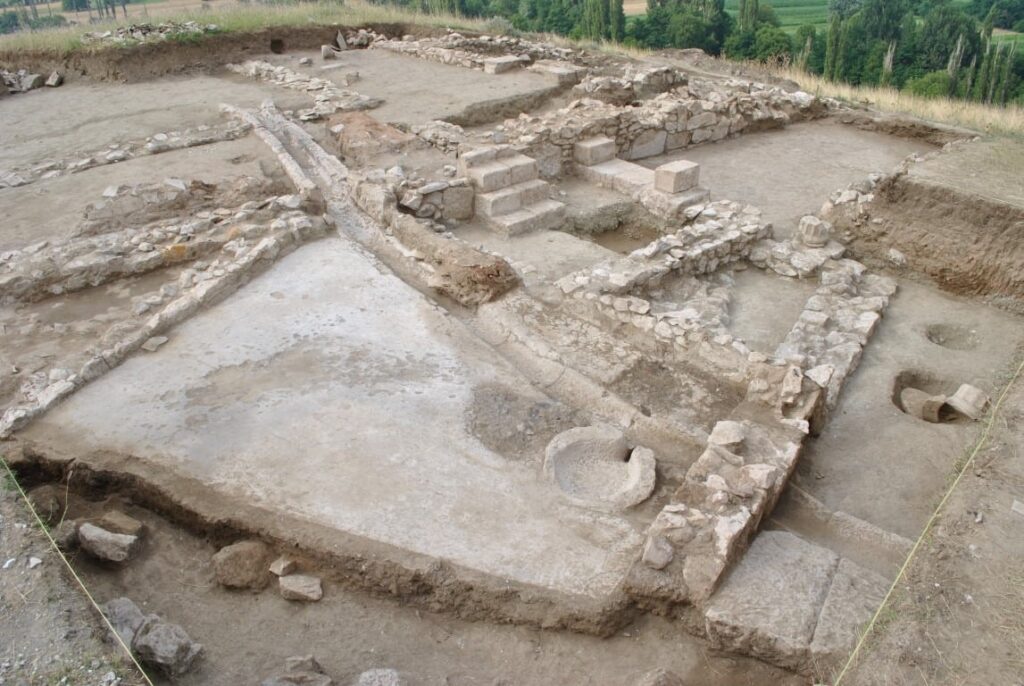
Remains of Hellenistic period mansion are discovered at the Gradishte hill near the Mlado Nagoričane village in North Macedonia. Credit: Dejan Gjorgjievski
Archaeologists in North Macedonia have uncovered the remains of a mansion from the Hellenistic period, a discovery that sheds light on the area’s ties with the Ancient Greek world.
According to researcher Dejan Gjorgjievski, the excavation of the NL Museum of Kumanovo has successfully uncovered an ancient Greek residence at the Gradishte hill near the Mlado Nagoričane village.
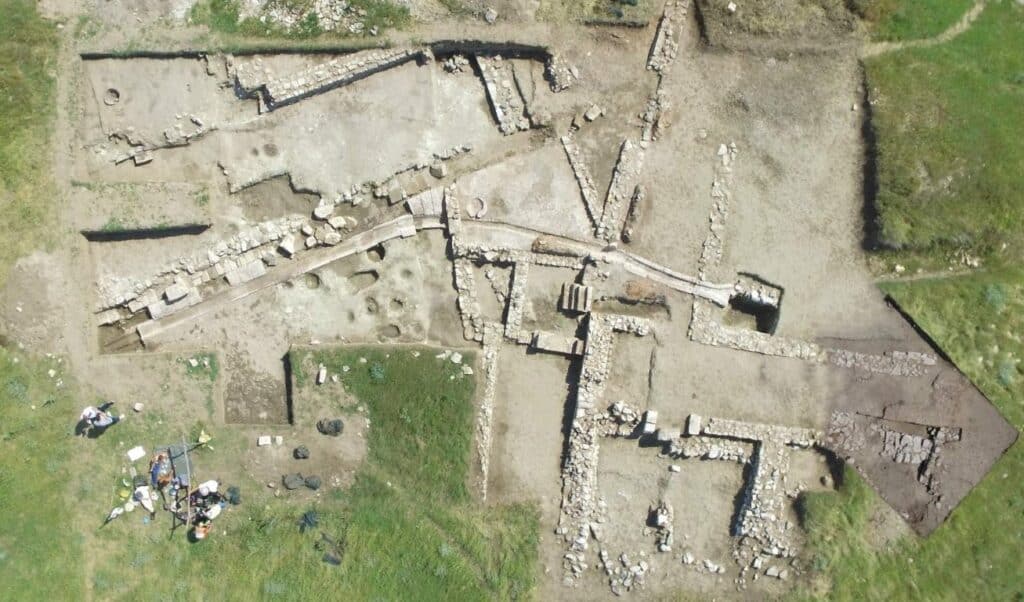
Aerial view of the site where the Hellenistic period mansion remains are found. Credit: Dejan Gjorgjievski
Archaeologists describe the residential remains and the objects and artifacts found as one of the most significant discoveries in the central Balkans. The structure is believed to have been the home of a local nobleman, while the location is interpreted as the ancient acropolis.
The architectural layout resembles the elite Hellenistic period mansions commonly found in the Mediterranean, but rarely so far north. The most striking feature of the house is the well-preserved Ionic capitals and bases coated with plaster.
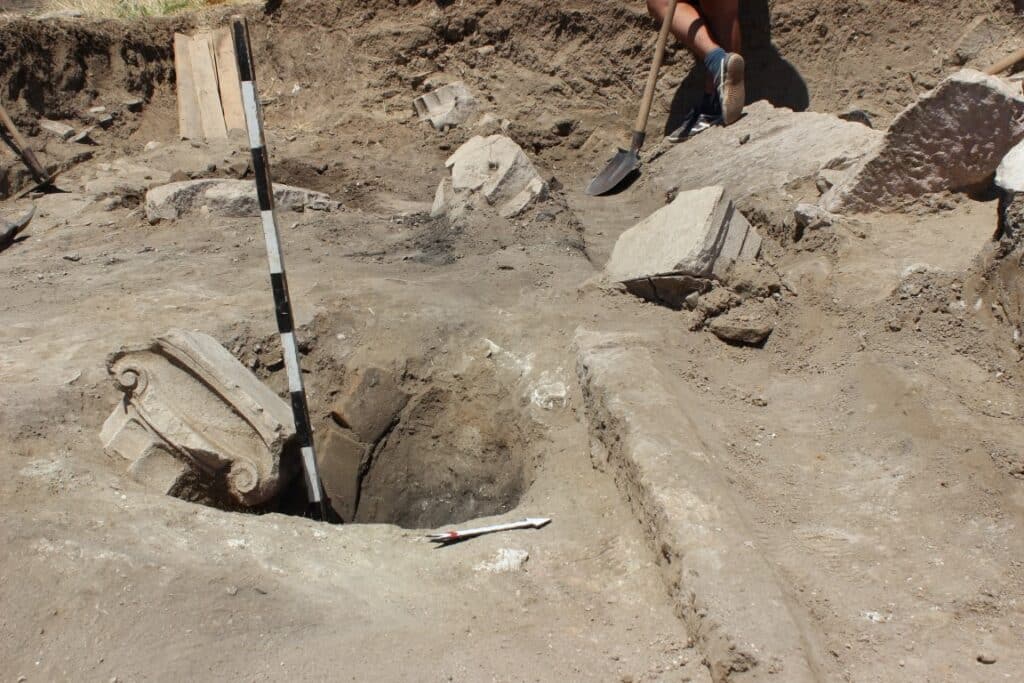
Fully preserved Ionic column capitals were unearthed. Credit: Dejan Gjorgjievski
The building features a central courtyard surrounded by a portico. The interior walls are decorated with painted plaster using masonry-style techniques, and a private bath is equipped with a plastered floor and a water-supply system. All the features suggest that the residence once belonged to a wealthy ancient Greek individual.
“These are currently the northernmost examples of such classical architectural elements known in the Hellenistic world,” Gjorgjievski told Arkeonews.
According to Gjorgjievski, a similar site uncovered in the region suggests that Hellenistic cultural practices were present this far into the interior Balkans during the late Classical and early Hellenistic periods.
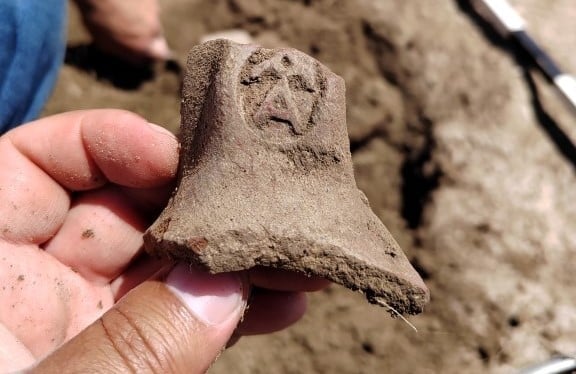
Important local objects of daily life were found at the Gradishte hill excavation. Credit: Dejan Gjorgjievski
Ancient Greek Objects of daily life found in North Macedonia
The artifacts and everyday objects unearthed in conjunction with the architectural remains enhance the significance of the discovery.
The excavations uncovered a wide range of objects, including West Slope pottery, Thasian amphorae, and various small vessels for liquids, clearly dated to the 4th–3rd centuries BCE.
An object of particular interest is a ceramic shard with the carving of a vulgar Greek graffito Psoli (Ψωλή), which refers to the male organ erect and with the glans uncovered in ancient Greek, and is an example of what scholars term an “aporretic inscription.”
This inscription is now the northernmost known example of its kind, offering a rare glimpse into everyday speech in Hellenistic times.
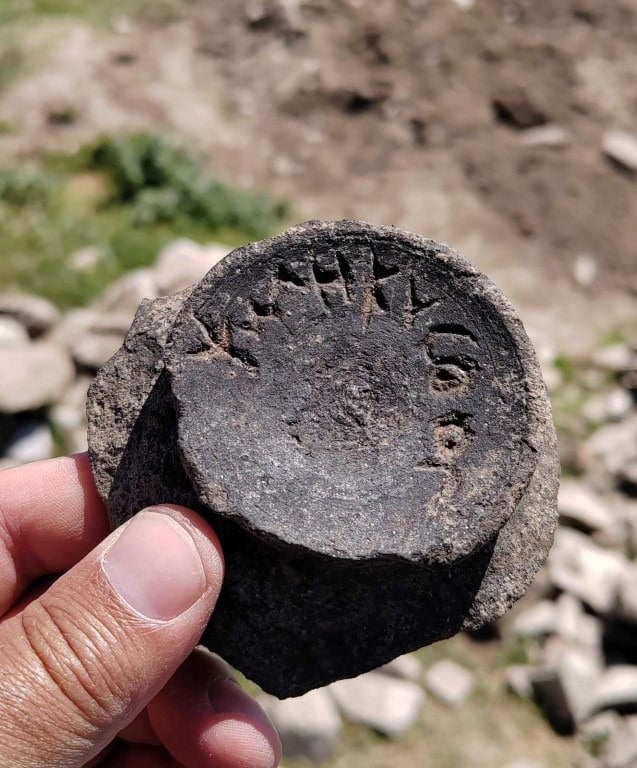
Ancient Greek vulgar graffito Psoli (Ψωλή). Credit: Dejan Gjorgjievski
Traces of massive stone walls were found beneath the residence, likely belonging to an earlier structure. However, these remains are currently undated. Future excavations will determine the period to which they belong.
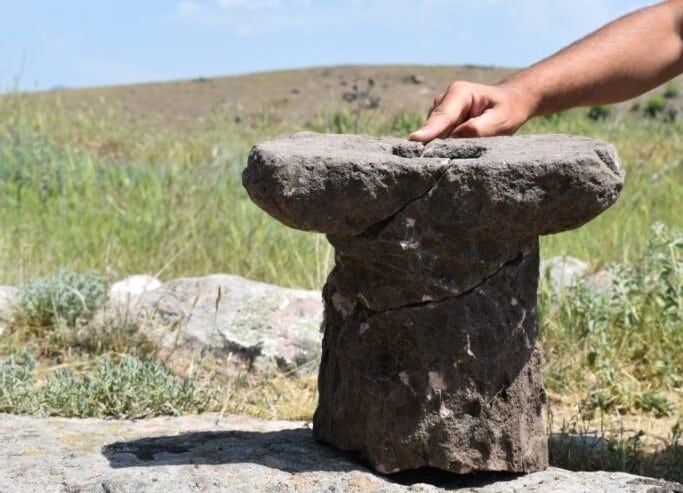
A well-preserved Ionic Column capital. Credit: Dejan Gjorgjievski
The residence features an internal fortification wall and a stylobate-like platform, as well as a sanctuary carved into the rock, which resembles a similar sanctuary at the Rachi settlement at Isthmia in Greece.
“Our findings at Gradishte contribute to a growing understanding that Hellenistic influence in the Balkans was not limited to coastal colonies or trade posts—it extended into local power structures and domestic life,” Gjorgjievski said in an interview with Arkeonews.
The Gladishte findings in North Macedonia redefine the cultural boundaries of the Hellenistic world, Gjorgjievski said.