
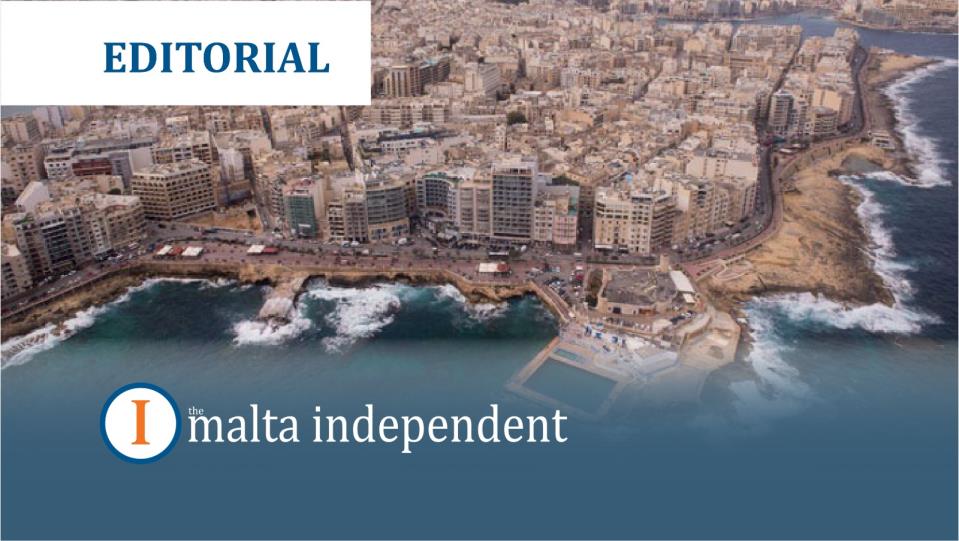

At the close of 2024, Malta’s estimated population stood at 574,250, marking a 1.9% increase from the previous year, according to the National Statistics Office (NSO). With the 600,000 milestone – or, better, millstone – clearly in sight, the question now facing the country is not whether it can grow further, but whether it should, at least without a coherent and effective plan. Malta’s population growth is happening within the hard limits of a small island with finite land and already strained infrastructure.
The impact is increasingly visible and felt. A sense of suffocation is felt wherever one goes, not only on beaches. Many people are finding it exhausting even to visit a supermarket where, at any time of day, they struggle to manoeuvre huge trolleys up and down aisles amid clusters of other customers, and finding long lines at the counter. In a country where there is little discipline when one is supposedly in a queue, it is not the first time that heated words are exchanged.
The figures reveal a deeper truth behind the numbers. This population growth is not being driven by births. In fact, live births in 2024 declined by 2% compared to 2023, reflecting a broader trend of demographic ageing and lower fertility. Meanwhile, deaths rose by 3.7%, further underlining that natural increase is not the source of growth. Instead, the engine driving Malta’s expanding population is migration – specifically the importation of foreign labour.
In 2024, Malta recorded a net migration figure of 10,614 people, with a staggering 76.6% of these migrants being non-EU nationals. That means nearly 8,100 new residents were third-country nationals, mostly coming to the country for employment. Foreign nationals now make up 29.4% of the resident population – nearly one in three people. This represents a dramatic demographic transformation within a short time, with significant consequences. Just to put you in the picture, foreign residents in Malta made up less than 6% of the population in 2013, the year when the Labour Party came to power.
The pressure on Malta’s infrastructure has been mounting ever since. Roads are congested, traffic is often gridlocked (not only during peak hours), and the island’s ageing sewage system is ill-equipped to support this kind of rapid growth. Sea contamination is often a result of sewage overflows.
Energy demand is also rising, leading to more frequent blackouts and strain on the national grid. In spite of all the effort that was put in by the authorities concerned, power cuts continue to be experienced on a regular basis each time the temperature goes up a notch. Public services such as healthcare, education, and waste management are under considerable stress, with local communities struggling to maintain a balance between quality of life and increasing population density.
Housing is another area of concern. Rents and property prices have soared, driven by demand from incoming workers, investors, and short-term rentals. This has priced many locals out of the market, fuelling public frustration. Open spaces are shrinking as development sprawls outward, sometimes at the expense of agricultural or ecologically sensitive land.
All this is happening in a country with one of the highest population densities in the world. What is more preoccupying is that the situation will be getting worse as time goes by. Finance Minister Clyde Caruana himself famously said that the population could increase to 800,000 by 2040 unless the economic model is changed. And yet the government he forms part of has not lifted a finger to change the economic model.
While migration has helped fuel economic growth and address labour shortages in sectors like construction, care, and hospitality, there appears to be no corresponding strategy to manage the pressures this growth is creating. Urban planning, public infrastructure investment, and integration measures have all lagged behind the pace of change. The government is offering no long-term plan, much less a vision, on the matter.
Rather than proactive governance, the situation seems to be one of passive reaction. The country continues to grow – not in physical size, but in population numbers – but with no clear framework for how this expansion will be absorbed, sustained or redirected. Calls for a population policy have been made for years by civil society groups and other concerned individuals. Yet the issue remains politically sensitive and often avoided.
In sum, Malta is fast approaching a critical juncture. Maybe it has already reached a point of no return. While migration has helped drive economic development, the country’s limited size and strained infrastructure cannot continue to absorb unchecked population increases without compromising quality of life.
The government must urgently develop a comprehensive population and integration policy that aligns economic needs with sustainable development, environmental protection, and social cohesion. Without decisive action, the growth that once drove prosperity could soon become the island’s greatest liability.