
Ivon Veličkovski: Vučić’s “Alte Banka” is entering Macedonia

Express newspaper
12/08/2025 13:29
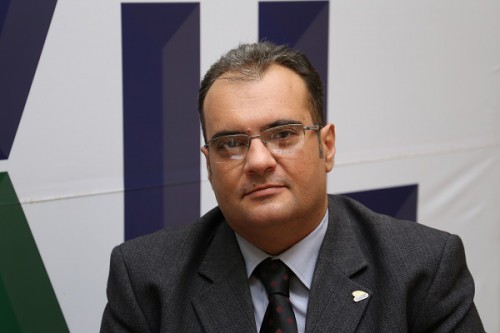
Macedonian politician Ivon Veličkovski, who is the chairman of the “New Republic” party, has reacted to the entry of the Serbian Alte Banka into the Macedonian market through a post on the social network “Facebook”.
Veličkovski considers this action dangerous for national security, alluding that behind this Bank are hidden many people with criminal pasts and people who are on the US blacklist.
Below you have the full text of Veličkovski’s article, translated into Albanian.
“The announced acquisition of Stopanska Banka Bitola (SBB) by Alte Banka (part of Davor Macura’s Alte group) is a serious issue not only for the financial sector, but also for the security sector in NATO-member and EU-oriented North Macedonia.
If we were talking about a “regular” Serbian bank, there would be no need for “alarm”. After all, most banks in the country are majority-owned by foreigners (Austria, Bulgaria, Greece…). But, since the entire rise of the owner of Alte Banka, Davor Macura – from the owner of a currency exchange office in 2014 to today – has run parallel to his closeness to the power of Aleksandar Vučić, the entry of Alte Banka (AB) into the SBB is a financial, political and security issue.
SBB is owned by Orce Kamchev, who is on the US “black list”. Interest in acquiring SBB from the Alte group appeared practically after the rejection of the offer of Komercijalna Banka (KB) for its purchase. We must remember the most important condition: payment of shareholders for each share, without the right to convert the paid amount into shares in KB. This was the condition set by Kostov for Kamchev: persons on the US “black list” cannot be shareholders in Komercijalna Banka.
In the context of the destabilization of Vučić’s power in Belgrade, it is clear that part of Belgrade’s financial flows should be (re)directed towards Skopje. The government, with its ambivalent attitude towards Russia (and Belarus) after the aggression on Ukraine, has sheltered many (Belarusian) oligarchs – and their capital.
Taking into account the lessons of the 1990s, it is possible to repeat the operations of the period of the financial and energy blockade of the Milosevic regime in the 90s. Back then, Skopje and the former FRY were a conduit for smuggling, but also a “bridge” to the offshore of Cyprus for the capital created by smuggling. Now Skopje is becoming an “offshore” that risks the cyprisification of North Macedonia. Or that is the intention.
For Serbian media, an illustration of Macura’s closeness to the SNS is the recent decision for Belgraders to pay their electricity bills to the account of the Serbian Elektroprivreda in AB. They also point to the privatization of “Jubme” (renamed to AB) as a favorable purchase of state property in the bank when Mali, Vučić’s “right-hand man”, was the Minister of Finance.
But that’s not all.
In the Alte group, in addition to the bank, there are also the companies Alte Gold, Alte Leasing, the majority stake in the construction company Procoopac, the Alston firm (for real estate) through which it fully owns Forum Vizija, ABL Solvent (which operates in the financial markets) and through which it purchased the state-owned land of the bankrupt IMT (where a large residential complex is expected to be built).
Alston is interesting because through it, the Alte group became the owner of “Danica Park”, which closed in 2024. “Danica Park” was an investor in a 1550 square meter residential building on the plot of land of the spouses of business partners of Kosovar origin – Zvonko Veselinovic and Milan Radoicic. Radoicic, former vice-president of the Serbian List in Kosovo, also on the US “blacklist”, led the armed group that carried out the terrorist attack in Banjska in 2023.
Now, perhaps it is clearer why the Nova Republika Movement is the only political movement in North Macedonia that has been insisting for two years on the amendment of the Law on the Implementation of Restrictive Measures. That solution would freeze the assets of persons listed on the “blacklists” of the UN, the EU, the US, Canada and the UK, as all of these are interconnected and based on the Magnitsky Act.
Frozen assets cannot be sold to hide traces of illegal/corrupt capital or used for profit. This would weaken our oligarchs (first or second generation, it doesn’t matter) with Yugoslav-Soviet (read: Serbian-Russian) connections. And, thus, would stop the current operation of returning North Macedonia to Serbian control.
The failure to propose these legal changes was the reason for the termination of cooperation with parties that are not ready to stay on the path of NATO alliance and European integration through the fight against corruption. In this case – there is no reason to cooperate with the Skopje branches of the SNS or SPS.
Alte’s entry into the SBB, with everything mentioned above, represents much more than a financial issue – it is a political and, obviously, also a security issue for North Macedonia.
And the governor, the prime minister, and many security institutions in the country, as well as diplomatic missions in the country, especially those of NATO member countries, must be held accountable for these issues.
When one sees the total silence on important issues:
- from the media coverage in North Macedonia by the “Hungarian oil” media connected to the Informer and Pink portal-translator scheme,
- through the dominance of Serbian state and private channels in cable operators and – the Hungarian-Serbian entry into the telecommunications space of North Macedonia that was marked by the entry of M-Tel and now with the announcement of the entry of 4IG…
- to the satisfaction of the Macedonian Orthodox Church with the “Tomos for autocephaly from Belgrade” instead of the Tomos for autocephaly from the Ecumenical Patriarchate…
… it becomes clear that Mickoski’s policy of blocking North Macedonia’s European integration and Filipce’s silence on the topic of corruption as a security threat are a joint subordination of Skopje to Belgrade. With this, these party and state leaderships are opponents of their nation – the NATO and European nation of North Macedonia – and of the Macedonian people.”