
Published on
August 14, 2025

Moscow’s status as the top travel destination in 2025 is largely driven by a growing influx of tourists from Saudi Arabia, Belarus, the UAE, China, India, Kazakhstan, Uzbekistan, and Kyrgyzstan. Several key factors contribute to this surge in tourism. Firstly, the city’s rich historical and cultural heritage, including landmarks such as the Kremlin, Red Square, and the Bolshoi Theatre, attracts travelers seeking an authentic cultural experience. Simultaneously, Moscow’s modern offerings, such as luxury shopping centers, upscale restaurants, and vibrant nightlife, appeal to those in search of contemporary experiences.
In addition to its diverse attractions, Moscow benefits from enhanced accessibility due to increased direct flight routes and relaxed visa policies, making it easier for visitors from these countries to travel. Stronger diplomatic and economic relations, particularly with Saudi Arabia and China, have led to increased travel exchanges. Furthermore, the growing interest in business, education, and tourism opportunities in Moscow has led to a broader regional interest from countries like India, Kazakhstan, and Uzbekistan. All these factors combined ensure that Moscow continues to be a prime destination for travelers from these regions in 2025.
In addition to Moscow, other cities across Russia are also becoming increasingly popular among international travelers. St. Petersburg, with its stunning architecture and rich artistic heritage, continues to be a favorite, while Vladivostok, known for its striking landscapes and proximity to Asia, attracts adventure seekers. Kazan, Kaliningrad, Sochi, Irkutsk, Volgograd, Novosibirsk, and Nizhny Novgorod are also making a mark, each offering visitors unique cultural, historical, and natural experiences that appeal to a wide range of interests.
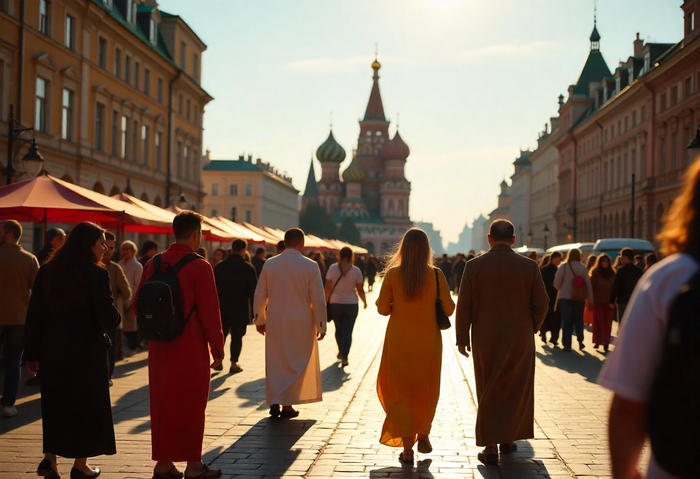
Moscow has become the heart of Russia’s thriving tourism industry. With its renowned landmarks, including the Kremlin, Red Square, and St. Basil’s Cathedral, the city draws millions of tourists annually. In addition to its historical gems, Moscow offers a blend of contemporary attractions such as upscale shopping malls, fine dining restaurants, and a lively nightlife scene. This unique combination of historical grandeur and modern indulgence makes Moscow a must-visit destination for those looking to immerse themselves in both culture and luxury.
While Moscow remains the primary draw for international tourists, other Russian cities are capitalizing on the influx of travelers by highlighting their own unique features. St. Petersburg, with its canals and imperial palaces, offers a European-like experience, while Sochi, a popular Black Sea resort, attracts those looking to combine outdoor adventure with relaxation. Vladivostok, on the Pacific Ocean, draws tourists seeking exotic landscapes and a taste of Russian Asia. These cities, along with others like Kazan and Irkutsk, provide an array of attractions that cater to a wide variety of global travelers.
To sustain this growth in tourism, Russia must focus on adapting to the specific needs of international visitors. Experts stress the importance of enhancing the overall travel experience by providing efficient transfers, guided tours in multiple languages, and culturally sensitive services. This focus on meeting the expectations of foreign travelers will push local hotels, restaurants, and attractions to improve their standards, ultimately strengthening Russia’s position in the competitive global tourism market.
The majority of international tourists visiting Moscow this summer are arriving from neighboring countries such as Belarus, as well as from further afield, including India, Saudi Arabia, Kazakhstan, China, the UAE, Uzbekistan, and Kyrgyzstan. These nations represent a growing segment of the market, with more travelers seeking out Russia’s unique offerings. The rising number of visitors from these countries highlights the diversification of Russia’s tourist base and the expanding global appeal of its cities.
A combination of factors has contributed to the increase in international tourism to Russia. One key element is the country’s recent relaxation of visa requirements with countries like Oman, making travel to Russia easier for tourists. Additionally, direct flight routes between Russia and Saudi Arabia, set to launch soon, are expected to further boost the flow of visitors. Simplified visa processes and improved air connections are central to the growing accessibility of Russian destinations.
Russia’s transportation infrastructure is another key factor in supporting the surge in tourism. Recent upgrades to airports, the expansion of railway services, and the opening of new international flight routes are improving accessibility and convenience for travelers. As more countries ease travel restrictions and as air travel rebounds globally, Russia is capitalizing on these opportunities to attract more international tourists.
The economic impact of this increase in international tourism cannot be overstated. Inbound tourism is a vital driver of Russia’s economy, contributing to local businesses, creating jobs, and generating revenue for the government. As foreign tourists spend on accommodations, dining, entertainment, and transportation, the positive ripple effect extends to various sectors of the economy, benefiting both the tourism industry and the broader Russian economy.
Several factors are fueling the country’s growing appeal. Beyond visa relaxations and new flight routes, Russia’s cultural and historical offerings continue to capture the attention of travelers. From world-renowned museums and heritage sites to vibrant festivals and natural landscapes, Russia offers experiences that are hard to find elsewhere. These features, combined with the country’s ongoing infrastructure improvements, make Russia an increasingly attractive destination for tourists from around the world.
As Russia continues to evolve its tourism sector, it will be essential to maintain this momentum by investing in services and infrastructure that cater to international visitors. The combination of streamlined travel processes, high service standards, and a diverse range of cultural and historical offerings will help Russia maintain its position as a major player in the global tourism industry. As the country works to meet the needs of international travelers, it is set to continue attracting millions of tourists each year, contributing to both economic growth and cultural exchange.
Moscow’s rise as the top travel destination in 2025 is fueled by increased tourism from Saudi Arabia, Belarus, UAE, China, India, Kazakhstan, Uzbekistan, and Kyrgyzstan, driven by its rich cultural heritage, modern attractions, improved accessibility, and stronger international ties.
In conclusion, Moscow, along with other key Russian cities, is on track for a summer tourism boom in 2025, driven by a combination of factors including relaxed visa regulations, improved transport links, and the ongoing appeal of Russia’s diverse offerings. As Russia continues to enhance its infrastructure and services for international visitors, the country is well-positioned to remain a major destination for tourists from across the globe. With these developments, Russia’s tourism sector is expected to thrive, bolstering its economic growth and global standing as a premier travel destination.
