
Andrew Durbin You’ve been acting director of Muzeum Sztuki since July 2024. Now that your position has been formalized, how will it impact the direction the museum takes going forward?
Daniel Muzyczuk My tenure will last for five years. These dates are meaningful because the museum will have its centenary in 2030. Historically, Muzeum Sztuki has had a strong avant-garde ethos; it has been an experimental institution that tries to map the future, rather than the past. If it has reflected on the past, it has been to try and understand how we got here and to consider what is to come. The museum was founded around the donation of a group of avant-garde artists and poets who established fruitful relationships with the international avant-garde. The founders, especially the artist and theorist Władysław Strzemiński, envisioned the museum as a laboratory for social and political emancipation. In the spirit of these pioneers, I will work with the collection, both as an archive of prototypes for new ways of thinking, and as an ensemble of different artistic trajectories, or individual takes, on how we can see reality critically. And of course, the museum will continue to learn from contemporary artists themselves.
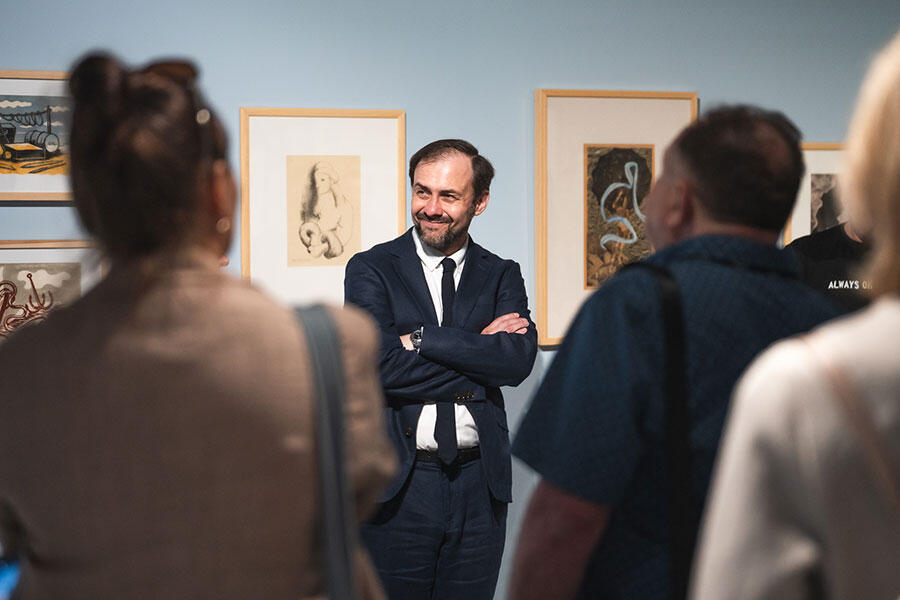
Daniel Muzyczuk. Courtesy and photograph: Daniela Zdjęcia
AD The previous government had a completely different position in relation to contemporary art, almost adversarial. As you step into this new role, what are some of the challenges you face?
DM The previous government was largely driven by xenophobia and mostly interested in fostering Polish nationalism. And the previous director of Muzeum Sztuki was primarily interested in paintings by Polish painters. The museum needs to return to the international fold, which was its focus at its creation. The original collection was named the International Collection of Modern Art of the ‘a.r.’ group. Internationalism, cosmopolitanism, that’s at its root. A museum understood in that way is a space where differences can unfold and radically diverse perspectives can be encountered. In a political sense, this means the museum gives voice to stories absent elsewhere, because the media and social networks are largely driven by different commercial concerns.
The original collection was created during the financial crisis of the late 1920s. Then, artists were keen to donate their pieces because they couldn’t sell them. After the change in the leadership at the museum last year, I approached many international artists who were working with us, or who were interested in the story of Muzeum Sztuki. Many of them have since announced their own donations. There are at least 90 international artists who have shared their work as an act of support for the ‘return’ of Museum Sztuki. So, another recent crisis opened up the possibility for the reformulation of the source mission and grounding of the originating principles.
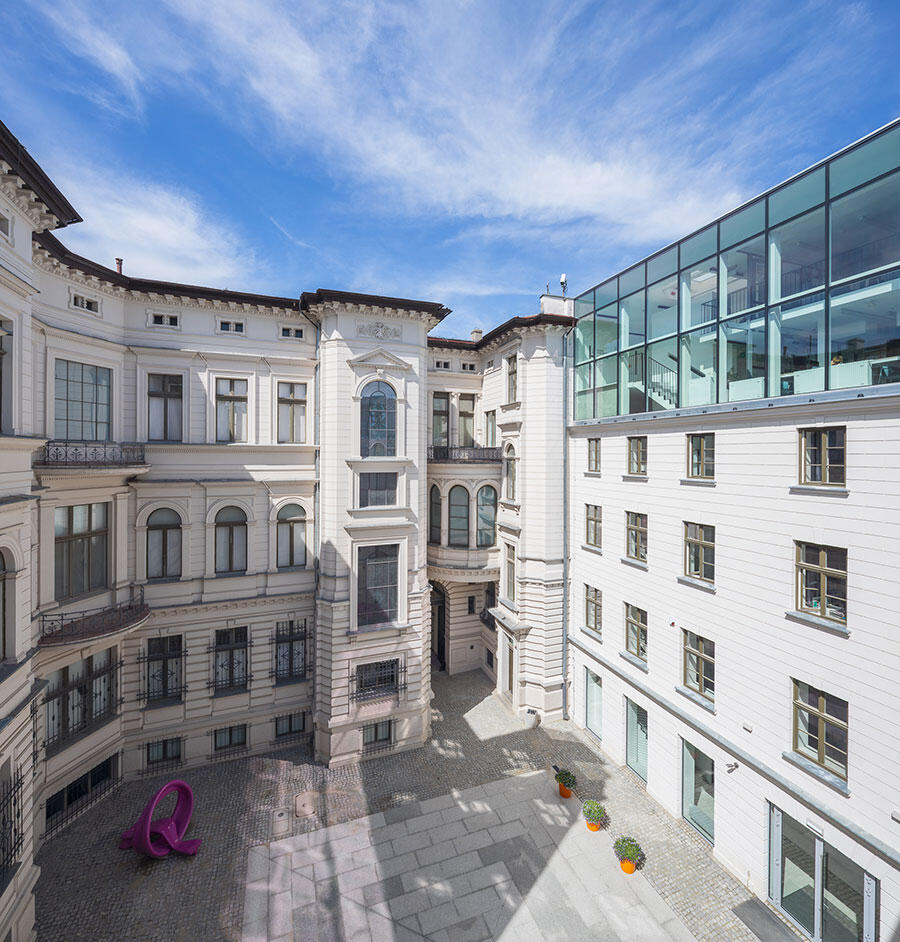
ms1, Muzeum Sztuki, Łodzi. Courtesy: Muzeum Sztuki; photograph: Rafał Tomczyk
AD At a moment of such intense nationalism across Europe and the United States, what value do you see in a museum reaffirming its international position?
DM For the museum itself, it’s a natural step. But I’m more interested in the role that a museum like that can play within the public sphere. The Polish artistic community is very inward facing. Most international exhibitions don’t get the interest that exhibitions of Polish artists do. The role of the museum is to draw attention to similarities and resonances; to show how there are shared concerns globally. I see this as a political role. It’s not only aesthetic, in the sense of sharing a type of language, art is an emancipatory force that allows us to see differently.
On 17 October we will open an exhibition of the permanent collection entitled ‘Ways of Seeing’ – a familiar title, but it’s not an homage to John Berger. The title was inspired by Władysław Strzemiński’s Theory of Vision (1958), which we are publishing in English for the first time. The book looks at art both as a symptom of larger economic and political developments, and as an active agent that can change our ways of seeing things. In this way, our collection becomes a set of different points of view, different methodologies to deal with reality, not simply a means to depict it. We are not so much interested in the representation, per se, like in socialist realism, but more in developing active ways of seeing reality and mediated reality critically.
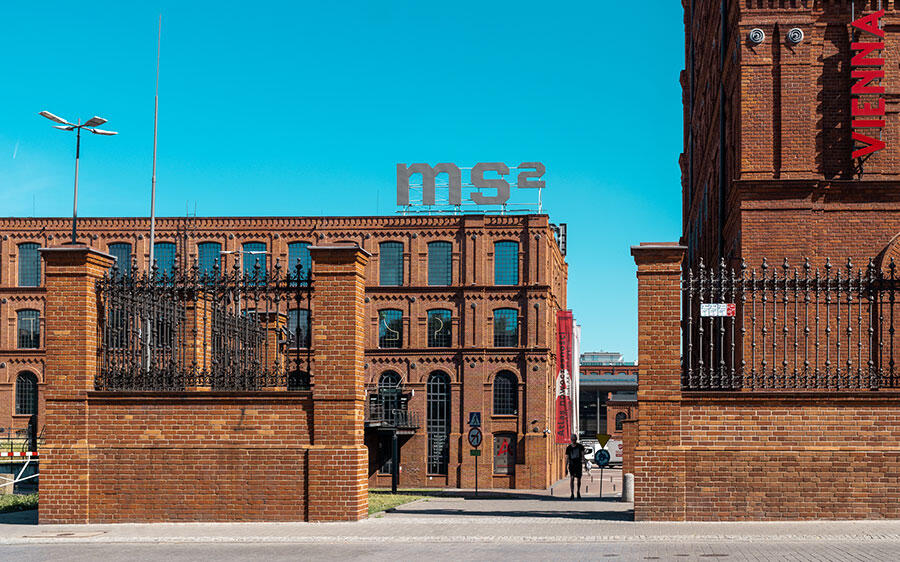
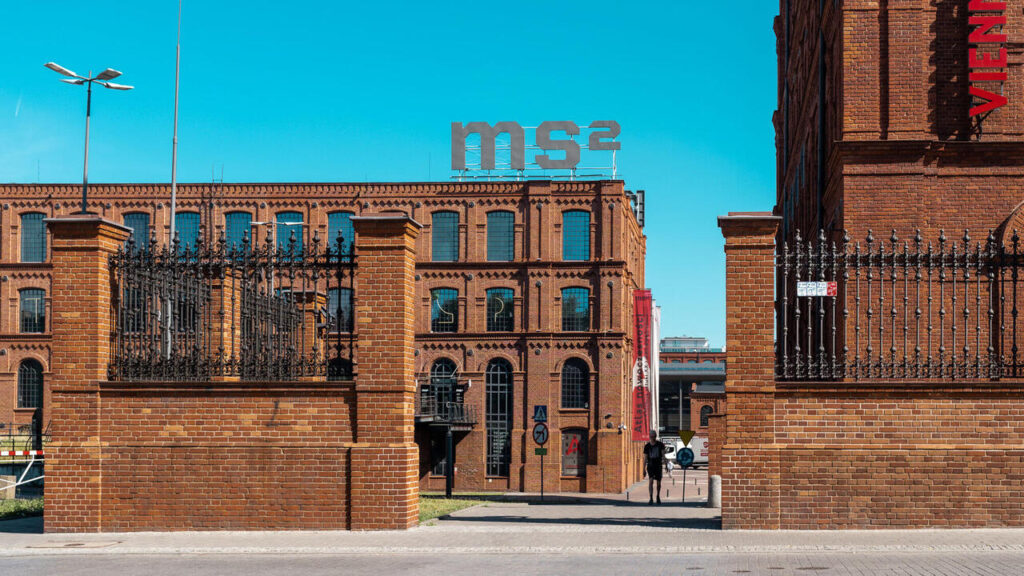
ms2, Muzeum Sztuki, Łodzi. Courtesy: Muzeum Sztuki; photograph: HaWa
AD Is there an emerging pedagogical role for museums in re-educating audiences on how to see images?
DM I wouldn’t like to teach people the ‘right’ ways of looking at images. We’re aiming to show that there are different types of reading. That artists, who are specialized in seeing, have developed different methodologies of how to convey, contain and analyse reality through images. So, it’s less about teaching people what’s right and wrong and more focused on exploring different approaches towards reality and images. Seeing is critical.
‘Ways of Seeing’ will be on view at Muzeum Sztuki, Łodzi, from 17 October
Main image: ms1 (detail), Muzeum Sztuki, Łodzi. Courtesy: Muzeum Sztuki, Łodzi; photography: Rafał Tomczyk