
Iowa officials confirmed the state’s first case of West Nile virus this year in a middle-aged adult from northern Iowa, as the Polk County Health Department issued warnings about increased mosquito activity.Hendrix Castillo, who spends time fishing at Water Works Park, said, “It hurts, it hurts.”His legs were covered in red bite marks from mosquitoes.”Just go outside for a couple seconds, and they’ll get you immediately. They’re not that bad, but they hurt,” Castillo said. The Polk County Health Department is alerting residents following data from Iowa State University experts, who have detected unprecedented levels of West Nile virus in mosquito traps across the state.Addie Olson from the Polk County Health Department said, “In the most recent data that we have, it’s been 20-plus years since we’ve seen these levels of West Nile virus being detected in mosquito traps across the state.”Health experts recommend using Environmental Protection Agency-registered insect repellent, covering skin when outdoors, and avoiding outdoor activities around dawn or dusk. Symptoms of West Nile virus include rash, fever, headaches, and body aches.One major factor contributing to the mosquito boom is the floodwater left behind after this summer’s record rains.”Making sure that you have no standing water around your house. Because mosquitoes can breed in a space as small as a bottle cap,” Olson said. August and September are the most dangerous months for West Nile virus, but Castillo remains undeterred in his outdoor activities.”Mosquitoes don’t harm me. I don’t really care about them. I would rather be out here than getting beat by mosquitoes,” he said.The city of Des Moines stopped spraying for mosquitoes this year due to budget constraints.» Subscribe to KCCI’s YouTube page» Download the free KCCI app to get updates on the go: Apple | Google Play
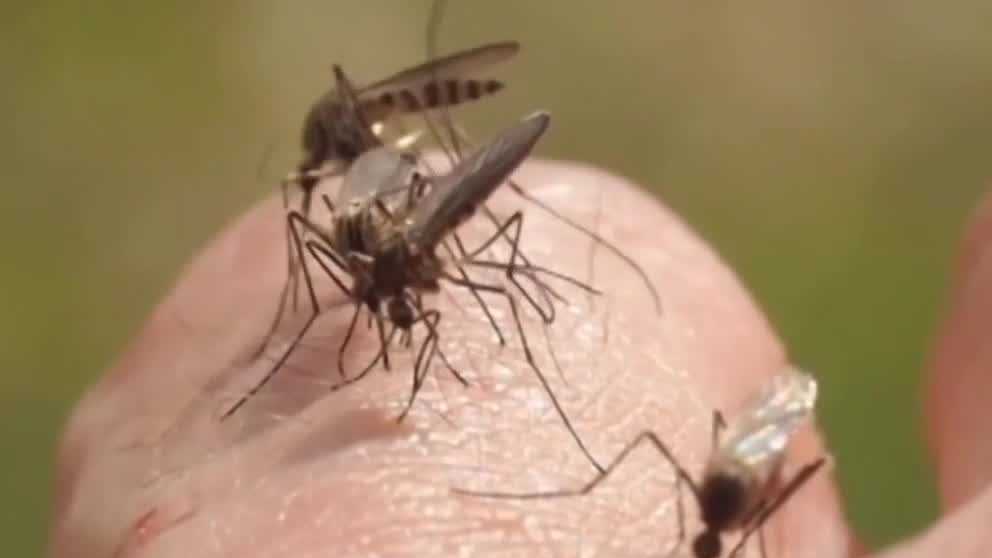
Iowa officials confirmed the state’s first case of West Nile virus this year in a middle-aged adult from northern Iowa, as the Polk County Health Department issued warnings about increased mosquito activity.
Hendrix Castillo, who spends time fishing at Water Works Park, said, “It hurts, it hurts.”
His legs were covered in red bite marks from mosquitoes.
“Just go outside for a couple seconds, and they’ll get you immediately. They’re not that bad, but they hurt,” Castillo said.
The Polk County Health Department is alerting residents following data from Iowa State University experts, who have detected unprecedented levels of West Nile virus in mosquito traps across the state.
Addie Olson from the Polk County Health Department said, “In the most recent data that we have, it’s been 20-plus years since we’ve seen these levels of West Nile virus being detected in mosquito traps across the state.”
Health experts recommend using Environmental Protection Agency-registered insect repellent, covering skin when outdoors, and avoiding outdoor activities around dawn or dusk. Symptoms of West Nile virus include rash, fever, headaches, and body aches.
One major factor contributing to the mosquito boom is the floodwater left behind after this summer’s record rains.
“Making sure that you have no standing water around your house. Because mosquitoes can breed in a space as small as a bottle cap,” Olson said.
August and September are the most dangerous months for West Nile virus, but Castillo remains undeterred in his outdoor activities.
“Mosquitoes don’t harm me. I don’t really care about them. I would rather be out here than getting beat by mosquitoes,” he said.
The city of Des Moines stopped spraying for mosquitoes this year due to budget constraints.
» Subscribe to KCCI’s YouTube page
» Download the free KCCI app to get updates on the go: Apple | Google Play