
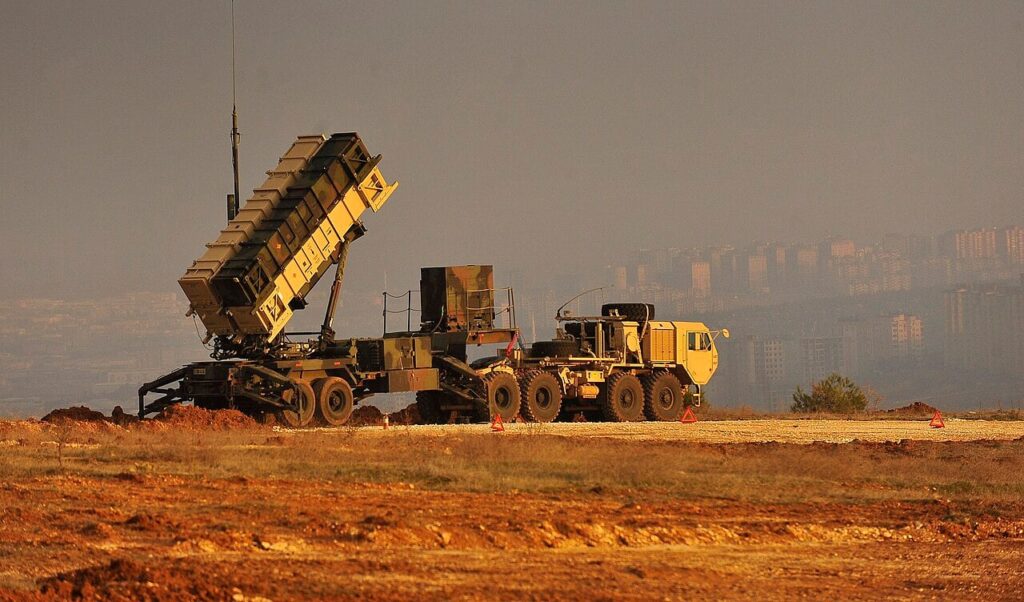
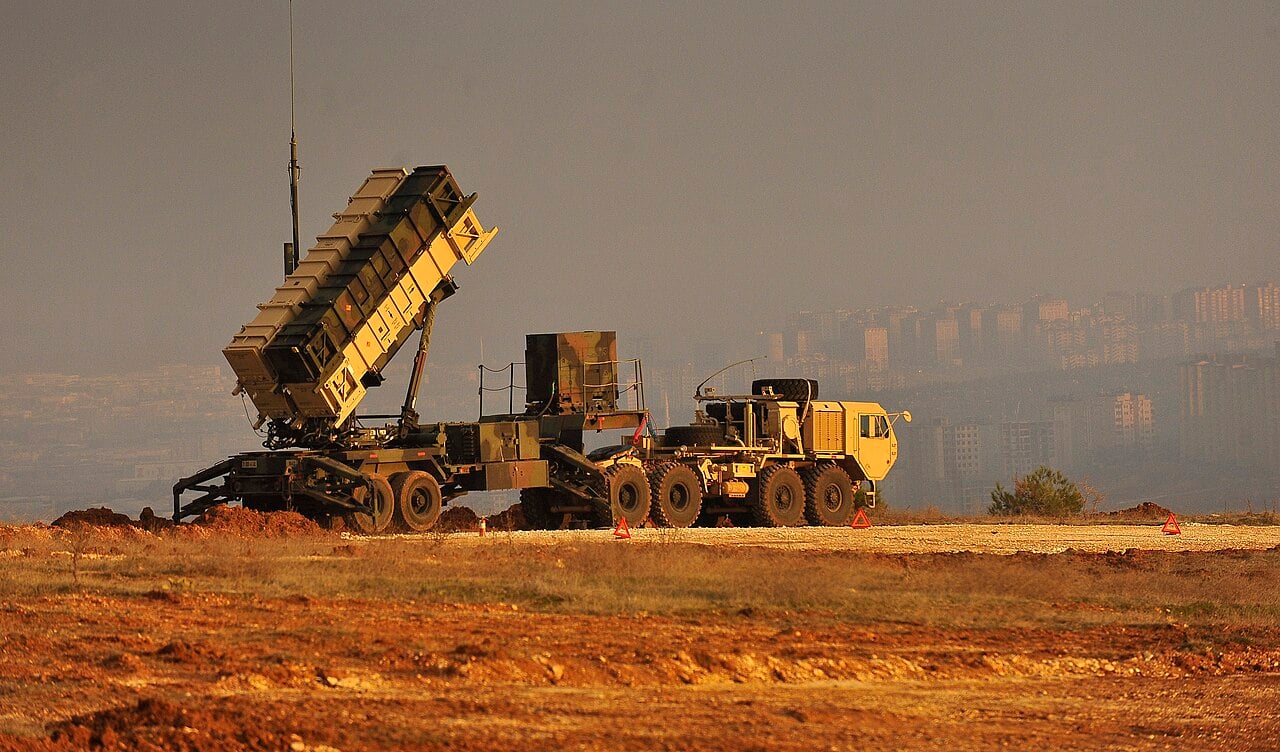
Patriot Missile Battery System. Credit: Wikimedia Commons Glenn Fawcett Public Domain
Greece is considering extending the deployment of its Patriot Missile Battery (PMB) mission in Saudi Arabia, part of the kingdom’s long-range air defense system.
This November will mark four years since the initial deployment, which was aimed at protecting critical Aramco infrastructure in the Saudi interior. The arrangement stems from a bilateral agreement between Athens and Riyadh to enhance the kingdom’s air and missile defense capabilities under the international “Integrated Air and Missile Defence Concept” (IAMD Concept).
Saudi authorities have formally requested that Greece’s military force in Saudi Arabia (ELDYSA) extend its mission in the Gulf country until November 2026. Talks between the two governments began in 2019, first at a technical and then at a diplomatic level. A memorandum of cooperation detailing the deployment was finalized in April 2021, and ELDYSA personnel were deployed from Tanagra to Saudi Arabia in September of that year.
Greece strengthening defense infrastructure with Saudi Arabia and considering mission extension
The extension of the Patriot Battery mission in Saudi Arabia by Greece appears increasingly likely, reflecting strong bilateral relations between Athens and Riyadh. Greek Prime Minister Kyriakos Mitsotakis has visited Riyadh multiple times since taking office in July 2019, while Athens hosted Crown Prince Mohammed bin Salman on his first stop in Europe in the summer of 2022.
Defense ties are particularly strong, with both countries regularly participating in joint military exercises, especially involving the Hellenic Air Force. ELDYSA personnel undergo continuous training under demanding conditions, as Saudi Arabia faces persistent threats from Houthi forces and is a focal point in regional security developments.
Broader strategic and economic cooperation
Beyond defense missions, Greece and Saudi Arabia have signed significant agreements in the economic and energy sectors, including recent projects such as undersea fiber-optic cables linking Saudi Arabia to Western Europe via Greece, Cyprus, and Israel.
Less visible but equally important is the strategic cooperation on regional security issues. Diplomatic exchanges between Athens and Riyadh have intensified in recent months, covering developments in the Gaza Strip, relations with Israel, and security in the Red Sea and Gulf of Aden, where Greece maintains a naval presence.
A strong channel of communication exists on Syrian affairs, with Riyadh being one of the few regional actors capable of influencing the transitional government of Ahmed al-Sharaa, which is closely aligned with Ankara. For Athens, this relationship is crucial both for safeguarding the rights of religious minorities in Syria and for countering Turkey’s efforts to negotiate Exclusive Economic Zone (EEZ) agreements with Syria at the expense of Cyprus.