
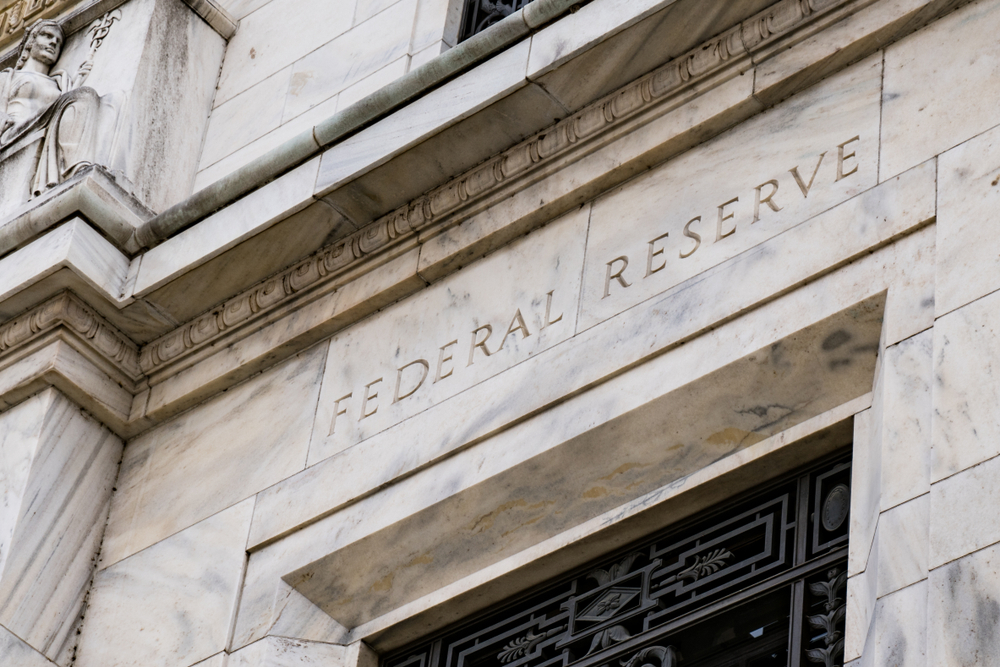
The Federal Reserve’s carefully choreographed unity cracked in July, exposing deep anxieties about President Trump’s tariffs and their unpredictable economic consequences. For the first time in more than 30 years, multiple governors broke ranks during a rate decision, signaling extraordinary uncertainty within America’s central bank about navigating an economy reshaped by trade wars.
Minutes released Wednesday from the July 29-30 meeting reveal an institution grappling with fundamental questions about inflation, employment, and whether traditional monetary tools can address problems created by tariff-driven price increases. The debate has become more urgent as Trump’s trade policies ripple through supply chains, forcing Fed officials to reconsider basic assumptions about how the economy functions.
Christopher Waller and Michelle Bowman voted against keeping rates steady at 4.25% to 4.5%, preferring immediate cuts. Their dissent represents more than procedural disagreement. It reflects a philosophical divide over whether tariffs represent temporary disruption or structural economic change requiring different policy responses. The split vote occurred against intense political pressure from Trump, who has called Fed Chair Jerome Powell “stupid” and “a loser” while demanding aggressive rate cuts.
Tariffs dominate the discussion
The word “tariffs” appears throughout the meeting minutes, underscoring how trade policy has hijacked monetary deliberations. Officials acknowledged considerable uncertainty about timing, magnitude, and persistence of tariff effects on prices. Some participants noted that stockpiling ahead of anticipated tariff increases had distorted economic data, making it difficult to assess underlying trends.
Fed staff observed that foreign exporters were absorbing only modest portions of increased tariffs, meaning American businesses and consumers bore most costs. Business contacts reported mixed strategies for managing these pressures, from switching suppliers to accepting lower profit margins. Yet many companies indicated they would eventually pass costs to customers, potentially embedding higher prices throughout the economy.
The debate over tariff persistence proved particularly contentious. Some officials viewed tariffs as creating one-time price increases that would fade over time. Others worried about supply chain disruptions and feedback loops that could entrench inflation. Several participants emphasized that distinguishing between tariff-related price increases and underlying inflation trends had become nearly impossible, complicating policy decisions.
Employment concerns emerge
While inflation dominated headlines, employment risks lurked beneath surface stability. The unemployment rate remained at 4.1%, but several indicators suggested weakening labor demand. Private payroll gains had stepped down noticeably, job growth concentrated in narrow sectors, and wage increases for job switchers fell below those staying in positions.
Officials noted that businesses reported reluctance to hire or fire amid elevated uncertainty, creating artificial stability masking deeper problems. Immigration policy changes affected labor supply in construction and agriculture, adding another layer of complexity. Some participants worried that import-dependent businesses might fail under tariff pressure, triggering broader employment losses.
The interplay between inflation and employment created what officials described as potentially difficult tradeoffs. If tariffs drove persistent inflation while labor markets weakened, the Fed would face competing mandates with no clear resolution. Participants agreed they would need to consider each variable’s distance from goals and different time horizons for closing gaps.
Political pressure intensifies
Trump’s shadow loomed over deliberations, though officials avoided direct references. The president’s demands for rate cuts and public attacks on Fed leadership created an atmosphere where any decision risked political backlash. With Governor Adriana Kugler’s resignation and Trump’s call for Lisa Cook’s removal over mortgage fraud allegations, the Fed’s independence faces unprecedented challenges.
Powell’s term expires in May 2026, and the White House has identified eleven potential replacements, including current and former Fed officials plus Wall Street strategists. This succession planning occurs while the Fed navigates its most complex economic environment since the 2008 financial crisis.
Markets await clarity
Financial markets remained relatively calm during the July meeting period, with policy rate expectations stable despite tariff uncertainties. Credit spreads tightened to exceptionally low levels for investment-grade bonds, while equity valuations pushed above historical averages driven by technology sector optimism about artificial intelligence.
Yet this apparent tranquility masks deeper anxieties. The Fed’s next moves depend on data that tariffs have rendered unreliable. Officials must distinguish between temporary disruptions and permanent changes while managing political pressure and market expectations. The institution designed for deliberate, data-driven decisions finds itself improvising responses to rapidly evolving trade policies.
Powell addresses the Jackson Hole symposium Friday, where markets expect signals about future rate directions. Whatever he says, Wednesday’s minutes reveal a Fed struggling to maintain credibility while navigating economic terrain its models never anticipated.