Benzinga and Yahoo Finance LLC may earn commission or revenue on some items through the links below.
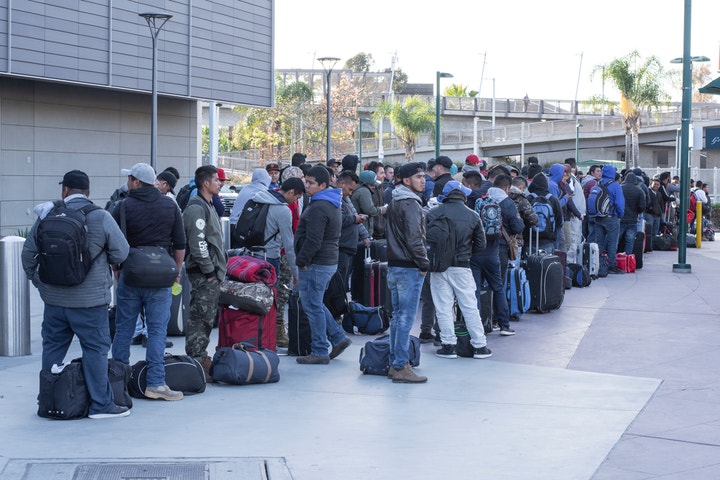
It was just a year ago when immigrants were entering the country in droves. The narrative has quickly shifted, and the White House recently featured a CNN report on its site touting that the country is on track toward negative net migration for the first time in at least 50 years.
CNN Politics Senior Analyst Harry Enten said it’s possible that we see a 2.8 million year-over-year negative net migration when it’s all said and done. President Donald Trump campaigned on a tight border and has delivered on that promise, but this dramatic shift will affect the economy. It’s not all good, but it’s not all bad, either. These are some of the realistic ways negative net migration will affect the economy.
Don’t Miss:
Removing able-bodied workers from an economy will reduce the workforce and reduce economic output. Fewer people in the workforce result in fewer products being produced and fewer services being fulfilled.
However, not everyone loses from a shrinking workforce. Fewer workers give the remaining workers more leverage, which can translate into wage growth. Businesses will have to pay higher prices for workers, which can be a boon for people who feel like their salaries haven’t kept up with inflation. Continuing to bring in new migrants would put downward pressure on wages due to a higher supply of workers.
Some businesses may raise prices since they have to pay higher labor costs, contributing to inflation in the process. American workers should see nominal wage growth due to negative net migration, but real, inflation-adjusted wages show whether these changes will be a net benefit or setback for the typical worker’s purchasing power.
Trending: Kevin O’Leary Says Real Estate’s Been a Smart Bet for 200 Years — This Platform Lets Anyone Tap Into It
The U.S. Census Bureau’s population clock shows that there are approximately 342 million people in the country. A negative net migration of 2.8 million individuals represents a 0.1% decrease in the population. Any population decrease will reduce housing costs since fewer people are trying to buy and rent the same number of housing units. For instance, Japan housing prices have been dropping in tandem with its population decline, according to Business Insider.
Negative net migration isn’t the only way to address housing costs, but it can have an unintended effect. In this case, it won’t be life-changing for Americans who want to become homeowners.
Although housing demand decreases as populations decline, negative net migration may increase construction costs. The construction companies that hired illegal immigrants will have to turn to more expensive American workers, who will suddenly have more leverage in negotiations. Undocumented workers tend to have lower wages, according to Econofact, so American workers represent higher costs for companies.
It’s exactly what Trump and his advocates envisioned, but more American workers in construction may come with higher construction costs, which can lead to higher housing prices. Can negative net migrations and higher wages for Americans offset rising construction costs? We will have to wait and see.
See Also: The ECG Hasn’t Changed in 100 Years — This AI Upgrade Could Help Detect Heart Disease Years Earlier
Governments rely on tax revenue to fund social programs and other initiatives for the country’s welfare. When illegal immigrants are forced out of the country, it reduces the number of taxpayers. For instance, undocumented immigrants paid $96.7 billion in federal, state, and local taxes in 2022, according to a report from the Institute on Taxation and Economic Policy. The same report said that they paid $25.7 billion in Social Security taxes.
However, a negative net migration may not be detrimental to social programs like Social Security. While the Institute on Taxation and Economic Policy report indicates that illegal immigrants contributed $25.7 billion to the program in 2022, Social Security collected more than $1 trillion that year. That means the contribution from illegal immigrants was less than 2.5%.
Fewer undocumented immigrants also lets social programs allocate more of their existing time and resources toward U.S. citizens. The impacts of negative net migration – positive or negative – ultimately depend on who ends up leaving the country. Getting rid of productive workers will hurt the economy, but advocates for deportation claim that taxpayer funds went toward housing illegal immigrants. This rationale asserts that the savings from no longer having to house illegal immigrants can offset losses in productivity.
Negative net migration isn’t a clear positive or negative for the economy. There are meaningful pros and cons to the approach, and its impact on the economy and Americans will become more apparent over time.
Read Next: Arrived Home’s Private Credit Fund’s has historically paid an annualized dividend yield of 8.1%*, which provides access to a pool of short-term loans backed by residential real estate with just a $100 minimum.
Image: Shutterstock
This article The U.S. May Experience Negative Net Migration For The First Time In 50 Years. Here’s What That Means For The Economy. originally appeared on Benzinga.com