
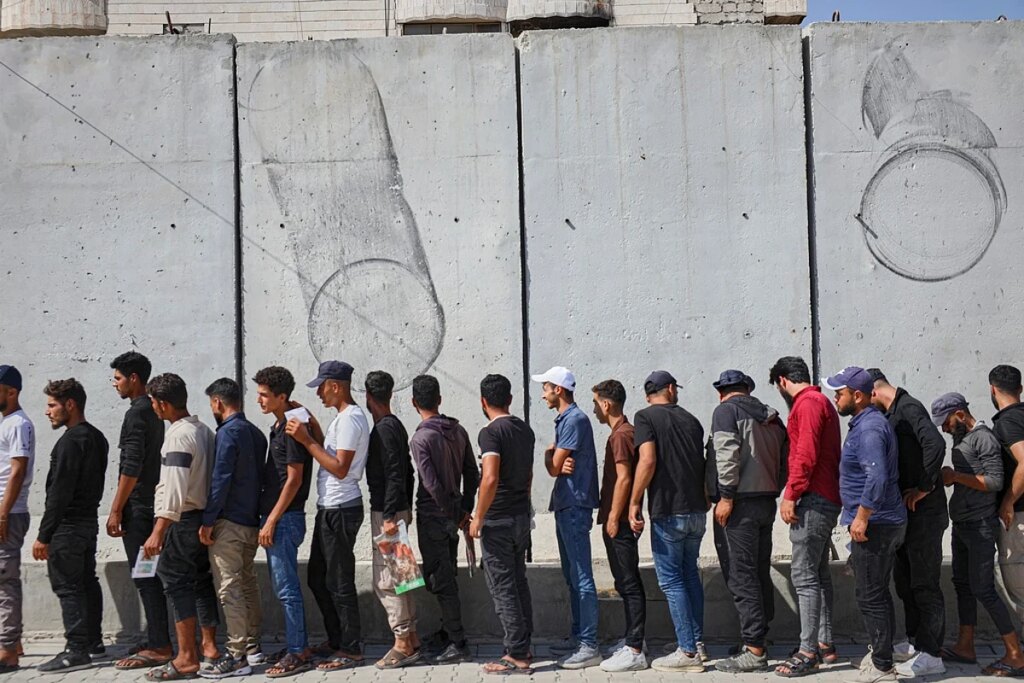
When asked for the numbers and percentage of minorities joining the security forces, Noureddine al-Baba, spokesperson for the Syrian Ministry of Interior, told The Associated Press “competence and patriotism are the criteria used, not sectarian quotas.”
Skepticism about the government’s intentions
The recruitment effort drew skepticism in some quarters.
The Afrin Social Association, an initiative providing support to people displaced from Afrin in the Kurdish-controlled northeast, said in a statement posted on Facebook that “enrollment of some young people in the General Security Forces, without any guarantees to protect Afrin’s communities and ensure the dignified and voluntary return of the displaced, is an irresponsible act.”
The association accused the authorities in Damascus of trying to “circumvent” the March agreement, which called for displaced people to be able to return to their homes, including in Afrin, along with a merger of the new government’s army and the U.S.-backed, Kurdish-led Syrian Democratic Forces.
Wladimir van Wilgenburg, an Iraq-based Kurdish affairs analyst, said “in theory, the recruitment could improve the situation of Kurds in Afrin.”
“It also depends if Kurds will be appointed to leadership positions in the security forces in Afrin and if they will really have any say, and if some Turkish-backed groups would return to their original areas … and if some of the violations stop,” he said.
A Kurdish man living in Afrin, who spoke on condition of anonymity because of security concerns, said locals have mixed feelings about the recruitment.
They believe it could be positive if the authorities are “really serious about giving a role in Afrin to the original people of this area,” but they fear the Kurdish recruits would be “employed negatively” in case of an armed conflict between the state forces and SDF, he said.
Some Kurdish families are pushing their sons to join, either because the security forces are seen as a career path for those without other options or in hopes of gaining political benefits, the man said.
“I know a young guy who was working as a barber and his grandfather forced him to go to the General Security, saying that we must have influence in the state,” he said.