
Analysts from Tirana: Crisis in the Parliament damages Kosovo’s image

Express newspaper
25/08/2025 13:09
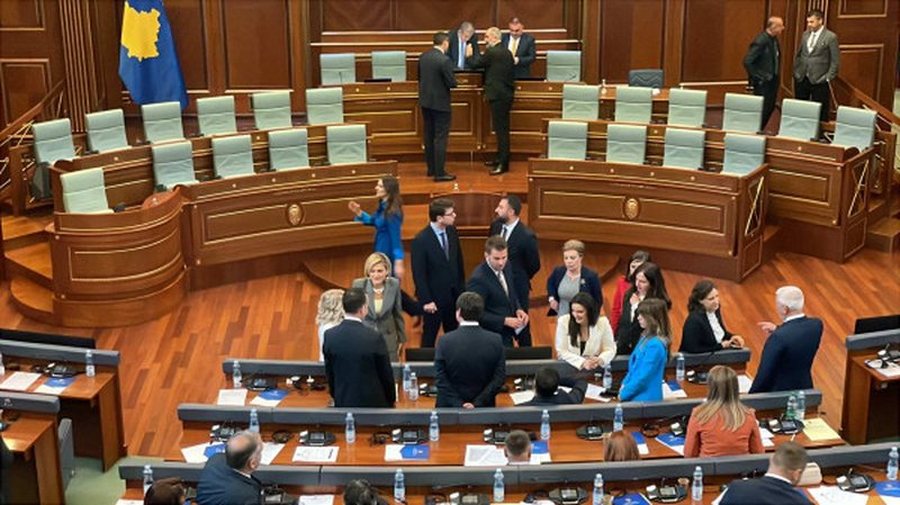
Albanian analysts see the political and institutional situation in Kosovo, as a result of the impasse in the Assembly, as quite worrying and with major consequences. They consider that one of the consequences is the non-inclusion of Kosovo in international agendas.
The failure to constitute the Kosovo Assembly is seen by political experts in Tirana as dangerous both in terms of Kosovo’s image and economic consequences. The former Albanian ambassador to Great Britain, Mal Berisha, told Radio Kosova that he considers the situation in Kosovo to be an act that he calls “stabbed in the back of one’s own neck.”
“I am very impressed that in that Assembly there is not a single MP who says: ‘away from the collective political madness that has gripped us’.” I expected at least one man there to come out and say that ‘if we are party slaves, let us not forget that above the parties, above us individually, above anyone else, is Kosovo, which is in great danger. The danger is no longer coming from Serbia, nor from historical enemies, but from those themselves, whom the people of Kosovo elected with the dignity they showed in the elections. In this regard, I am very critical and very disappointed,” he said.
Berisha also expressed his surprise as to “why Westerners have so far shown patience with the political class of Kosovo.”
“A kind of small dictatorship is being built in Kosovo, which is damaging Kosovo’s reputation so much that I fear that many of those who invested taxpayers’ money, put armies into service, helped Kosovo in rebuilding the country, in rebuilding democratic institutions, I am surprised that they have not yet lost patience, especially the United States of America, because there is no external factor that forces Kosovo’s politicians to do this action that they are doing. In this regard, I say that all parties are responsible. The election of the Speaker of the Assembly does not necessarily mean the formation of the Albin Kurti government, because they are different phases. But, to leave Kosovo without an Assembly at all and to put on that kind of two-three-minute performance every two days, is truly a performance that calls into question the question of “do Kosovars deserve the great help that the West gave them, when it sent troops, opened Bonsteel, liberated Kosovo?” To misuse this is to disappoint allies to the extent that one day they will say “you didn’t deserve this,” he added.
Tirana analyst Ben Andoni told Radio Kosovo that the current situation in Kosovo is extremely worrying in terms of the progress of many processes that await Kosovo.
“You know that in September Kosovo must approve in the Assembly the part related to the European Union development plan and Kosovo is eager for funds. On the legal side, I find it very worrying that the Constitutional Court took responsibility for the legal solution and legal interpretation, but did not sanction what will happen to it, if the political class of Kosovo does not decide to form the institutions,” said Andoni.
Another concern, according to Adoni, is the lack of Kosovo’s inclusion in international agendas.
“I see the situation as very worrying for the image of Kosovo, above all, Kosovo no longer has the image of a moral authority that it had before, which was the US and other QUINT countries, which are increasingly indifferent, except for Germany. The consequences are great and the biggest consequence is that Kosovo is increasingly off the agenda. The second consequence is the real consequence, which is related to the economic situation of Kosovo, as I said, there are austerity measures on Kosovo. Meanwhile, even for the Western Balkans Development Plan, Kosovo will now be deprived if it fails to approve the passage of the Plan in the Assembly to receive these funds,” he added.
According to Andoni, if Kosovo continues with this logic, then little by little it will remain a kind of “poor Taiwan” in the middle of the Balkans.