
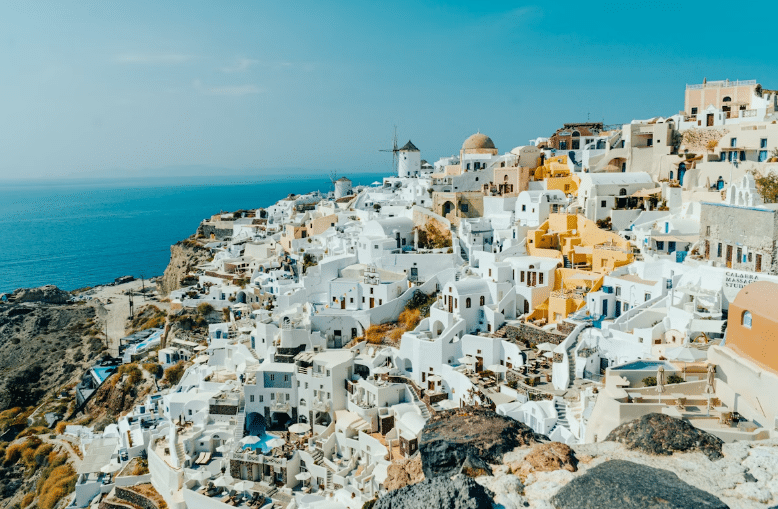
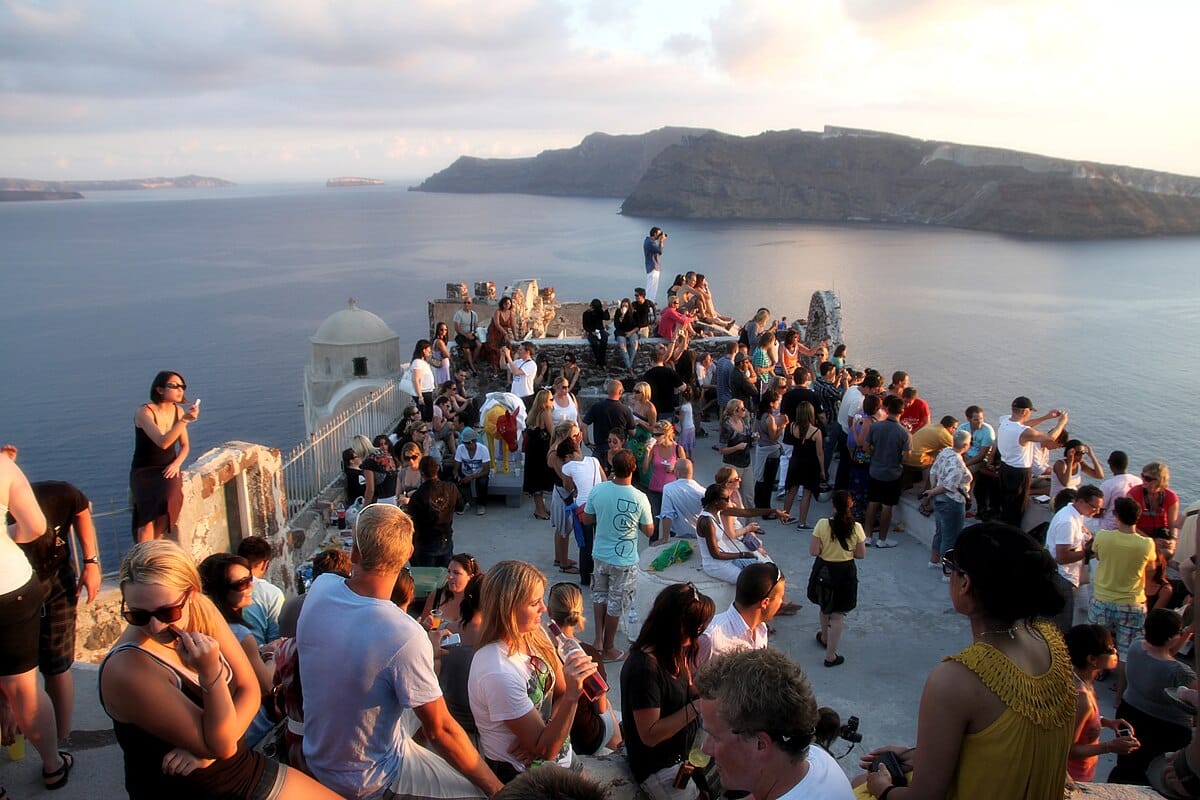
 Santorini. Credit: Yarl by CC 2.0 via Wikimedia Commons
Santorini, one of Greece’s most popular destinations, is experiencing a steep downturn in tourism revenues, raising concerns about the sustainability of its visitor-driven economy.
According to data from the Hellenic Statistical Authority (ELSTAT), accommodation and food service businesses on the island recorded losses of more than 20 percent in the second quarter of 2025 compared with the same period last year.
Regional differences in tourism in Greece: Santorini, Crete, and others
Nationally, the accommodation sector showed resilience. Revenues rose to €2.97 billion in Q2 2025, a modest 2.6 percent increase from €2.90 billion in Q2 2024.
The island of Corfu led growth with a 10.7 percent increase, while Chania on Crete posted a smaller rise of 2.7 percent. In stark contrast, Santorini posted a sharp 22.1 percent decline—the most dramatic drop in the country.
The food service industry fared even worse. Nationwide revenues fell 2.6 percent year-on-year, totaling €2.72 billion. Zakynthos bucked the trend with a 7.3 percent gain, but Santorini again stood out for the wrong reasons, with a staggering 21 percent contraction in its restaurant and dining sector.
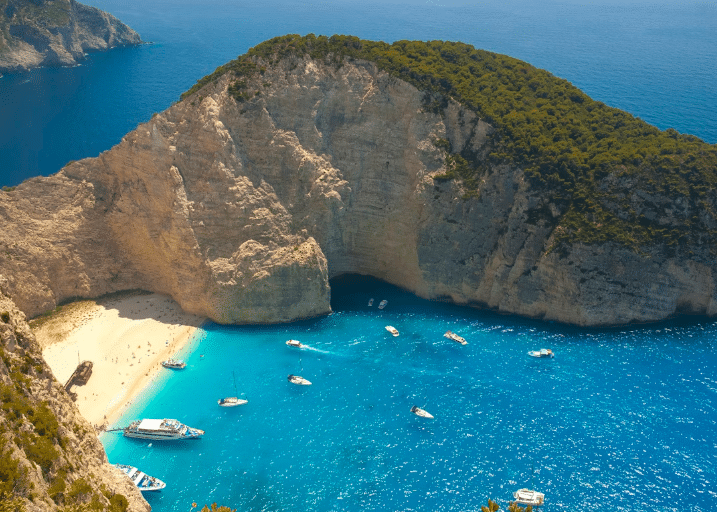
Aerial view of Navagio Beach on Zante, Cretid Unsplash – Andrey Chevard
New cruise passenger tax already in effect
Adding to the reshaping of Greece’s tourism economy, a new cruise passenger tax came into effect on July 1, 2025.
Designed to address overtourism and strengthen local infrastructure, the levy applies to cruise ship visitors at different rates depending on the destination and season. October and May can be shoulder season at some ports and low season at others, depending on the specific destination.
- Santorini and Mykonos (peak season, June–September): €20 per passenger
- Other Greek ports:
- Low season (October–May): €1
- Shoulder season (April, May, October): €3
- Peak season (June–September): €5
Revenues generated from the tax will be directed toward upgrading infrastructure, reducing environmental strain, and preserving the islands’ natural and cultural assets.
Balancing tourism and sustainability on Santorini, Greece
The sharp decline in Santorini’s accommodation and dining revenues underscores the volatility of Greece’s tourism sector at a time when sustainability has become a pressing concern.
While the new tax may initially raise concerns among local businesses about reduced arrivals, policymakers argue it is a necessary measure to protect destinations facing immense pressure from mass tourism.
As the summer season continues, the effectiveness of the tax and the resilience of local businesses will be closely monitored. For Santorini, the challenge lies in stabilizing its revenues while embracing a more sustainable tourism model that safeguards the island’s global appeal.