
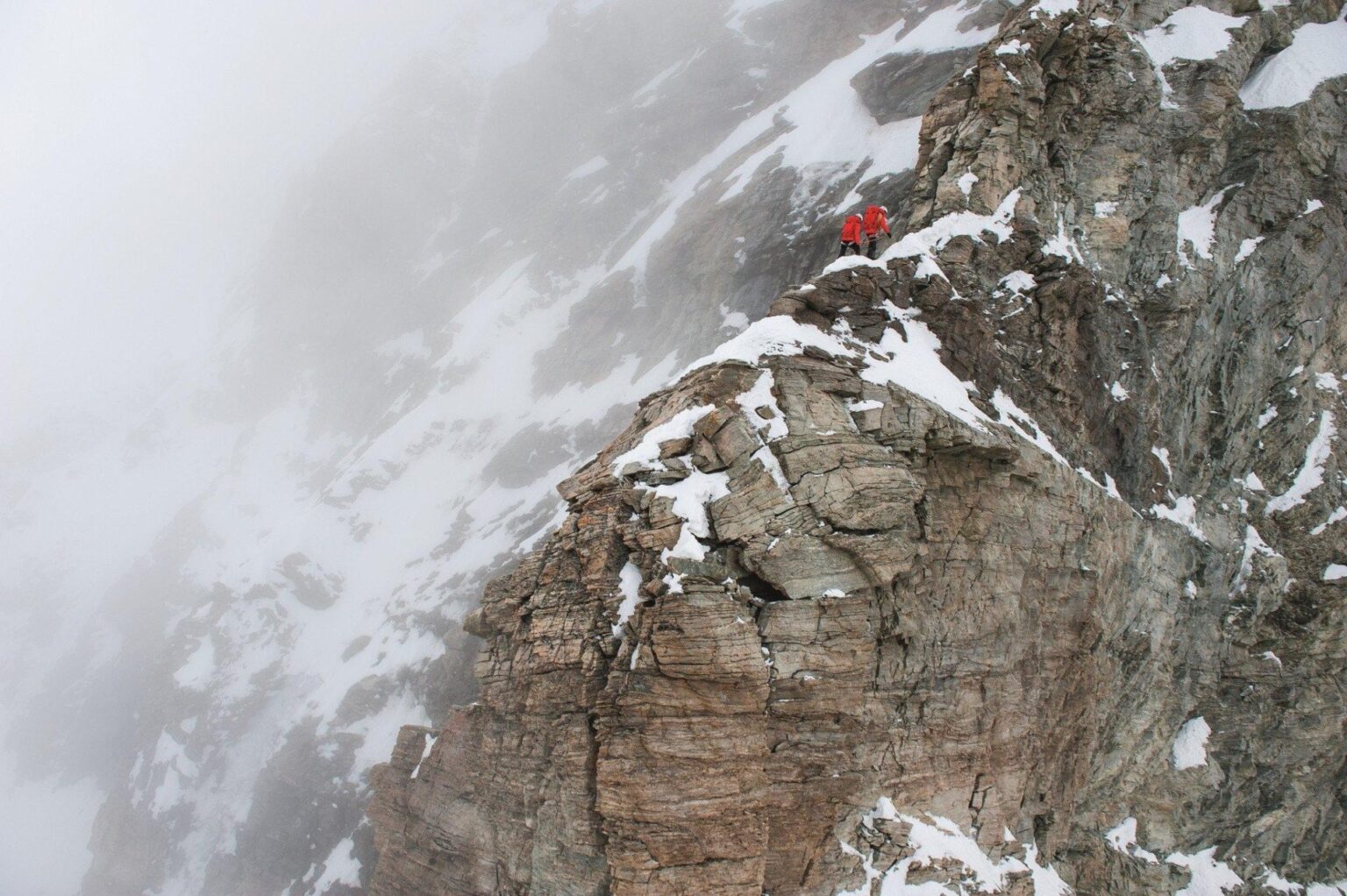
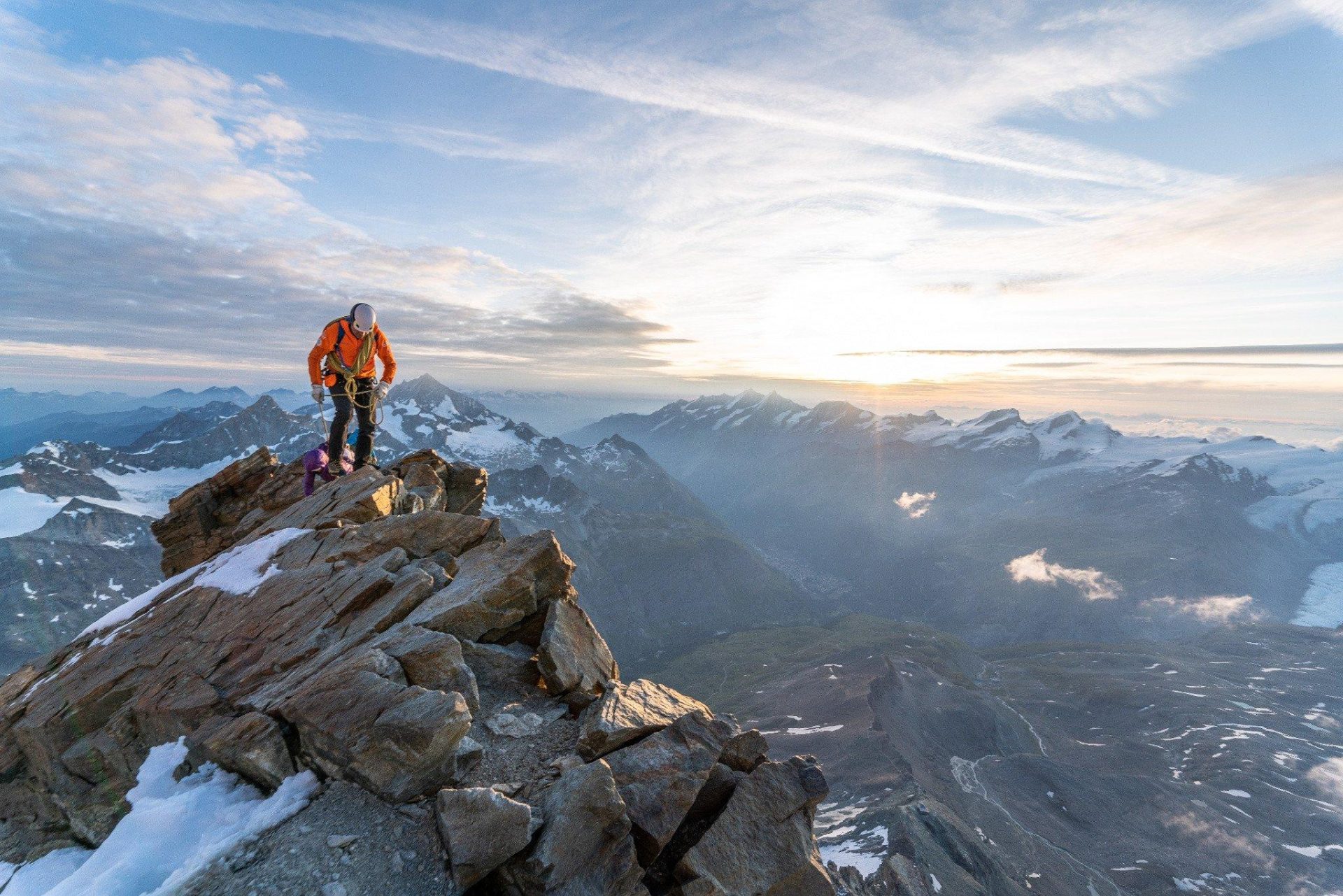
 The ascent of the Matterhorn is the most difficult climb in the Alps. | Image: Zermatt Tourism
A 58-year-old climber from South Korea died on August 24, after falling during his descent of the Matterhorn, Switzerland, the cantonal police of the canton of Wallis/Valais shared in a press release.The accident occurred around 4 p.m. on Sunday, August 24, as two mountaineers were making their way down the Hörnligrat, the mountain’s famed northeast ridge. At an altitude of about 4,000 meters (13,123 feet), one of the climbers fell for reasons that are currently still unclear.
The Korean hiker’s partner immediately called for help, and rescuers from the Cantonal Valais Rescue Organisation (KWRO144), flown in by an Air Zermatt helicopter, reached the site shortly afterward. The climber was pronounced dead at the scene. The Valais prosecutor’s office has opened an investigation into the circumstances of the fall. The identity of the deceased Korean hiker has not been revealed by the Swiss authorities in line with Swiss privacy laws.
The Hörnligrat is known as the “normal route” to the Matterhorn’s summit at 4,478 meters (14,692 feet). The route along the ridge is primarily gneiss—a metamorphic rock—which can be more prone to rockfall, particularly when it is highly fractured or weathered, as minerals and tectonic deformations within the rock can create weaknesses that accelerate weathering and fracturing, making it susceptible to the freeze-thaw cycles that trigger rockfalls. Zermatt Tourism recommends using a guide for the Matterhorn climb along the Hörnligrat. Climbers typically begin the ascent from the Hörnli Hut bivouac at 3,260 meters (10,039 feet) after a pre-dawn wake-up.
Despite the designation as “normal route,” the ridge is regarded as one of the most challenging classic climbs in the Alps. According to Zermatt Tourism, the route “requires outstanding fitness and experience in rock climbing with and without crampons” and is “only suitable for well-versed mountaineers accompanied by a mountain guide.” On the descent, fatigue often makes the route even more perilous.
The Hörnligrat ridge has been a proving ground for alpinists since 1865, when the first ascent of the Matterhorn took place via this route. The route passes landmarks like the Solvay Hut, a small emergency shelter built at 4,003 meters, before reaching the twin summits — the Swiss summit at 4,478 meters and the Italian summit just one meter below. The Matterhorn is one of the Alps’ most iconic but treacherous peaks and even a small deviation from the route can expose climbers to rockfall or fatal slips. Since the first ascent in 1865, over 500 people have died while climbing the Matterhorn, making it one of the deadliest mountains in the world. In recent years, an average of about 8-12 people die each year on the Matterhorn ascent or descent.
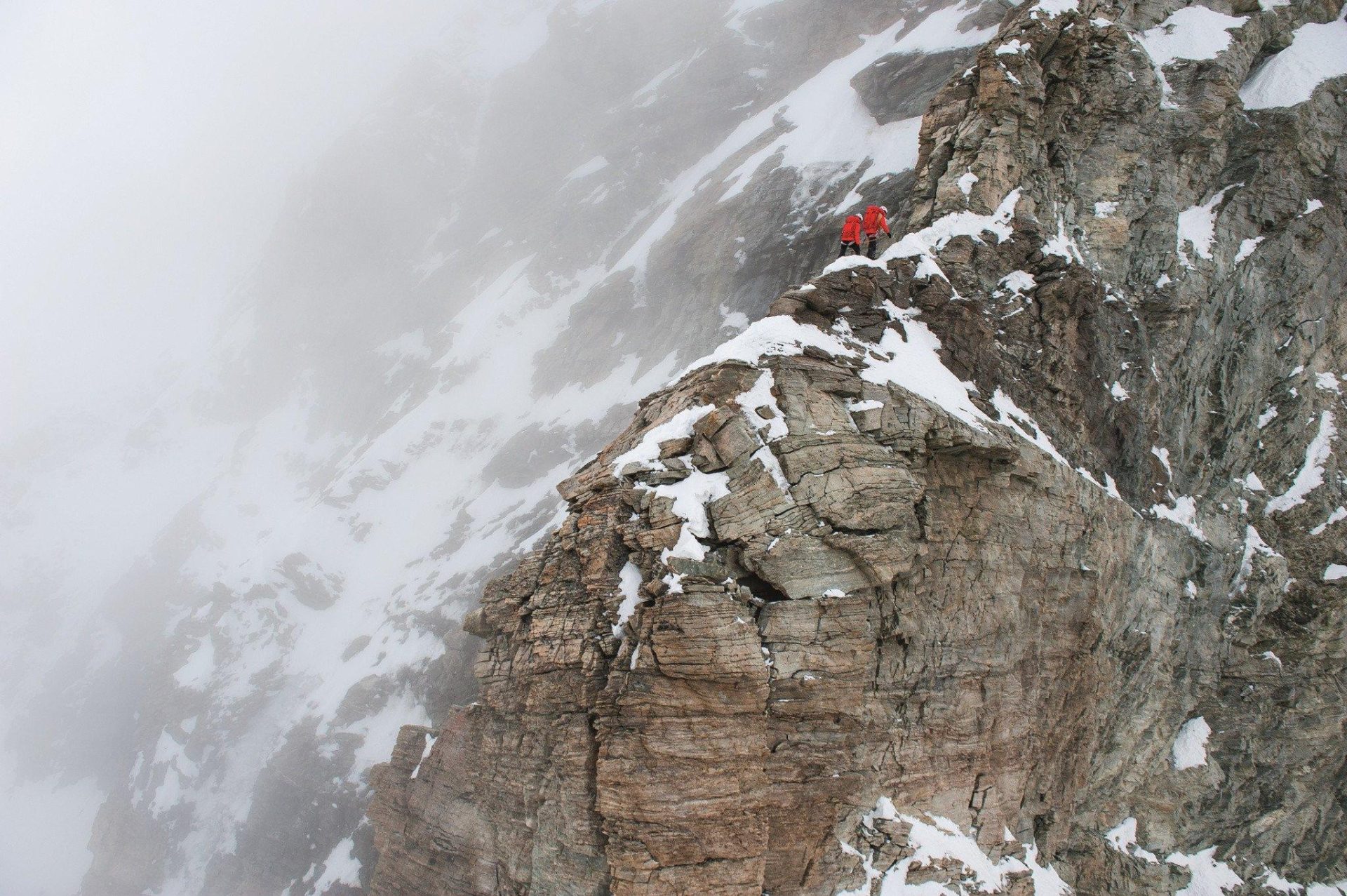 Climbers on the Hörnligrat Ridge. | Image: Zermatt Tourism