
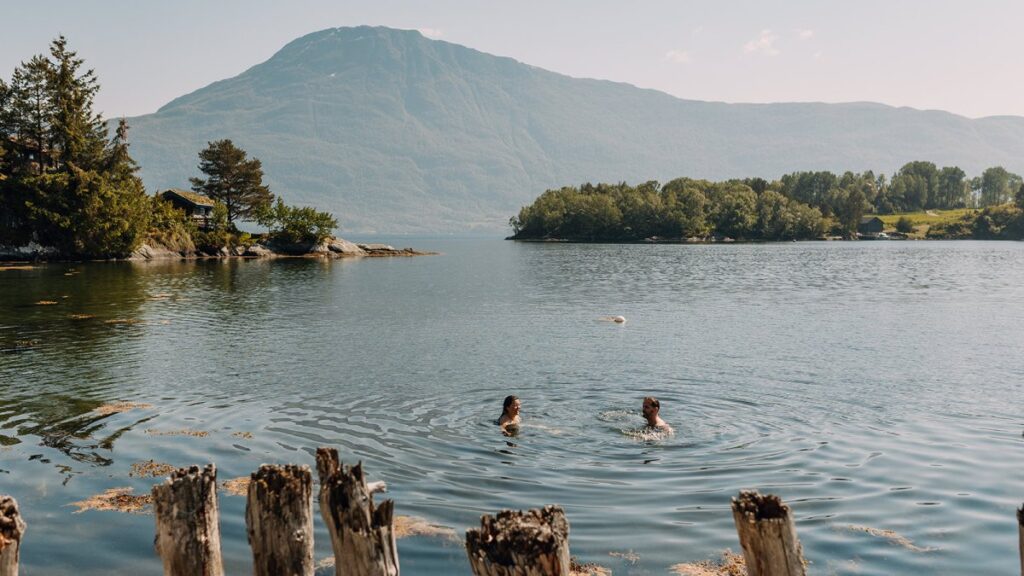
Norway’s national pastime unites some of its most famous citizens, from the pre-eminent 19th-century playwright Henrik Ibsen and Roald Amundsen, the first man to reach the geographic South Pole, to Morten Harket, frontman of the Eighties pop band A-ha, and Erling Haaland, one of the world’s leading footballers. Yet I wasn’t entirely sold on it until I discovered that it involves chocolate.
Friluftsliv (pronounced free-loofts-liv) loosely translates as “the open-air life” and is the ancient Norwegian belief in the value of time spent in nature. It’s a flexible philosophy, so taking a hike, kayaking, picking berries or even swinging in a hammock qualify as expressions of friluftsliv. That may sound suspiciously vague but a growing body of scientific studies support the Norse instinct that being alfresco rather than aldesko improves mental and physical wellbeing.
Admittedly friluftsliv is trickier to pronounce than the better-known Danish feelgood concept of hygge (feeling snug as a bug indoors) but it’s too late to pick a fight with Ibsen about that. For it was the writer who first committed the word to print in his 1859 poem On the Heights.
Cemented in the Norwegian cultural psyche by Ibsen, friluftsliv encouraged Amundsen to explore and Harket to become an environmental campaigner. The singer was instrumental in introducing electric vehicles to the country, which has the highest proportion of EVs worldwide, while for the Gen Zer Haaland, the concept means meditating on a river rock during his summer break. If nothing else, picturing the football hard man Roy Keane’s face on hearing what Haaland gets up to on holiday brings me great joy.
• 10 of the best places to visit in Norway
Friluftsliv is no laughing matter in Norway, however. The principle is not only enshrined in law, giving citizens the right to roam so long as they leave no trace, it’s a recognised university degree course. But back to chocolate.
Embracing friluftsliv in the southwest of Norway
I’m testing out the therapeutic claims of friluftsliv in the southwest of the country, and within minutes of arrival I begin to understand why nine out of ten Norwegians practise it regularly. Norway is effortlessly beautiful. About 40 per cent remains blissfully untouched, offering screensaver landscapes that manage to be epic and thrillingly intimidating in their scale yet intimate and easily accessible from its cities.
This is ably demonstrated en route to my first stop, the Storfjord Hotel outside Glomset, a southwestern village that feels ends-of-the-earth escapist but is 45 minutes’ drive from Alesund airport. I pass sprinkles of timber cottages with turf roofs and painted in primary colours, wedged between mighty fjords and fairytale forests. It’s magical.
• 16 of the best hotels in Norway

The fjord view from the Storfjord hotel
The hotel, which has hosted Bill Gates among other A-listers, brings boutique classiness to the backwoods. The staff are so wholesome and good-looking I imagine they must arrive at work every morning after showering under a waterfall and foraging for their breakfast. The 30 cabins are clad in warm-toned woods with greige furniture and stylish wood-burners. It’s tempting to stay put but the snow-clad peaks of the Sunnmore Alps and the gaping jaws of Storfjord, at 68 miles one of the longest of the country’s 1,200 fjords, lure me outside.
Soon I’m soaking in that wall-to-wall ethereal scenery — literally. I’ve been drenched by a sudden downpour.
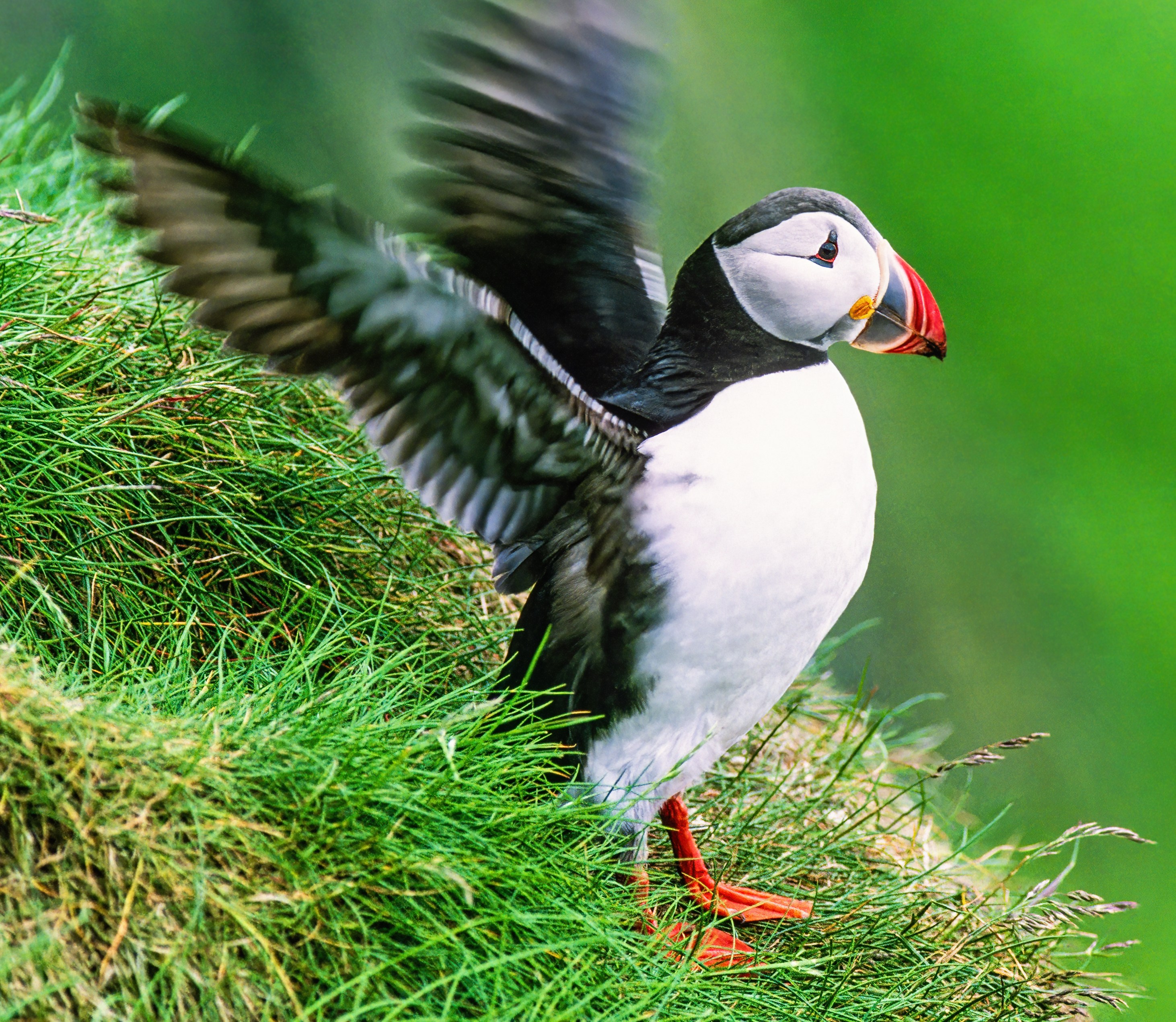
Visitors can spot puffins on the Lofoten Islands
GETTY IMAGES
Hiking in the Sunnmore mountains
I’m on a hike up Haugtua with the hotel’s guide, Helge Karbo. I gulp in pine-scented air, use mossy tree roots as stairs and twisted trunks as handrails. Delicate lichens, festooned across the branches, distract me from the icy trickle running down my neck. Well, almost. My lightweight puffer jacket is so waterlogged the down is forming soggy clumps.
Karbo, snug in a hooded rain jacket, is spectacularly unbothered that I’m turning into a drowned rat. I try to elicit sympathy by theatrically wringing out my beanie. “There’s no such thing as bad weather, only bad clothing,” Karbo says matter-of-factly, adding: “Norwegians think nothing of sleeping outside in freezing conditions.”
• 16 of the best Norwegian fjords cruises for 2025 and beyond
This is true, if scant consolation. According to Statistics Norway, 25 per cent of Norwegians spend a night outdoors annually but I doubt their jackets are from Uniqlo. I make another plea for pity, wistfully mentioning my Gore-Tex jacket back home. Karbo raises an eyebrow. “[The mountaineer] Nils Petter Faarlund says we shouldn’t wear synthetic fabrics. We should keep everything natural.”
Faarlund helped to reinvigorate interest in friluftsliv in the 1970s and was the driving force behind its elevation to an academic subject. Karbo, a friluftsliv graduate, quotes Faarlund often. After initial reservations because of his sartorial intransigence, I grow to like the sound of Faarlund, now in his late eighties. The old eco-warrior dislikes tech on walks, especially earbuds. I agree that birdsong is better. He disapproves of competitiveness. Me too — and not only because I never win. When I hear of his disdain for adrenaline-fuelled pursuits he’s nearing hero status in my eyes — I am 110 per cent risk-averse.
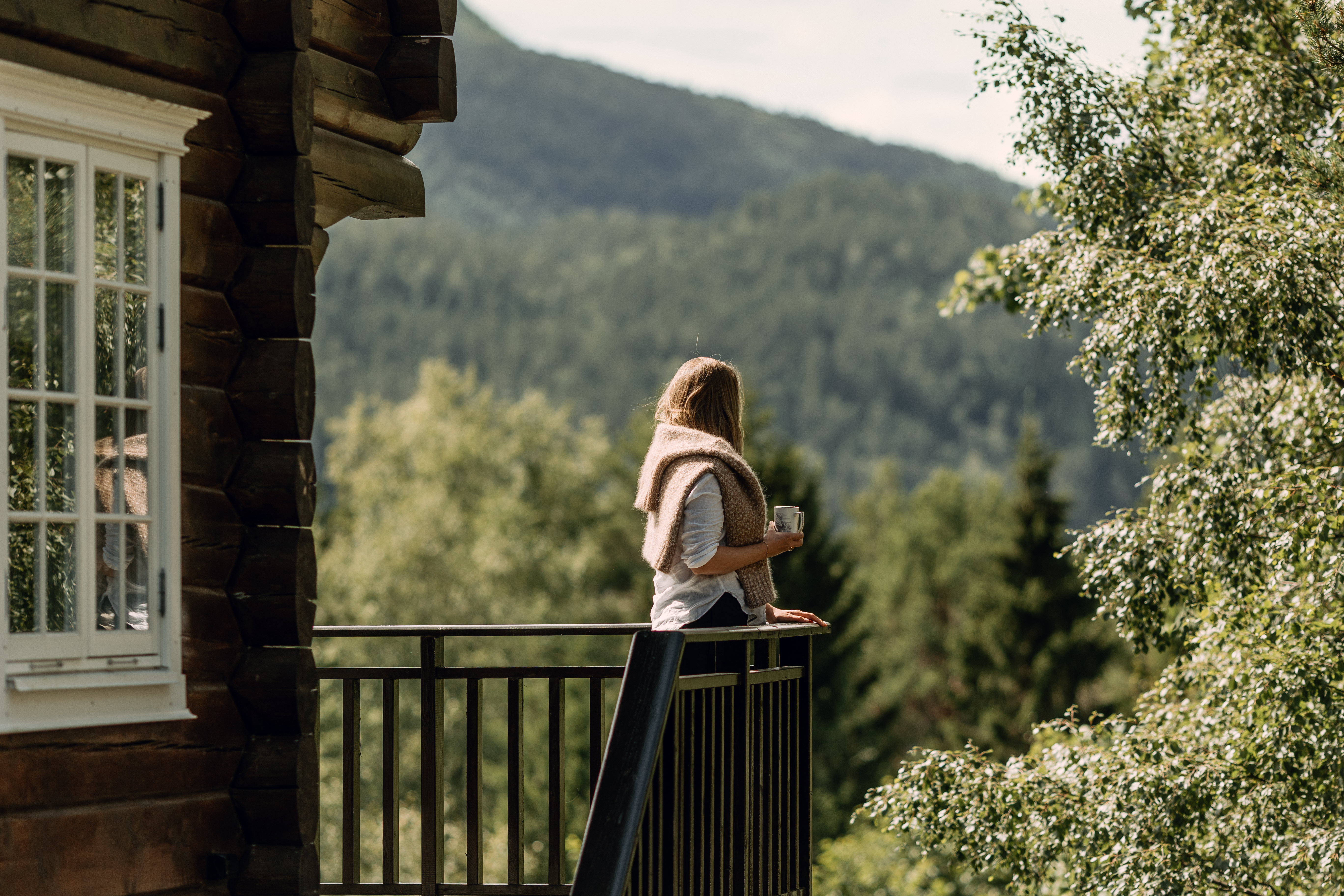
Another back to nature view from a cabin balcony at the Storfjord hotel
MARY & KLOUDA
And then the chocolate appears to seal the deal. At Haugtua’s summit Karbo opens his backpack and produces a flask of coffee and something that looks like a KitKat. “Is that a KitKat?” I ask. “I doubt Nils Petter Faarlund would approve of eating that.”
Karbo smiles. “He would. This is a Kvikk Lunsj. It’s only sold in Norway and it’s the traditional friluftsliv snack.” The inside of the wrapper even outlines the friluftsliv guidelines: dress for bad weather (bit late) and take it easy.
You have to love a nation that has chocolate as a requisite element of its wellness ethos. I eat, I sip, I barely notice the rain any more because I am so entranced by the wispy strands of mist playing kiss chase with the mountain peaks. Friluftsliv is clearly working its charms on me.
The Hotel Union Oye has a sauna on a fjord and great food
The next day I head further down the southwest coast to the hideaway hamlet of Oye and the 38-room Hotel Union Oye, a red and cream half-timbered Victorian chalet, its impressive architecture an elegant foil to the jagged peaks behind. Its swagged and gilded interiors are a maze of museum-quality memorabilia, including a piano where Edvard Grieg composed, a writing desk used by Karen Blixen and golden goblets owned by Kaiser Wilhelm.
The friendly team suggest cruises, hikes and ebikes but I opt for a do-nothing date with what is surely the ultimate friluftsliv experience: the hotel’s glass-fronted sauna on Hjorundfjord, a short stroll away. I idle an afternoon away heating up, then cooling down, in its glacial water, which has a dreamy emerald shimmer reflecting the fjord’s blanket of pine trees. Elsewhere, virginal white cascading waterfalls scour the grey rock and intensely coloured rainbows perk up the sky. I feel refreshed and at peace, and after dinner, which includes satisfyingly earthy venison with seabuckthorn, baby carrots and broccolini in the hotel’s candlelit conservatory, I sleep like a baby.
The Svinoya Rorbuer resort in Svolvaer is the gateway to the Lofoten islands
Boats, planes and automobiles transport me the 750 miles, give or take, to the far northwest and my final base: Svinoya Rorbuer in Svolvaer, the gateway to the otherworldly Lofoten archipelago above the Arctic Circle. The resort is a collection of nine rust-red fishermen’s cabins and 14 traditional houses and apartments. My cabin has painted tongue-and-groove walls, pitched ceilings and enough sheepskin to hold its own in a hygge-off. The accommodation hunkers down beside a working harbour where I can see — and smell — stockfish being wind-dried on wooden racks as I head for dinner.
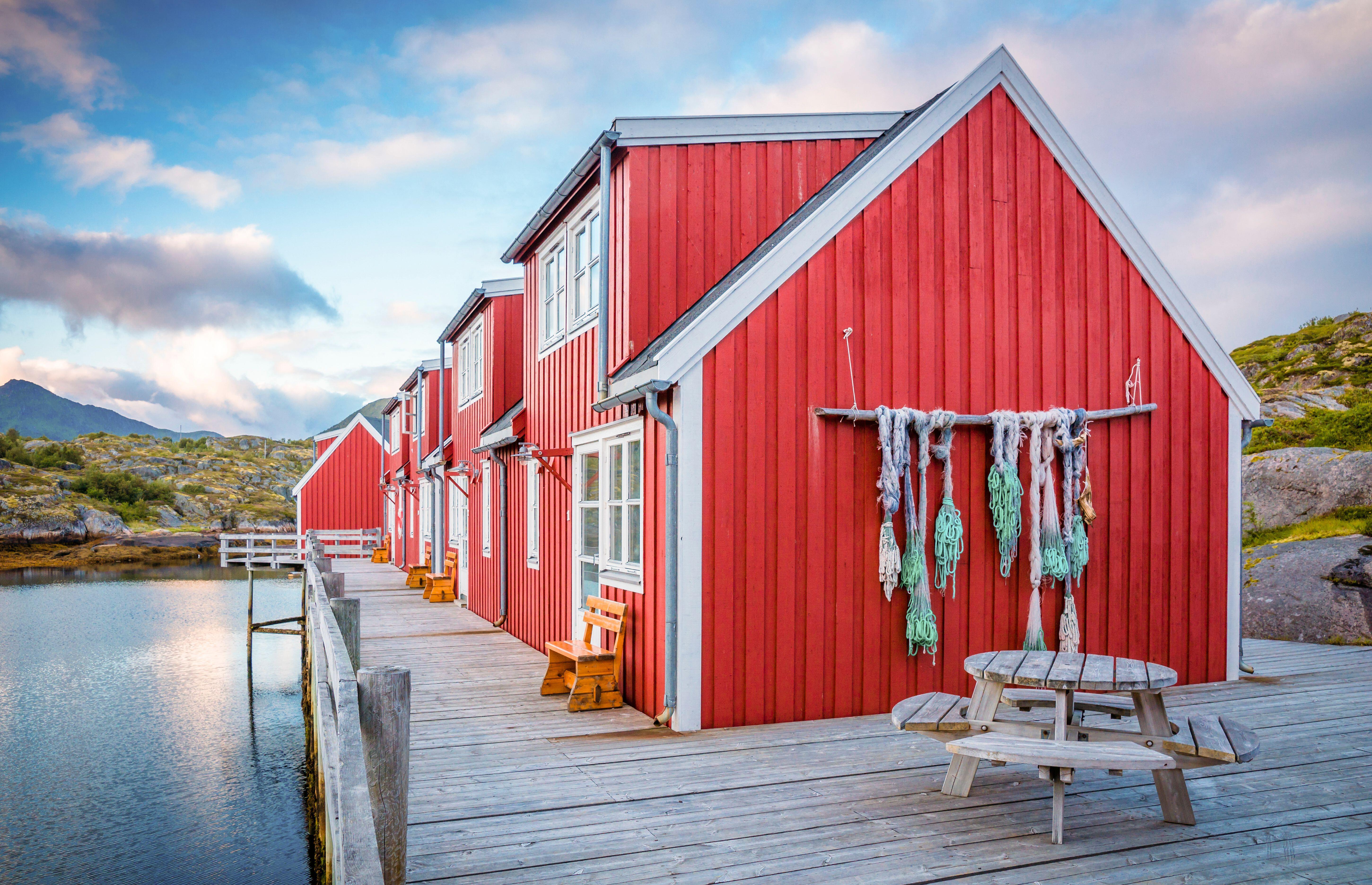
Traditional rorbuer cabins in the Lofoten Islands
ALAMY
I try the traditional dish of stockfish with egg butter, carrot stew, bacon and potatoes. The polite way to describe it is an acquired taste — but the locals are scraping their plates.
Kabelvag has wild, untamed scenery and wildlife
The next morning it’s snowing softly as my new guide, Odd Krane from Lofoten Aktiv (lofoten-aktiv.no), and I drive ten minutes through more untamed scenery to Kabelvag, which lays claim to being the oldest fishing village in Lofoten, dating from Viking times. We snowshoe through woods and across a frozen lake (me a little reluctantly). It’s my first time snowshoeing. It’s easy to master and makes light work of clambering up slopes and sliding down the other side. We stumble across an unlocked shelter that Krane says is used for overnight friluftsliv stays. It’s functional except for a log book where guests wax lyrical about sightings of kittiwakes, cormorants and even moose.
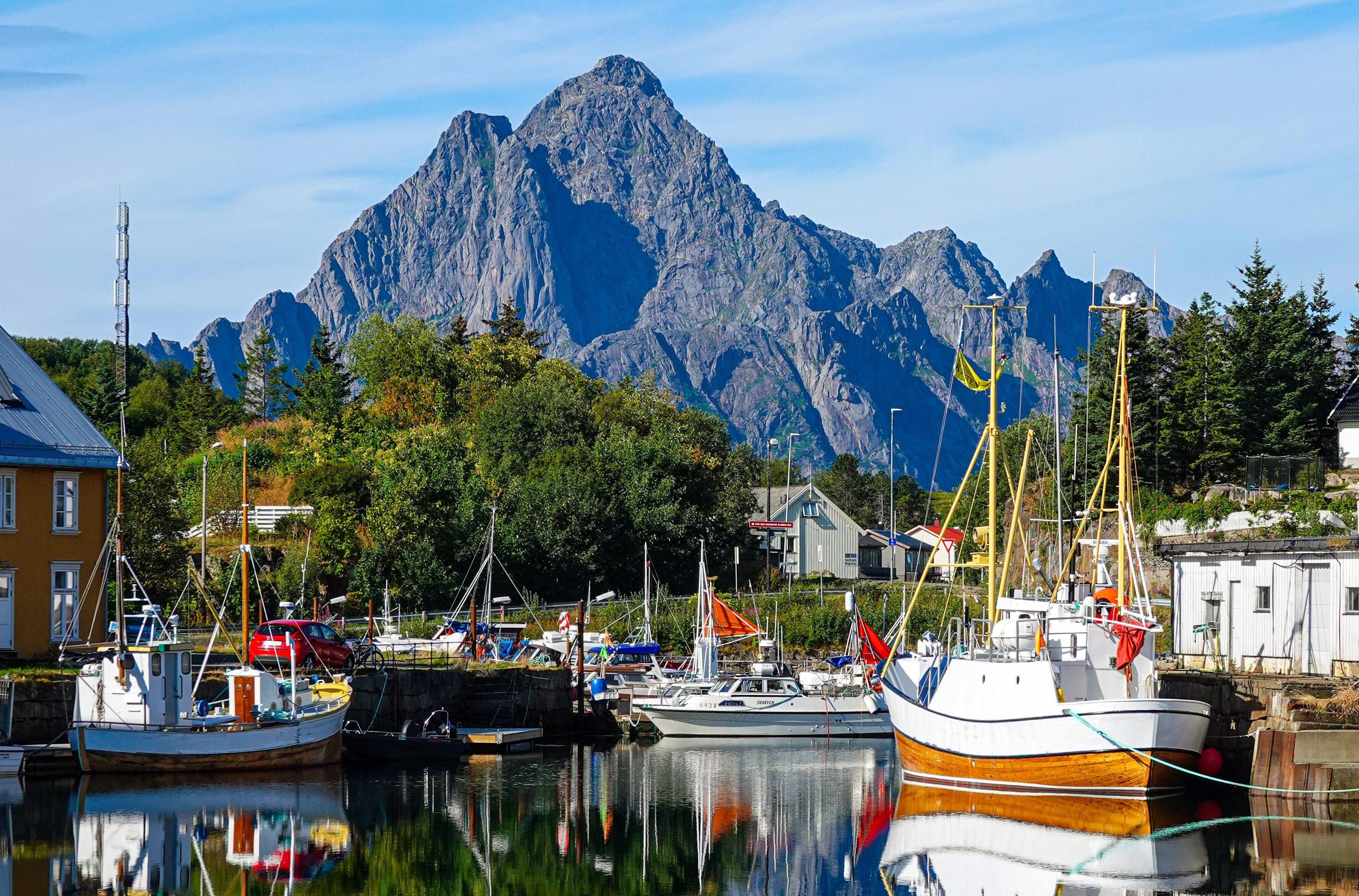
Kabelvag on the Lofoten Islands
ALAMY
Kayaking on Orsnes bay and spotting a sea-eagle
The morning is enchanting. That afternoon we make a 15-minute drive to Orsnes bay to kayak. As we leave the van I spot Krane’s keys still in the ignition. “Oh, we don’t lock cars here, or houses,” he says. We paddle the pretty coastline, the only sounds the swish of water through our oars and the wing flap of a white-tailed sea eagle as it swoops to pluck an unlucky fish from the depths. Krane has seen seals, puffins, otters and whales, though a swimming moose remains his favourite close encounter. I haven’t thought about anything for hours and feel utterly content.
• Discover our full guide to Norway
As we head back to the hotel Krane points out the Svolvaer Goat. Not a mammal but two 150m pillars of rock shaped like goat’s horns on the side of 590m Mount Floya. “People jump the 1.5m gap from one horn to the other,” Krane tells me. Apparently a nine-year-old did it a few years back. He asks mischievously if I’m up for the challenge.
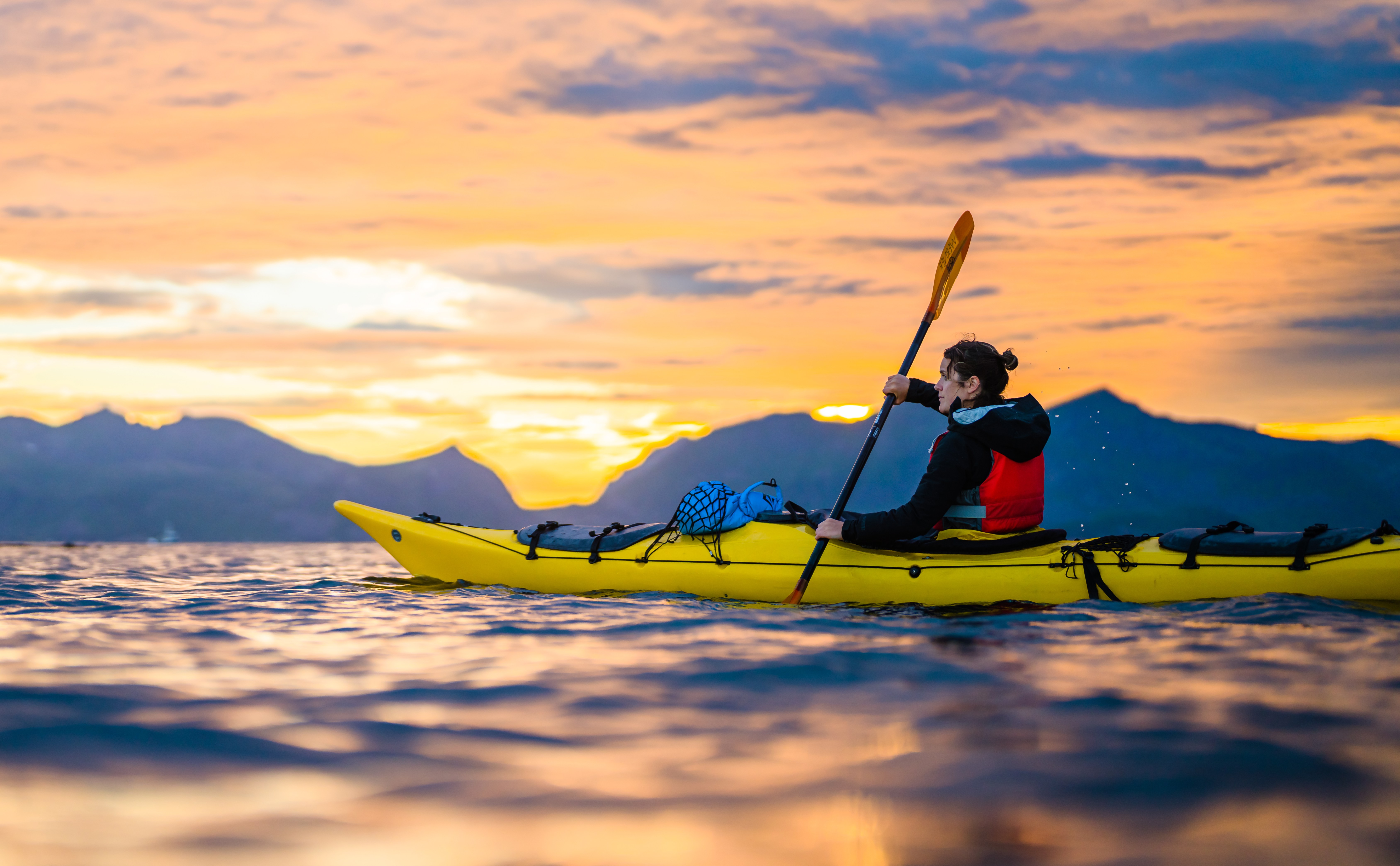
Kayaking along the coast of the Lofoten Islands
GETTY IMAGES
I explain that obviously I could do it but I’m guided by Nils Petter Faarlund on all matters outdoorsy and a scare-yourself-stupid leap just doesn’t sound very friluftsliv-ish. So I decline, zip up my by-now badly misshapen puffer jacket, reach for my Kvikk Lunsj and reflect that I could get used to this friluftsliv lifestyle. Mentally and physically, I feel great.
Susan d’Arcy was a guest of Scott Dunn, which has six nights’ B&B — including two nights at Svinoya Rorbuer, one at Storfjord Hotel, two at Hotel Union Oye and one in Alesund — from £5,909pp, including flights and transfers (scottdunn.com)
Have you visited Norway? Share your reflections in the comments