
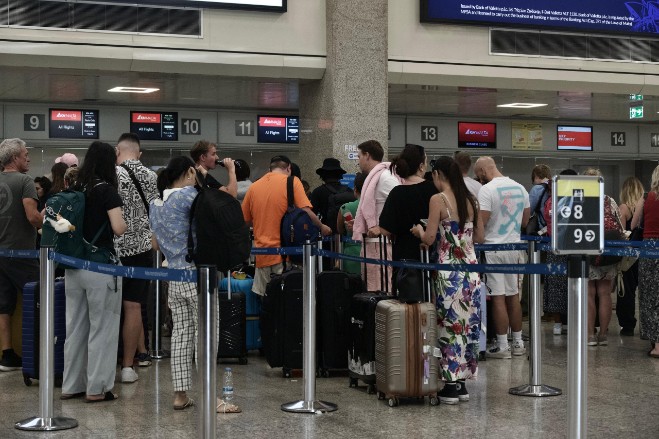
 Photo by Miguela Xuereb
Malta’s reliance on mass tourism is eroding residents’ quality of life, according to ADPD–The Green Party, which has called for urgent reforms, including stricter regulation, a review of carrying capacity, and the transfer of eco-tax funds to local councils.
Party chairperson Sandra Gauci said residents in heavily visited towns such as St Paul’s Bay, St Julian’s, Sliema and Swieqi are suffering from noise, litter, overcrowding and anti-social behaviour.
She blamed lax enforcement and the marketing of Malta as a “party island” for worsening the situation, accusing the authorities of prioritising economic gains over community wellbeing.
Eco-tax reform
Gauci noted that the St Paul’s Bay Local Council recently approved her motion requesting that the tourist eco-tax be channelled directly to councils hosting visitor accommodation.

She argued that such funding is essential for towns burdened by mass tourism, which adds strain on infrastructure such as sewage systems. Despite opposition from Labour councillors, Gauci said she was encouraged by the support her proposal received.
ADPD secretary general Ralph Cassar pressed for further changes, describing the current €5 ceiling on the tax as “ridiculous”. He called for the 50-cent daily charge to be increased in line with the costs imposed by tourism, urging Tourism Minister Ian Borg to act without delay.
Hotel expansion and overtourism
The Greens are also demanding an end to the policy that allows hotels to add two extra storeys beyond local plan limits.
With official figures showing an 8.1% rise in hotel guests during the second quarter of 2025 compared with last year, the party said the island already has more than enough beds.
Cassar warned that government policies, including the Vision 2050 target of 4.5 million tourists annually by 2035, are driving overtourism. He urged the administration to abandon that goal and instead commission an updated study on Malta’s tourist carrying capacity, citing previous work by the Malta Hotels and Restaurants Association.
The party also questioned how many apartments built as homes are being used illegally for short-term holiday lets.
It called for tighter controls, insisting that local councils must have a decisive say before residential properties are converted into tourist accommodation.
Summary of ADPD proposals:
- Raise the eco-tax above 50 cents per day and abolish the €5 cap.
- Allocate eco-tax revenues directly to councils, in proportion to visitor numbers.
- Scrap the policy allowing hotels to build two additional floors.
- Commission an urgent carrying-capacity study and withdraw the Vision 2050 target of 4.5 million annual tourists.
- Prevent residential apartments from being used as tourist accommodation without council approval.

