
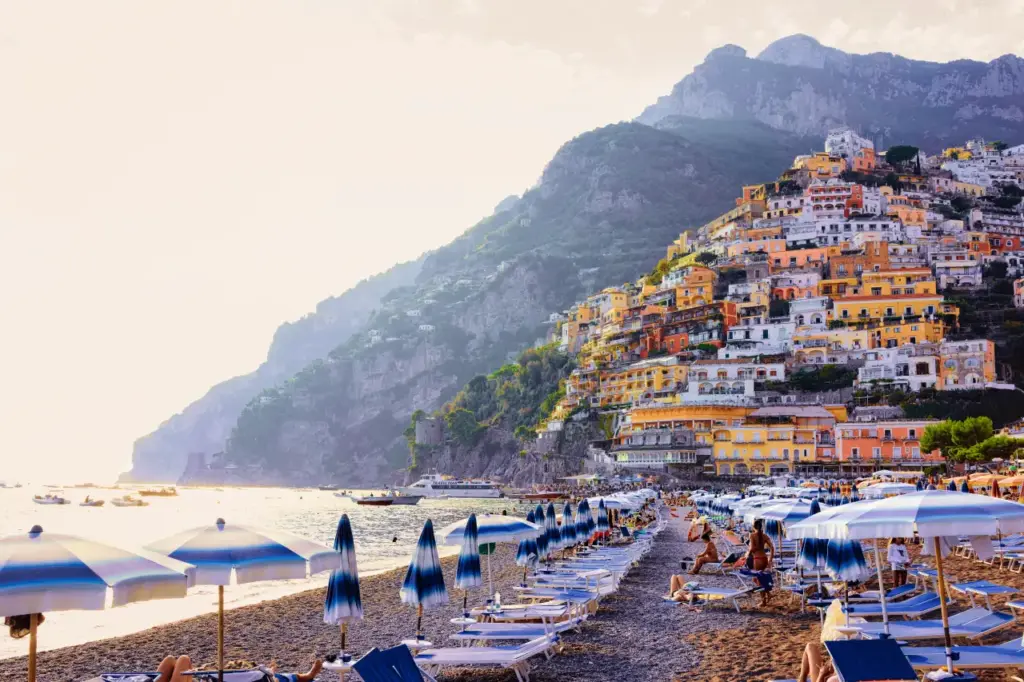
Italian beaches are seeing a sharp drop in visitor numbers this summer, with industry groups estimating a decline of up to 30% compared to last year.
While the downturn has been linked to high prices and changing travel habits, operators and associations remain divided over the real causes.
Industry managers say the decline is not new and reflects broader shifts in tourism behavior since the COVID-19 pandemic. Operators report that weekend business remains strong but no longer offsets weaker attendance during the week, as long-term rentals have given way to shorter stays.
Operators highlight changing travel patterns
Antonello Chiappini, manager of the Molto beach club in Ladispoli, said Euronews that the decline is part of an ongoing trend. “Since the pandemic, we’ve noticed a new trend: tourism mainly increases over the weekend compared with weekdays,” said Chiappini. He explained that tourists no longer rent properties for one or two months as in the past, reducing consistent demand across the week.
Chiappini also noted that while beach club revenues improve on weekends, they fail to compensate for weekday losses. Rental costs, he said, are a bigger factor than beach tariffs in shaping visitor decisions. “More than beach club tariffs, it’s rental prices that have gone up,” he said.
Price stability at beach clubs
Despite widespread concerns about costs, operators argue that tariffs have remained relatively stable. Federbalneari, a national association, stated that average tariffs have increased by around 20% since 2012, which it describes as modest compared with overall inflation. Chiappini confirmed that his own club’s tariffs have not changed since 2022.
At Molto beach club, a standard umbrella with two sunbeds costs €25 per day, while an umbrella with one sunbed costs €18. Regular customers interviewed by Euronews said they appreciated the consistency. “Here tariffs have stayed the same, or at least they’re quite moderate,” said one woman. Another customer added: “Here prices haven’t changed compared with previous years. But I know in other beach clubs they’ve spiked, and it’s annoying.”
Ongoing policy disputes
Beyond local business concerns, the debate over Italian beach tourism has a political dimension. Tariffs are not formally regulated, and private concessions granted without time limits have been blamed by some groups for keeping costs elevated. The issue has fueled ongoing tensions between Rome and Brussels over the application of the European Union’s Bolkestein directive, which seeks to liberalize service sectors.
As the summer season continues, operators, associations, and policymakers remain at odds over how to balance visitor affordability with the economic realities facing Italy’s coastal tourism industry. The disagreement underscores the wider challenges of adapting post-pandemic tourism patterns to longstanding structural issues on Italy’s beaches.
Top Italian beaches popular among tourists
While some resorts are reporting fewer visitors this year, Italy remains home to some of Europe’s most famous coastal destinations. From the Amalfi Coast to Sardinia, certain beaches continue to attract strong international demand.
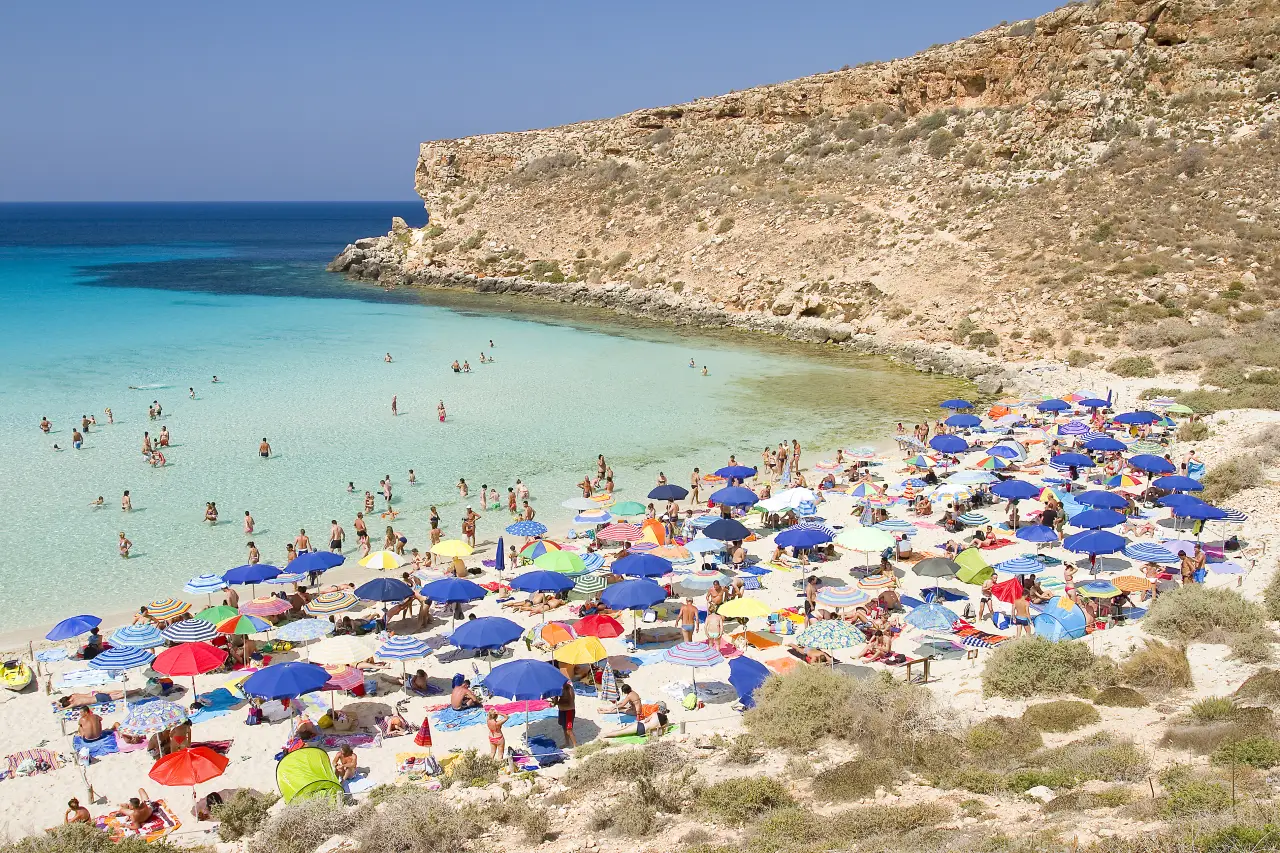 Crowded Spiaggia dei Conigli beach on Lampedusa Island. Photo Credit: Natursports / Shutterstock.com
Spiaggia dei Conigli, Lampedusa: Frequently ranked among the world’s most beautiful beaches, this stretch of sand in Sicily’s Pelagie Islands is known for crystal-clear waters and protected marine life, including loggerhead sea turtles.
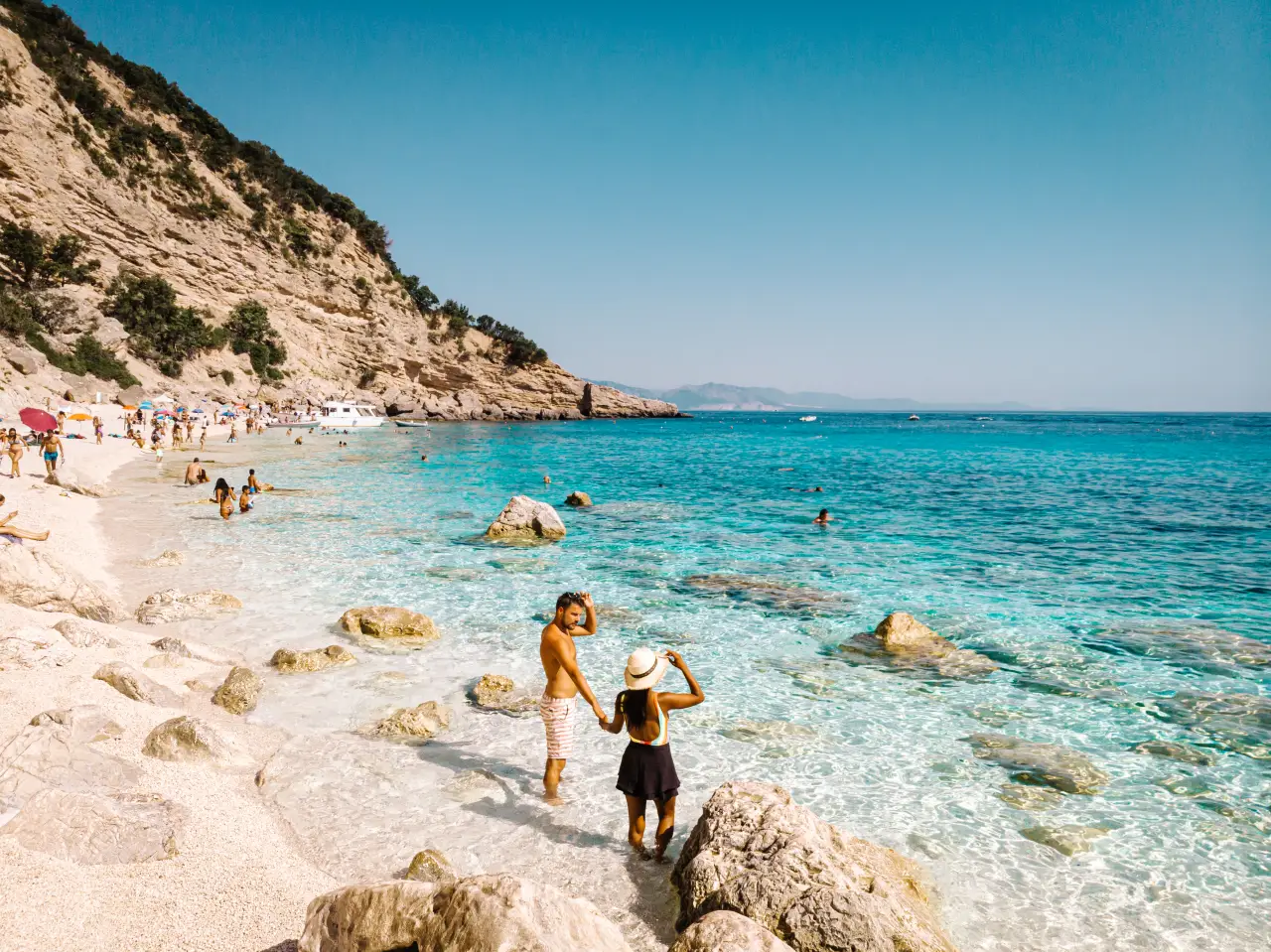 Tourists enjoy Cala Mariolu beach in Sardinia, Italy. Photo Credit: fokke baarssen / Shutterstock.com
Cala Mariolu, Sardinia: Located on the Gulf of Orosei, Cala Mariolu is popular for snorkeling and diving thanks to its turquoise water and striking limestone cliffs. Its remote setting is a major draw for adventure travelers.
Positano Beach, Amalfi Coast: A signature image of Italy’s coastline, Positano combines pastel-colored cliffside houses with a lively beachfront. Tourists continue to flock here despite high prices and limited space on the sand.
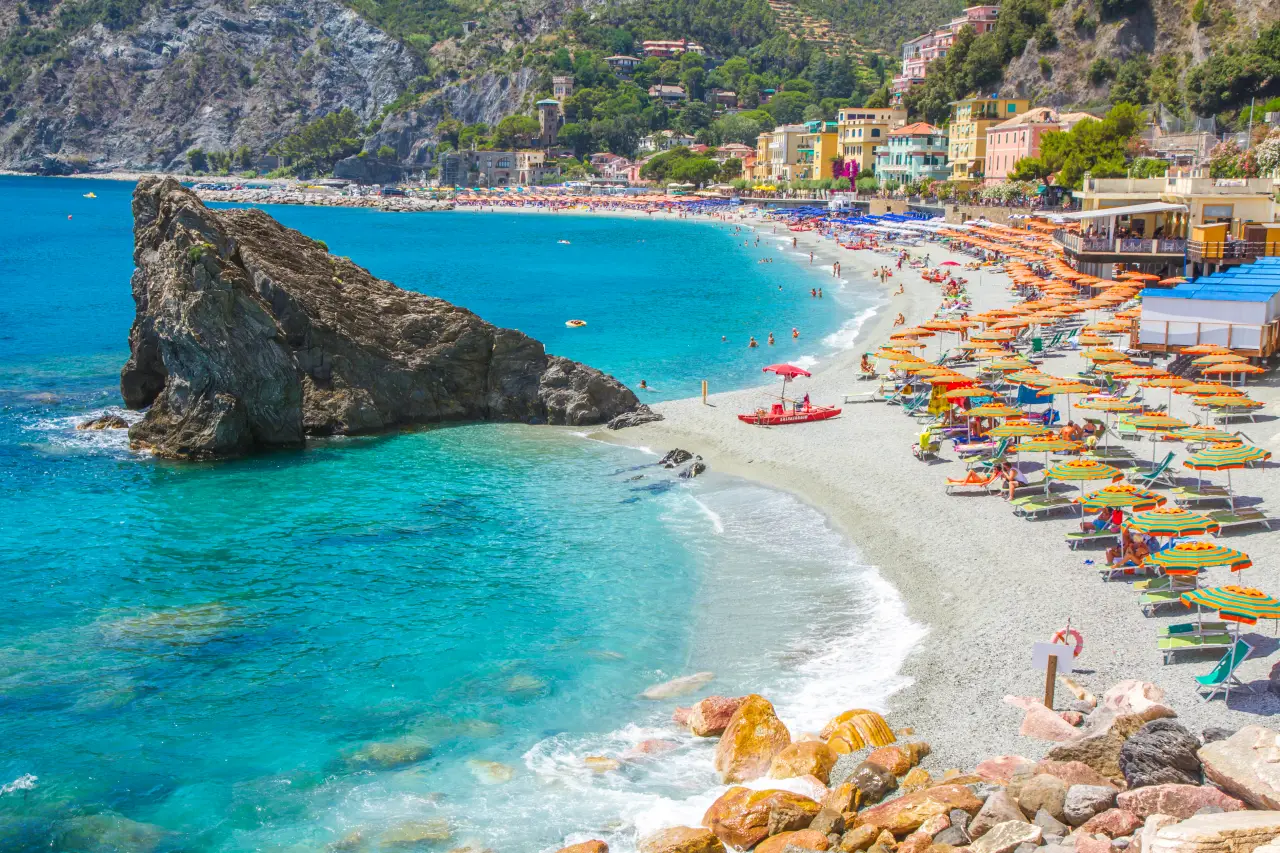 Picturesque coastal village of Monterosso al Mare, Cinque Terre, Italy. Photo Credit: Whatafoto / Shutterstock.com
Monterosso al Mare, Cinque Terre: The largest beach in Cinque Terre, Monterosso offers a rare sandy shoreline in the rugged Ligurian coast. It is a hub for international visitors exploring the UNESCO-listed villages.
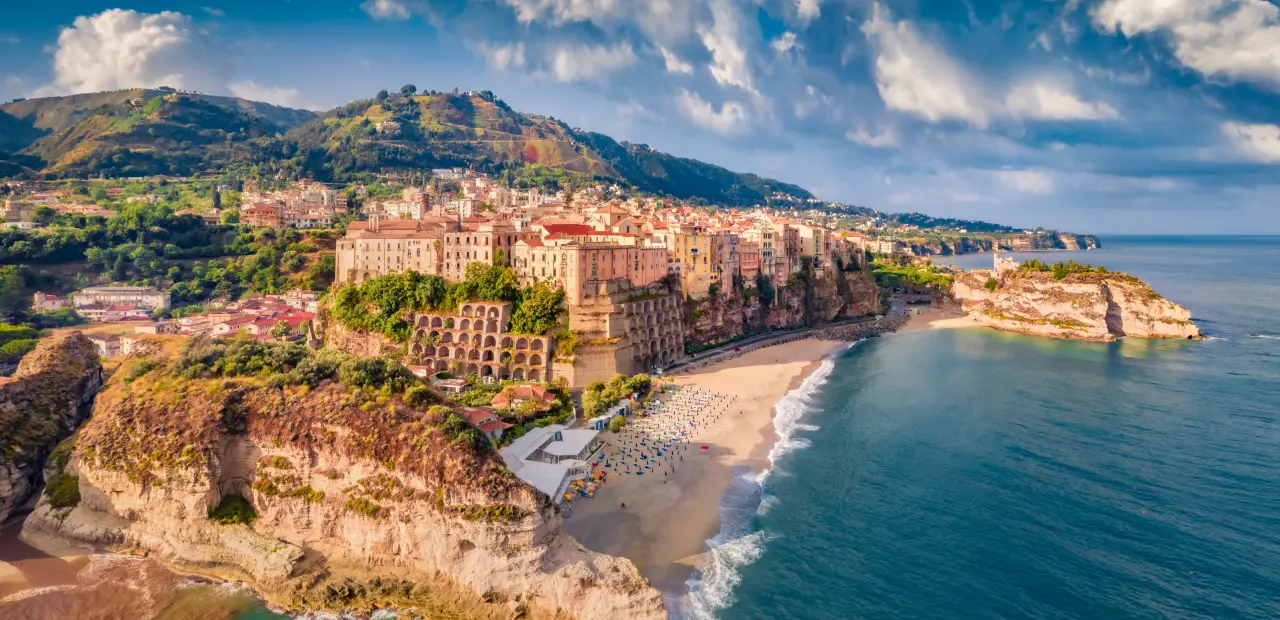 Aerial view of Tropea Beach in Calabria, Italy. Photo Credit: Andrew Mayovskyy / Shutterstock.com
Tropea Beach, Calabria: With its dramatic rock formations and clear Tyrrhenian waters, Tropea remains one of southern Italy’s best-known coastal towns. Its beach is especially popular in peak summer months.
These destinations illustrate the enduring appeal of Italy’s coastline, where iconic beaches continue to welcome tourists despite broader shifts in visitor trends across the country.
Top Photo Credit:
View of Positano Beach on the Amalfi Coast, Italy
Roman Babakin / Shutterstock.com