
EU in Copenhagen further paves the way for Montenegro and Albania, Kosovo requests questionnaire and candidate country status

Express newspaper
02/09/2025 17:26
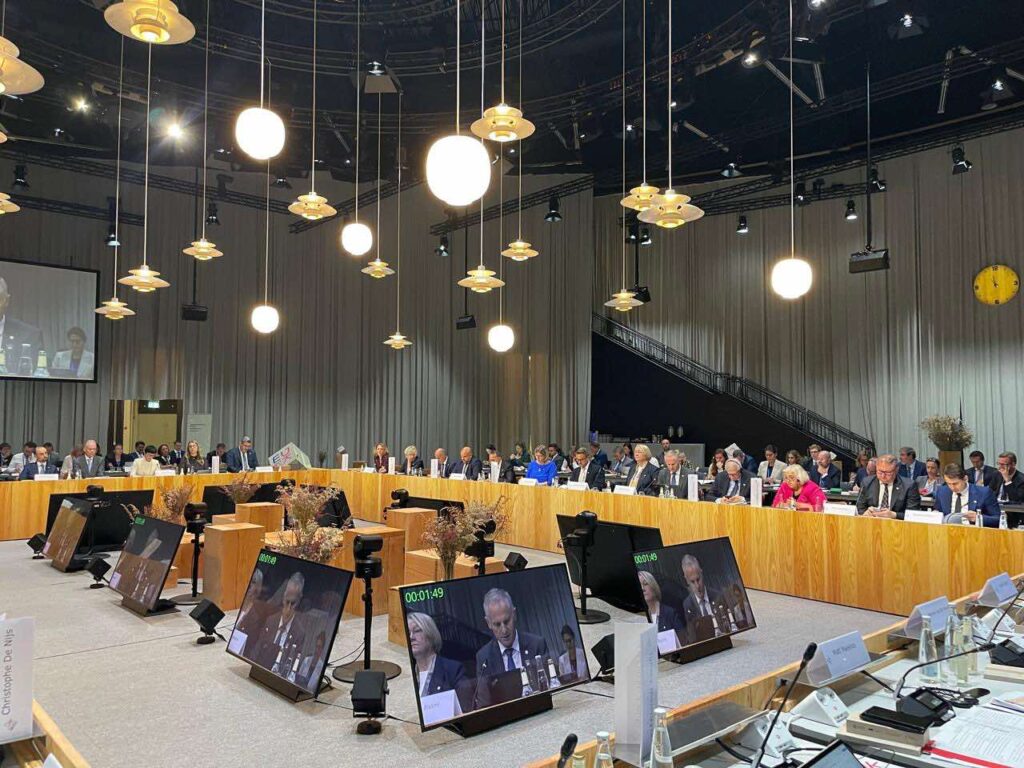
Following the informal meeting of EU ministers for European affairs, which was also attended by ministers from the Western Balkans, Enlargement Commissioner Marta Kos said in a press conference that Albania and Montenegro are the two candidate countries that made earlier progress towards EU membership.
She said that for other countries, criteria based on meritocracy apply and said that a lot of work is needed to meet the objectives, Gazeta Express reports.
Journalists asked Kos whether the mentioned deadline of 2030 is a realistic goal for all countries or only for Albania and Montenegro.
Kos, who previously mentioned these two countries at the conference, said that during the meeting they talked about all candidate countries.
“I mentioned only two countries now at the press conference, but at the ministerial we talked about all the countries. We also had representatives from all the countries. I mentioned those two countries because they are the most advanced. As you know, Montenegro has already opened all the chapters, so now we are only in the closing phase. And the realistic prospect, from a technical point of view, is that we can complete the negotiations by the end of next year, 2026, which means that, if we look at the average time of ratification of the accession treaties, one to two years, then Montenegro can become a member state.”
For Albania, Kos said that there are only two chapters left to open and this will happen in the fall and that a lot of work is needed to be able to close the chapters.
“But, if we do it this way, and Albania is doing the reforms very well, then we can technically conclude the negotiations at the end of 2027. So, yes, still during the term of this current Commission, Albania can become a member of the EU,” Kos said.
“For others, as you know, it’s always been based on merit for everyone. What we see clearly now is that, if the leadership of the candidate country is really engaged and has been able to show the citizens the benefits of enlargement, then the reforms are also going well. And maybe sometimes we don’t emphasize this enough, the role of the leadership, which means, to me, how they can reach a so-called soft point, when people, citizens will feel that this is really happening.”
Kos also mentioned the results of surveys with citizens of these two countries on how much they are in favor of EU membership. Albanians were much higher in percentage in this regard than Montenegrins.
Meanwhile, regarding Serbia, journalists also asked about the handshake between Serbian President Aleksandar Vučić and his Russian counterpart Vladimir Putin.
Kos said that they are very critical of Serbia’s failure to align its foreign and security policy with the Union.
“As for Serbia, no. We are not hesitating at all. We are very critical. And we are in a constant exchange with the new Serbian government. There are some reforms that they need to implement. They have submitted three reforms for the media law. They still need to implement the reforms, which we agreed on back in April, for the electoral system. And, of course, we also expect them to include civil society organizations in the accession process. And we all support Serbia’s path towards EU membership, but they also need to deliver [the reforms]. And, of course, we are also concerned about free media. So our duty is to support them, and we are doing that, while they need to implement [the reforms], especially with regard to, generally speaking, the rule of law, the fight against corruption and free media.”
From Kosovo, the acting Deputy Prime Minister, Besnik Bislimi, participated in this meeting. At the roundtable “Copenhagen Criteria and Gradual Integration”, Bislimi mentioned Kosovo’s application for EU membership in 2022, requesting candidate country status.
“Our institutions have proven their high level of preparation, therefore it is necessary to evaluate them based on meritocracy, accepting the questionnaire and receiving the status of a candidate country,” Bislimi emphasized.