
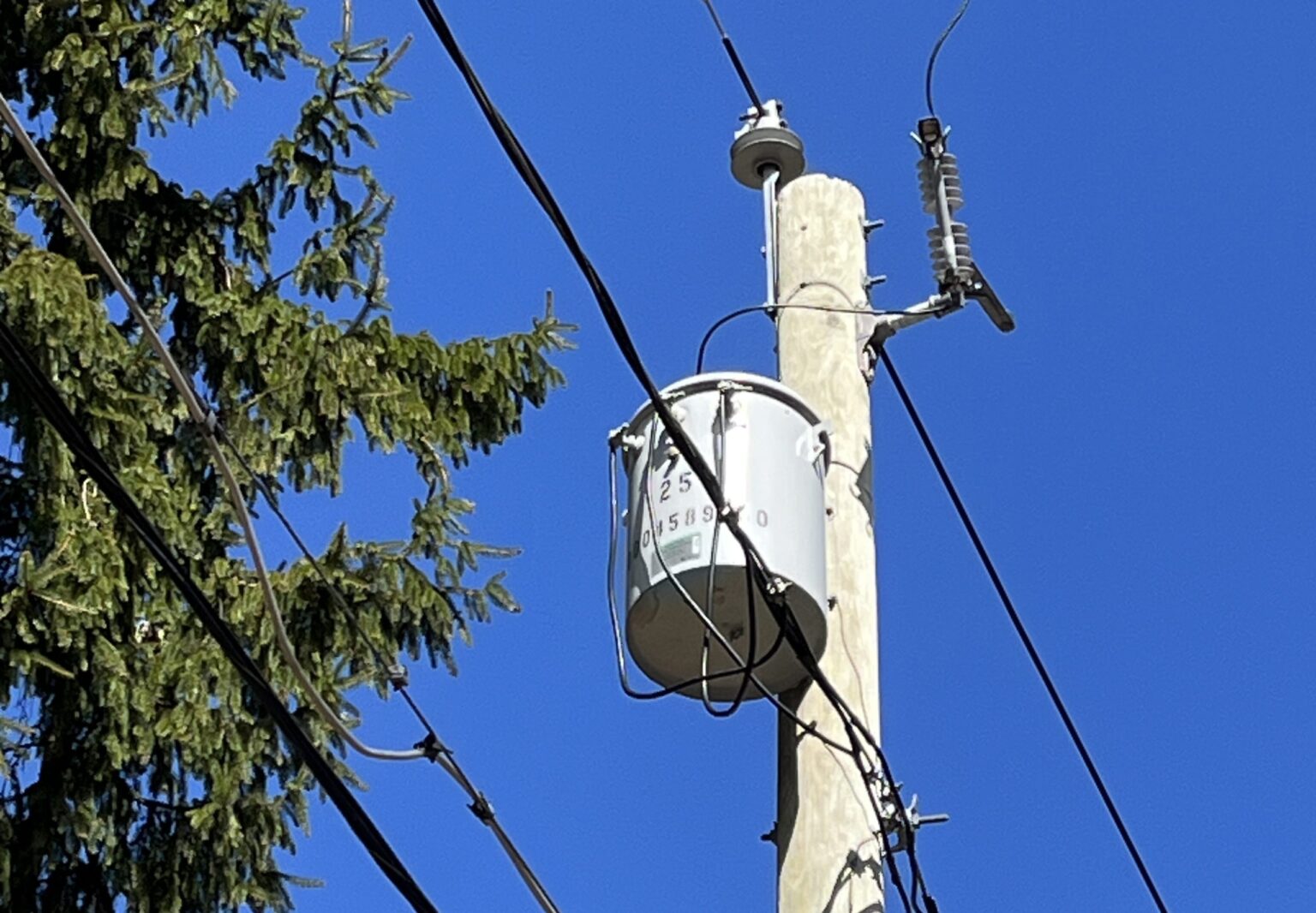
There have been editorials written and politicians trotting out their plans at town meetings to help us reduce Connecticut’s high electricity prices — some of the highest in the country.
All the reform advocates have studiously avoided the question of deregulating the power distribution network. (While Connecticut’s energy generation market was deregulated long ago, the distribution companies –United Illuminating and Eversource — are still regulated monopolies.)
So the fundamental question is this: do we continue down our current path of allowing the utilities (or, as they prefer, Electricity Distribution Corporations aka EDCs) to have a regulated monopoly or do we change the rules of the game so that there is competition? And if we do change the rules of the game, what are these changes?
While there have been good reasons to regulate power companies (without power, people die), Connecticut’s regulatory environment is crippling innovation in energy. We’re in the middle of a technological revolution in electricity production. While wind power has matured over a few decades, solar cells are finally ready for prime time.
Forget what you heard about the costs of solar from years ago. Electricity from solar cells is now some of the cheapest on the planet. Not surprisingly, solar installations have taken off, with one third more solar installations globally in 2024 than 2023. Nearly 600 gigawatt (a GW is a 1,000 megawatts) were installed around the world last year. Electricity from renewables (solar, wind, hydro) is now 30% of electricity generated –a major shift from fossil fuels. To put this in perspective, Connecticut’s two nuclear plants at Millstone are a little over 2 GW, so in 2024, the solar cell equivalents of 285 Millstone plants were installed around the world.
Some of you will remember when AT&T held a monopoly on telephone service. I can recall that, in the early 1980s, a one hour phone call from Massachusetts to Indiana to talk to my girlfriend (during evening hours) was about $10 in 1980s dollars! That was more than three first run movie tickets back then. While there were some glitches when Ma Bell was broken up, communications costs have plummeted today. These drastically lower communications costs have helped grow the economy since customers and businesses can now talk inexpensively no matter where they are.
We are in a similar position now with regards to electricity. While there hasn’t been much growth in electricity usage for the past decade in the U.S., that’s rapidly changing. Heat pumps, electric vehicless, and data centers are all going to need more electricity — a lot of it. What we’re seeing now, though, is that adoption of some of these technologies has been slowed by the high cost of electricity so we’re not getting the savings we should.
In 2017, the Connecticut legislature saw that there was a problem with electricity costs in the state and set up the Public Utilities Regulatory Authority’s Innovative Energy Solutions Program. This program called for people outside the utility industry to submit ideas to help the state meet its various goals ranging from storage to decarbonization. (My group submitted two Phase 1 proposals which were accepted in 2024). Unfortunately, the program hasn’t delivered on its lofty goals, but at least it has showed that there was awareness of the problem.
A recent editorial made the following suggestions, but fundamentally, it’s just more of the same. We will not see major savings in the costs of electricity.
- Modernize the grid. Sure- why not? Except that United Illuminating’s territory (about 20% of the state, mostly around Bridgeport and New Haven) is actually pretty up to date while Eversource’s territory is more of a hodgepodge. There doesn’t seem to be much difference in rates though. New infrastructure is what’s driving the costs of electricity to go up nationally, even though generating costs are coming down. Just look at your bill and see how big those delivery charges are.
- Reduce peak demand. Currently the grid is most economically inefficient when it’s run flat out. When we need more electricity than average days, i.e. peak demand, the costs skyrocket. Why not try to reduce peak demands? Well, the climate has other ideas. Do we really want to be telling people that they shouldn’t run their air conditioners during a heat wave? Does anyone think that heat waves are going to become less extreme in the coming years?
- Use data to tell us where to string new wires. Determining where the infrastructure is needed still involves a crystal ball of predicting what new demand is going to look like. These kinds of predictions are only as good as the data, otherwise, it’s garbage in, garbage out.
- Wait for “cheaper” nuclear. It’s going to be a minimum of 10 years for new technology plants that have already been permitted to come online and there’s no data to show that these plants are actually going to be less expensive to operate. What are we supposed to do before these plants become available? Take out another mortgage to pay our electric bills?
- Rely on existing natural gas plants. We’ve already seen how the swing in natural gas prices can drive up the costs: recall the Christmas of 2023 If we have domestically produced solar, we are going to have predictable pricing for the foreseeable future as the price of sunlight isn’t going to change. The rest of the country is adding solar and storage in a hurry. Why aren’t we?
- More regional cooperation. Unfortunately, the Federal Energy Regulatory Commission (FERC), after dragging its heels, announced some very modest new transmission corridors which aren’t anywhere close to Connecticut. Simply put, we’re on our own to solve this problem.
None of the suggestions that have been put forward will dramatically lower our rates. If we want to reduce the cost of electricity, (I think 50% is a reasonable goal. That’s the national average) we’re going to need to innovate and take advantage of new technologies. Unfortunately, the EDCs do not have innovation in their DNA, so it’s up to us to tell our legislators what we want. Yes, the legislators have gotten the message that high electricity costs are a problem, but the EDCs haven’t put forward any really useful ideas. That’s now up to us and the first step is to deregulate the industry sufficiently to allow innovation. There’s a lot of moving pieces here which makes this transition challenging. Trying to do it piecemeal doesn’t work- it’s like trying to build a house one room at a time. But if we don’t do this now, electricity prices are going to continue to rise.
Here are some ideas:
- Businesses and homeowners should have more of a choice for who supplies their electricity. Should they simply buy it from the utility or own their individual generation (most likely solar) and storage? There’s a combination of local and state regulations that drives up the soft costs (soft costs are what’s not hardware, i.e. financing and legal costs) of solar and storage installations dramatically. Larger installations for commercial and industrial businesses have a lower percentage of soft costs which may make increasing these installations more attractive for these customers, but if soft costs overall are reduced, then energy distribution companies are going to have to compete (finally!) for their current customers dollars. Forget subsidies for everyone except low-income people since the technology to produce your own electricity and store it is cheap enough– if we don’t have excessive bureaucracy! Not all customers are going to be in this position, but this competition should help lower prices.
- Allow Virtual Power Plants (VPPs). This is perhaps the best way for customers to get compensated by the energy companies for their own generation and storage. Virtual Power Plants reduce peak demand quickly, and so provide a benefit for everyone.
- Stop exporting electricity. The state exports electricity which makes no economic sense. Typically, a region with a low cost of production can export to somewhere else where production costs are higher. But in Connecticut, we have some of the highest electricity prices in the country– and we’re exporting ~30% of our electricity to neighboring states?
- Pay for storage. Why does the state export electricity? Because we don’t pay for storage. The economics of the grid were designed to drive construction of new generation and transmission– not to store electricity till it is needed. Deregulated states like Texas are adding storage frantically because it solves multiple problems: reduces the need for new generation and transmission, stabilizes the grid, reduces peak demand, reduces emissions, and allows arbitrage– buying electricity when its cheap to use when its expensive. The issue has been that no one has come up with a good way to pay for storage. We need to try some new business models to pay for storage. But we also need to be prepared to make changes if they don’t work well.
Not everyone lives in a home that could power itself in the near term. People in apartment buildings need power and they still will need the grid and utilities. While utilities are going to lose customers– probably both residential and commercial especially in the suburbs — in the cities, electricity consumption will probably increase as heat pumps, EVs and data centers proliferate. Overall, utilities may wind up selling more electricity than they do now, even if they do lose some residential and commercial and industrial customers.
We are going to need more electricity in the coming years– that’s pretty clear. But if we don’t produce electricity more cheaply and without increasing CO2 emissions, we’re in a lot of trouble. Fortunately, the technology to reduce costs as well as emissions is already here. We just need business models to use it more efficiently.
We need our legislators to change the rules so that utilities operate more efficiently and have to face some competition. If we do this correctly, Connecticut may be seen as a more attractive place to live, instead of just a little state with high electricity costs.
Samuel Brauer lives in Shelton.