
Kosovo: Women agribusiness entrepreneurs

Express newspaper
04/09/2025 9:54
Agriculture is the main source of income for rural families in Kosovo. Through grants from the German Ministry for Cooperation and Development (BMZ), 93 female farmers have “taken the reins” of entrepreneurship in Kosovo.
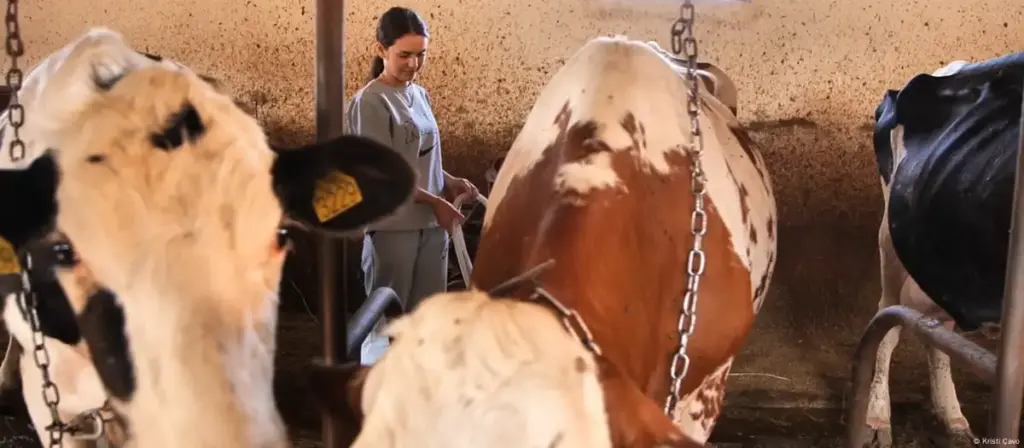
In the village of Komogllavë in the Ferizaj municipality in Kosovo, Arbresha Beqiri takes care of her cows and calves. For 14 years, she and her husband, along with the rest of the family, have owned the farm, which is their main source of finance.
“We take care of 30 dairy cows and 10 calves. We collect 450 liters of milk a day and send it to the collection point. There it is processed and distributed further,” the young entrepreneur tells DW.
Emigration, with the hope of a better future
In 2022, she and her husband migrated to Slovenia, where they planned to build a life. After staying there for a short time, they decided to return to the village and revive the family business. A grant from the German Ministry for Cooperation and Development (BMZ), through the humanitarian association “CARE”, enabled them to purchase equipment for tilling the land and feeding livestock.
Every member of the Beqiri family invests most of their time in the farm. However, the one who seems to enjoy the entrepreneurship the most is Arbresha. “It’s good to be independent and work for yourself as well as for the children, for the family. I take care of both the girls and the farm,” she says.
Once a war refugee, today an entrepreneur
A few kilometers from Pristina, in Bërnica e Poshtme, Gjyla Thaçi is checking on the peppers in her greenhouse. She has finished her day’s work as a law teacher and is spending the rest of the day at her new venture, of which she is proud.
Growing up in agriculture since childhood, Gjyla never lost her love for the land and crops. Today, she owns a 200-square-meter greenhouse, where she grows fresh vegetables. But initially, without receiving support from BMZ funds, the products were grown in the field, which meant greater challenges for Gjyla.
“Initially it was difficult. There were challenges, because cultivating plants outside greenhouses is highly risky, due to weather conditions. But when we built the greenhouse, we avoided the risk and the cultivation became better and with higher yields,” Gjyla tells Deutsche Welle.
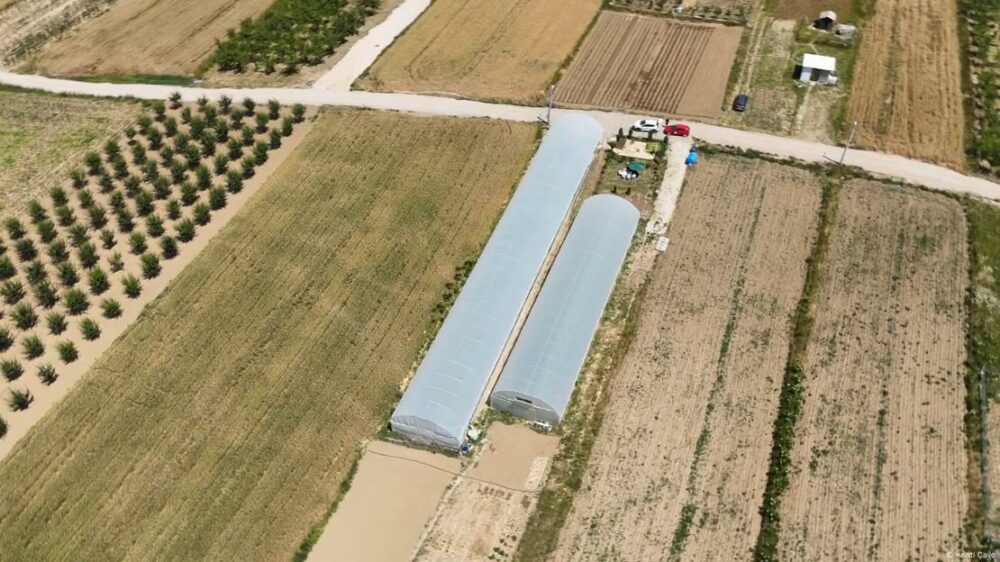 Serrat e Gjylas, who never separated herself from her love for the land and crops | Photographer: Kristi Chavo
Kosovo – “The Land of Opportunities”
During the war, she and her family lived in Austria for about three years. But when the war ended, they had no hesitation in returning. “I feel good in my country. Kosovo is a country in transition and it is known that there are many challenges, but here is a country of opportunities. You just have to have the desire and will.”
Makfire Avdiu, from the village of Gaçka in Ferizaj, also fled with her family to Germany to escape the war. There she gained experience working in a greenhouse, knowledge that she still uses today. Like Gjyla, she returned to Kosovo and today owns a 300-square-meter greenhouse, a multi-cultivator and a solar panel, which help her with all agricultural processes. “You have to be ready for plants. The plant doesn’t ask you if you’re tired, if it’s hot or nighttime, but you have to take care of it. For the greenhouse, you have to wake up early and work in the evening, until late,” says Makfire.
On her journey towards entrepreneurship, she has also encountered prejudice, which surprisingly she has felt most from other women.
“I’m telling you my journey and what it means to be independent, to work for yourself and have your own bank card and not depend on a husband. As long as I have health and life, I won’t stop.”
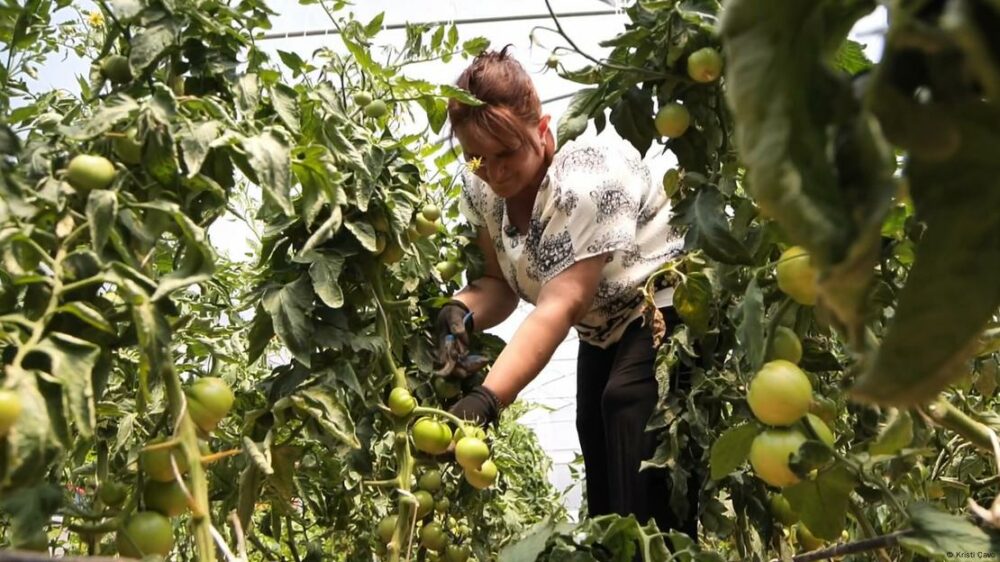 Makfire Avdiu, from the village of Gaçka in Ferizaj, now owns a 300 square meter greenhouse | Photographer: Kristi Chavo
“Women for Women”: Better Finances, Changing Mentalities
93 women farmers in Kosovo were financially supported by BMZ through CARE and local organizations. The IWKA project – “Inclusion of Women in Agricultural Business in Kosovo” provided grants of up to 10 thousand euros and entrepreneurship training.
“What we often do is ignite their entrepreneurial spark, the idea they have. Women are taught to sell the products that they often give up, because they have the opportunity to earn. And the change in mentality that an uneducated woman cannot be profitable and generate income, changes with our program” – says Iliriana Gashi, executive director of the association “Women for Women”.
Women entrepreneurs – who produce ajvar, red pepper, work with honey extraction, and cultivate vegetables – have already organized themselves into four associations, through which they aim to
inspire other women who want to enter the small business market in villages. Minorities in Kosovo are also part of the program. “We established the association in order to be visible, to become one. In the future, we plan to recruit other women who are ‘invisible’ and help them succeed and become part of this enterprise,” says Dragana Simić, a Serbian entrepreneur living in the Gračanica area.
One woman’s success affects others
“We have seen that often businesses founded by women have become family businesses and have been joined by men, sons, daughters, the whole family. They are what in English are called “role models”. They are women who set an example. We see that in a village where the woman has been successful and the family has a better life, there is less resistance from other families in the same community” – says Iliriana Gashi.
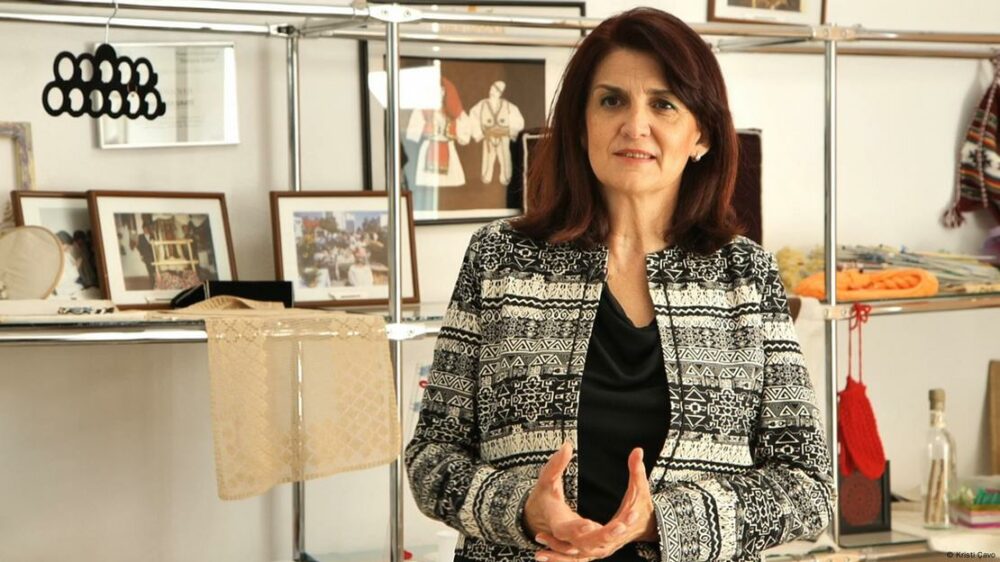 Iliriana Gashi heads the organization “Women for Women” | Photographer: Kristi Chavo
Free legal assistance for property problems
One of the legal challenges for these women entrepreneurs has been the issue of ownership. In most cases, their names did not officially appear on the ownership certificate.
They were offered free legal assistance throughout the process, in order to overcome this legal impasse. “We have advocated through the Notary Office in Kosovo and have managed to overcome this problem through a notarial document and these women have the opportunity to apply with a notarial certified document that the property in which it is intended to be invested through this project, be recorded as property that is currently not in the name of the applicant or her husband but is in court and there is no objection to the property,” says Memli Ymeri, executive director of the “Civil Rights Program” in Kosovo. /DW