Kamberi: De-allocating Albanian addresses should be part of Serbia-EU talks as a human rights issue

Express newspaper
04/09/2025 15:56
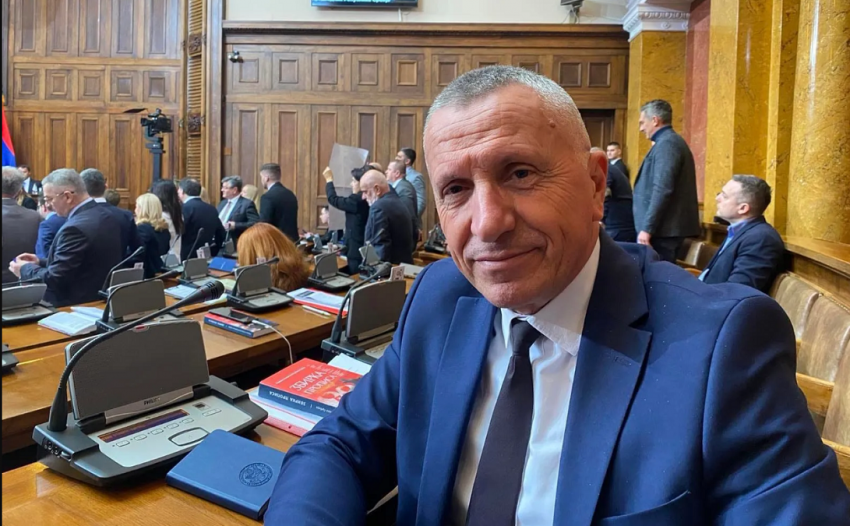
In this interview for the platform www.passivizimi.com, the only Albanian MP in the Serbian Parliament, Shaip Kamberi, speaks, among other things, about the ethnic selectivity of passivation, the lack of transparency by state authorities, international reactions and the need for diplomatic pressure on Serbia. According to him, passivation is today aiming at the same effect in urban areas as what was done after the war in mountain settlements, when entire villages were emptied of Albanians.
– Mr. Kamberi, you have recently received two official responses from European authorities, which also highlight the issue of passivation. What do you specifically expect from these responses?
Shaip Kamberi – The fact that European institutions have included the issue of passivization in official communications is an important step. This issue should become part of the agenda of Serbia’s negotiations with the EU and be treated as a fundamental human rights issue. Artificially changing the ethnic structure of the population is prohibited not only by international norms, but also by the Constitution of Serbia itself. Therefore, we expect more concrete and intensive diplomatic pressure on the Serbian authorities to stop this discriminatory practice and restore the legal rights of Albanian citizens.
– Officials of the Republic of Serbia deny that the passivation process is selective towards Albanians and claim that the Law on Residence and Place of Stay applies equally to all citizens of the Republic of Serbia. In parallel, international institutions and credible non-governmental organizations have requested investigations into the implementation of the law on the passivation process, raising suspicions of selective application towards the Albanian national minority. Your comment?
Shaip Kamberi – Denial has become the official political culture in Serbia. From the denial of genocide and war crimes that have been established by final judgments of the International Tribunal, to the denial of systematic and concrete discrimination, to the denial of ethnically motivated passivation as part of the daily agenda of the Serbian authorities. Denial is contrary to reality, but since there is no more serious international reaction, Serbia has been given the comfort to continue with this policy. The fact that only the Albanians of the Presevo Valley have faced massive passivation, while no other community has, speaks for itself. If the law were applied equally, then we would have examples from other regions of Serbia as well. The reports of the Helsinki Committee and YIHR that speak of ethnically motivated passivation show that in municipalities with a predominantly Serbian majority in the neighborhood of municipalities with an Albanian majority, such as Lebanja, the passivation rate is up to 0,02%, while in Medvedja the passivation rate is 40%. This is clear evidence of what is happening. The request of international institutions for investigations is additional evidence that our suspicions are well-founded and that passivation has been used as an administrative instrument to change the ethnic structure of the region, in fact to legitimize an ethnic cleansing that is taking place in the heart of Europe.
– What facts do you have to prove that passivization is being applied selectively to Albanians in Serbia?
Shaip Kamberi – The facts are clear: the large number of cases of passivation occurs only in municipalities where Albanians constitute the majority or a significant part of the population, namely in Preševo, Bujanovac and especially in Medveđa. We also have documented cases where Albanian citizens, even though they physically live at their addresses, appear passivated. This is direct discrimination. Furthermore, the Helsinki Committee for Human Rights and other international organizations have published reports confirming this selective practice.
– Do you have accurate data on the number of Serbian Albanians who are officially passive?
Shaip Kamberi – Unfortunately, Serbia lacks transparency in this process. Official figures are not made public by the Serbian authorities, although we have insisted on transparency. Or even when they provide some data, they vary from case to case. The lack of transparency is another evidence of ethnic discrimination. However, according to the data we have collected on the ground and the reports of the citizens themselves, in the municipality of Medvedja alone the number of passive Albanians reaches thousands. For Presevo and Bujanovac we also have hundreds of documented cases. This data clearly speaks of a deliberate and systematic process of depopulation of the Presevo Valley.
The passivization is aiming for the same effect in urban areas as the ethnic cleansing of Albanians from mountain settlements, when after the war entire Albanian villages were emptied from the Land Security Zone by police-military violence.
– What actions are being taken by institutions run by Albanians in Serbia regarding passivization?
Shaip Kamberi – Our local institutions are limited in competences. They do not have any competences even in the local police, but we have constantly raised this issue in the Municipal Assemblies, in the Republican Parliament, in communications with Serbian authorities, and especially with internationals. We have sent official requests to the Ministry of Internal Affairs and have informed international partners. As political representatives, we have used every space we have in the Serbian Parliament to address this problem. We have also cooperated with civil society organizations, to document concrete cases and submit them as evidence to international factors.
– Have you tried to communicate and cooperate with the Ministry of Internal Affairs, the police stations in Presevo, Bujanovac and Medvedja; as well as with other state institutions, on the issue of passivation?
Shaip Kamberi – Yes, we have made numerous efforts. We have requested official meetings, addressed interpellations in Parliament and submitted parliamentary questions. The answers we have received so far are always denials or avoidance of reality. The Ministry of Internal Affairs and its local structures have not shown any real willingness for dialogue and transparency. This only strengthens our conviction that passivization is not simply a technical procedure, but a deliberate policy towards the Albanians of the Presevo Valley.