
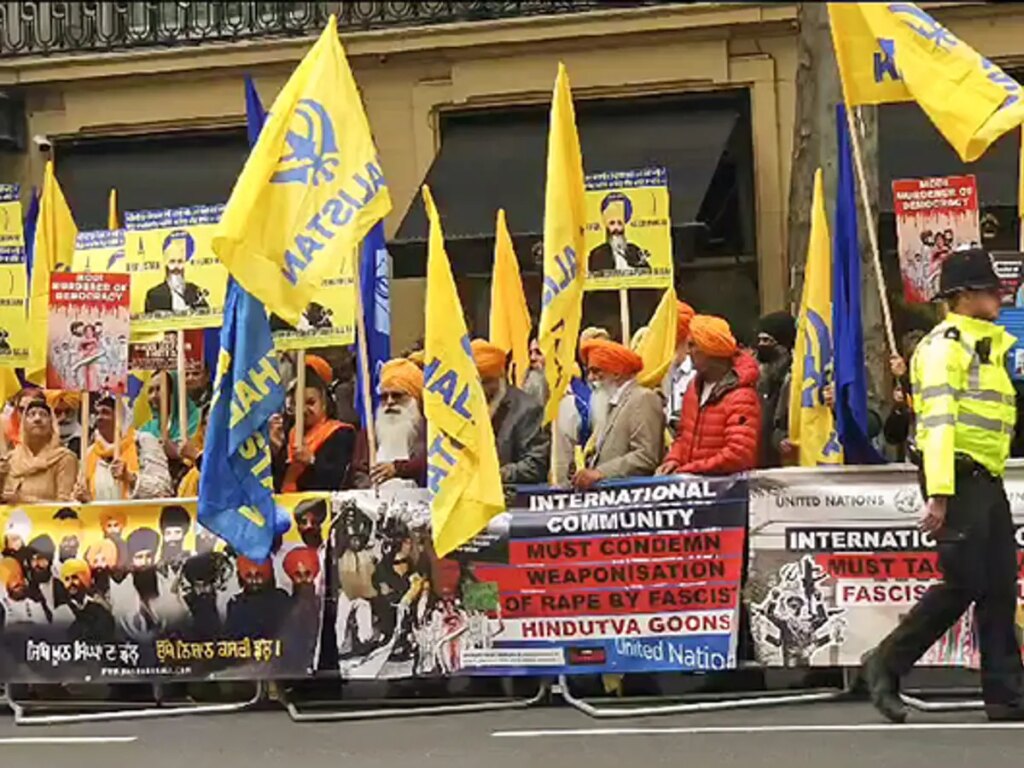
Canada has raised fresh concerns about Khalistani extremist groups operating within its borders, pointing out how they have been raising funds, including through the abuse of charitable organisations, to support violent activities. The warning, outlined in the Canadian Finance Ministry’s 2025 “Assessment of Money Laundering and Terrorist Financing Risks”, highlights the challenge of Khalistani extremism and its implications for both domestic and international security.
The report singles out groups like Babbar Khalsa International and the International Sikh Youth Federation, alongside other organisations such as Hamas and Hezbollah, as entities that have been “observed by law enforcement and intelligence agencies to receive financial support originating from Canada.” These groups, the report notes, are suspected of leveraging networks in Canada to solicit donations, often exploiting nonprofit organisations (NPOs) to funnel funds for their activities. “Khalistani violent extremist groups have been known to use networks to solicit donations from diaspora communities to raise and move funds, including through NPOs (nonprofit organisations),” the report states, highlighting how these activities exploit Canada’s charitable sector.
The report acknowledges that Khalistani extremist networks in Canada have shifted from large, organised fundraising operations to smaller, fragmented groups. It said these groups “previously had an extensive fundraising network in Canada but now appear to consist of smaller pockets of individuals with allegiance to the cause but seemingly no particular affiliation to a specific group”.

India has repeatedly voiced concerns over the activities of Khalistani extremist groups, and India has listed Khalistani terrorists in Canada. Khalistani extremism gained international attention after the 1985 bombing of Air India Flight 182, a tragedy orchestrated by Canada-based extremists that claimed 329 lives, mostly Canadians of Indian descent. The attack remains one of the deadliest acts of terrorism in Canadian history and continues to shape India’s concerns about the activities of Khalistani extremist elements in Canada.
New Delhi has pointed to events like so-called “Khalistan referendums” and rallies in Canada as evidence of unchecked extremist activity. The Canadian finance Ministry’s report findings align with India’s concerns. Earlier this year, the Canadian Security Intelligence Service (CSIS) further amplified these concerns in its annual report to Parliament, labelling Canada-based Khalistani extremists (CBKEs) a national security threat.
After the fall in ties under former Canadian PM Justin Trudeau, both Delhi and Ottawa are working to normalise ties. Last month, both sides reinstated high commissioners in what is seen as sign of recovery in ties.
-
-
-

The observable universe is just 5% of reality, 95% remains invisible!
-

-

The moment astronomers realised the universe is growing at a mind-bending speed
-

‘50,000°C but no fire?’: Voyager redefined our understanding of heat while being in firewall
-

What is Novak Djokovic’s net worth in 2025? Career earnings, sponsorships and investments
-
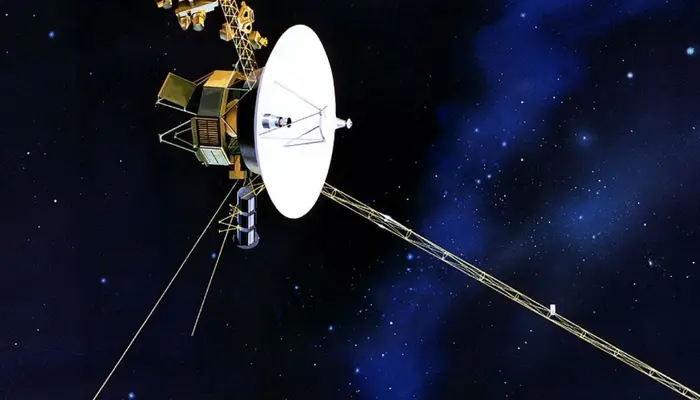
From 24,970,000,000 km away, can scientists install AI on ‘Voyager’ 1 and 2?
-

In 40,000 years, Voyager 1 will brush past Gliese 445, the star of Camelopardalis
-

Observable universe is 93 billion light years wide but what’s beyond it? Here’s what we can’t see…
-
-
‘50,000°C at 50,000 km/h’: How Voyager is surviving firewall at the edge of our solar system
-

-

There is a reason why Voyager missions were launched in 1977, not before, not later