
The route also saw transit gas shipments in the form of liquefied natural gas (LNG). Two LNG carriers departed from the Barents Sea. These were sanctioned shadow fleet vessels that had been idling in waters to the northeast of Norway during winter and spring waiting for clear passage to buyers in China.
Bulk carrier traffic, transporting e.g. iron ore or coal, often sails under the radar compared to higher environmentally-risky shipments or sanctioned gas transport. But this category accounts for a significant share of traffic with around 290,000 tonnes. All of the traffic occurred between Russian and Chinese ports or within Russia itself.
Container Shipping to Europe
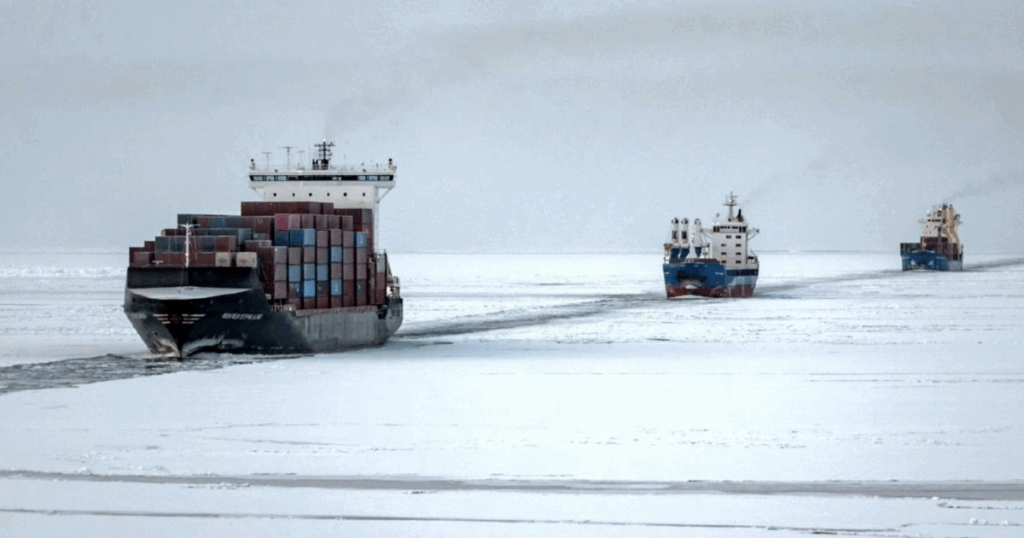
Container shipping along the Northern Sea Route has been steadily on the rise over the last few years, although overall numbers remain small compared to global trade routes. China is the key driver to transit containers via the Arctic.
Through August 31 the CHNL analysis has already recorded 10 container ship voyages carrying around 150,000 tonnes of cargo. The traffic remains concentrated between Chinese and Russian ports, frequently connecting St. Petersburg or Arkhangelsk with Shanghai and Qingdao.
Though the first Chinese container liner service to connect major Western European ports, including Rotterdam in the Netherlands and Hamburg in Germany, is scheduled to begin on September 20.