
President Donald Trump and his GOP majorities in Congress know they have work to do selling voters on their economic agenda ahead of the midterms. Their job isn’t getting any easier.
Trump’s party is staring down economic challenges that haven’t let up for months: rising unemployment, the ripple effects of Trump’s tariffs, the unpopularity of their tax plan, and now the potential for spiking health insurance costs. New data expected on Thursday is unlikely to provide relief: Consumer sentiment is trending down, and inflation is slated to remain stubborn.
With campaign season descending, Republicans are now racing to convince the public that their tax cuts, tariffs, and spending cuts are worth returning them to power on the Hill.
They’re banking on trade deals and a rate cut at the Federal Reserve to help alleviate the pain, and they’re blaming former President Joe Biden when they can — including for giving Trump a hole to dig out of after a massive downward revision of job numbers.
But many in the GOP admit that winning fights over data isn’t the same as winning elections.
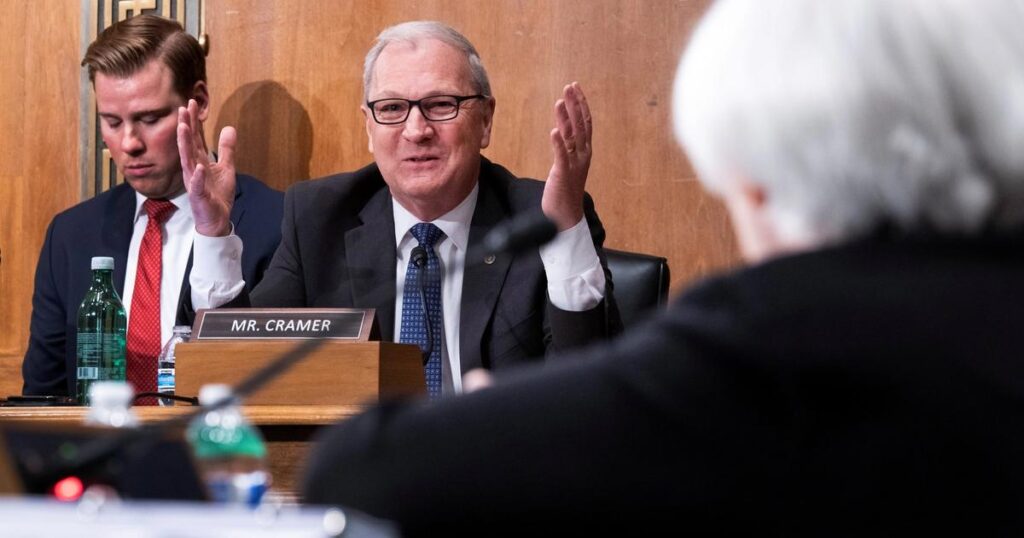
“The headwinds that matter the most to an election are how American citizens are feeling about things, not so much the official numbers as people’s situation,” said Sen. Kevin Cramer, R-N.D. “I just talked to a group of farmers who are feeling pretty tough right now because they’re not selling their products.”
The record-breaking job revisions on Tuesday prove that Trump “was right” about lowering interest rates and alleging problems with Bureau of Labor Statistics reports, a senior White House official told Semafor.
“This is the low point,” the official said, adding that the administration expects the jobs revisions to prompt “a cycle of rate cuts and loosening up the monetary policy” that voters feel by the midterms.
Those anticipated short-term rate cuts would also signal that the US economy now under Trump’s ownership needs the boost. And it’s not a guarantee that long-term rates soon go down as a result.
“The economy has shown some signs of softening over the last few months — pretty much during the course of the year — and that bodes some support for” rate cuts, House Financial Services Chair French Hill, R-Ark., told Semafor.
The Republican Party is polling better than it did in 2017 and on par with 2021 numbers, giving it some serious hope for next year. Real Clear Politics data, for example, has Democrats at +3 on the generic congressional ballot, around the same as in 2021, when the GOP ended up at +2.5 in the average on Election Day.
Even so, the last time the House didn’t flip in a midterm election after being controlled by a new president’s party was 2002. And Republicans are plainly worried about losing the chamber. They’re fretting less about the Senate, but more due to a favorable map than anything else.
In their weekly closed-door meeting Tuesday, House Republicans discussed how to better market their party-line megabill, which packaged tax breaks with cuts to safety-net programs like Medicaid. Now the White House is dubbing it a “working families” law rather than the “big, beautiful” moniker Trump used for months.
“Everyone was a little frustrated with the rebranding part of it,” Rep. Scott Fitzgerald, R-Wis., told Semafor. “To try and rebrand something when you had every Republican member of Congress out there pounding on it since January, pretty much — it’s pretty hard to reverse that.”
Especially when Americans are paying attention to the economy. The New York Federal Reserve said Monday that consumers believe there is a 45% chance they can find a new job if they are unemployed — the lowest reading since it started collecting the data in 2013.
Administration officials argued that voters will soon begin to credit the GOP for the tax bill’s positive impacts, in part because the new cuts are designed to kick in before the midterms.
The party has to hope that’s enough time to leave the electorate feeling more upbeat.
“It only matters when the voters notice, right? And what never works here is people saying the statistics are wrong, you’re better off than you really are,” said retiring Sen. Thom Tillis, R-N.C. “You don’t get four or five years to get a strategy to work. You get two.”