
An outbreak of the intestinal bacterium EHEC is spreading rapidly across Europe, with eight deaths reported in Belgium and dozens of cases in Germany. Luxembourg health authorities said they are monitoring the situation closely but have not identified any unusual clusters.
In Belgium, 63 people have shown symptoms since the start of September, mainly in eight retirement homes in Flanders. Authorities confirmed eight fatalities and are investigating possible links in four other facilities.
In Germany’s Mecklenburg-Western Pomerania, 31 infections have been reported since mid-August, most of them in children and adolescents. Sixteen required hospital treatment, and nine developed hemolytic uremic syndrome (HUS), a complication that can lead to kidney failure.
Luxembourg has registered 28 cases of Shiga toxin-producing E. coli (STEC) this year, including one child hospitalised with HUS, the Ministry of Health told Luxembourg Times. The average age of those affected was 26. EHEC is a type of STEC that typically causes more severe illness.
Also read:Coeliac disease: when gluten damages the intestines
“In Luxembourg, neither conspicuous clusters nor links to outbreaks abroad have been identified so far,” the ministry said. “Therefore, no additional measures are currently planned, other than remaining vigilant in order to be able to react quickly if necessary.”
Children are particularly at risk
EHEC, or enterohaemorrhagic Escherichia coli, is a strain of the intestinal bacterium found mainly in cattle. It can be transmitted to humans through contaminated food and produces toxins that cause severe diarrhoea and, in some cases, HUS. Children are especially vulnerable because their immune systems are less developed.
The Robert Koch Institute in Germany said there is no evidence linking the Belgian and German outbreaks. Belgian authorities have identified a common strain among the cases in retirement homes but the source remains unknown.
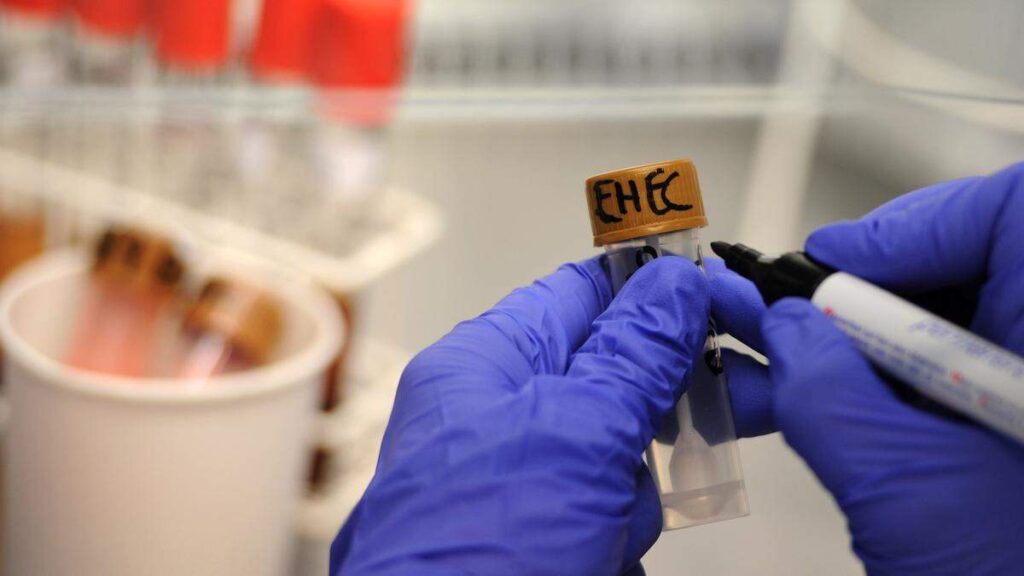
A medical-technical assistant works under a fume bonnet on stool samples that are being analysed for EHEC bacterial strains. © Photo credit: dpa
Experts advise careful hygiene when preparing food: raw meat should be cooked thoroughly and fruit and vegetables washed. In 2011, contaminated fenugreek sprouts imported from Egypt caused a major EHEC outbreak in Europe.
Symptoms typically appear three to four days after consuming contaminated food. They include watery diarrhoea, nausea, vomiting and abdominal pain. Severe cases may involve bloody diarrhoea and complications such as kidney failure.
(This article was originally published by the Luxemburger Wort. Translated using AI, edited by Kabir Agarwal.)