
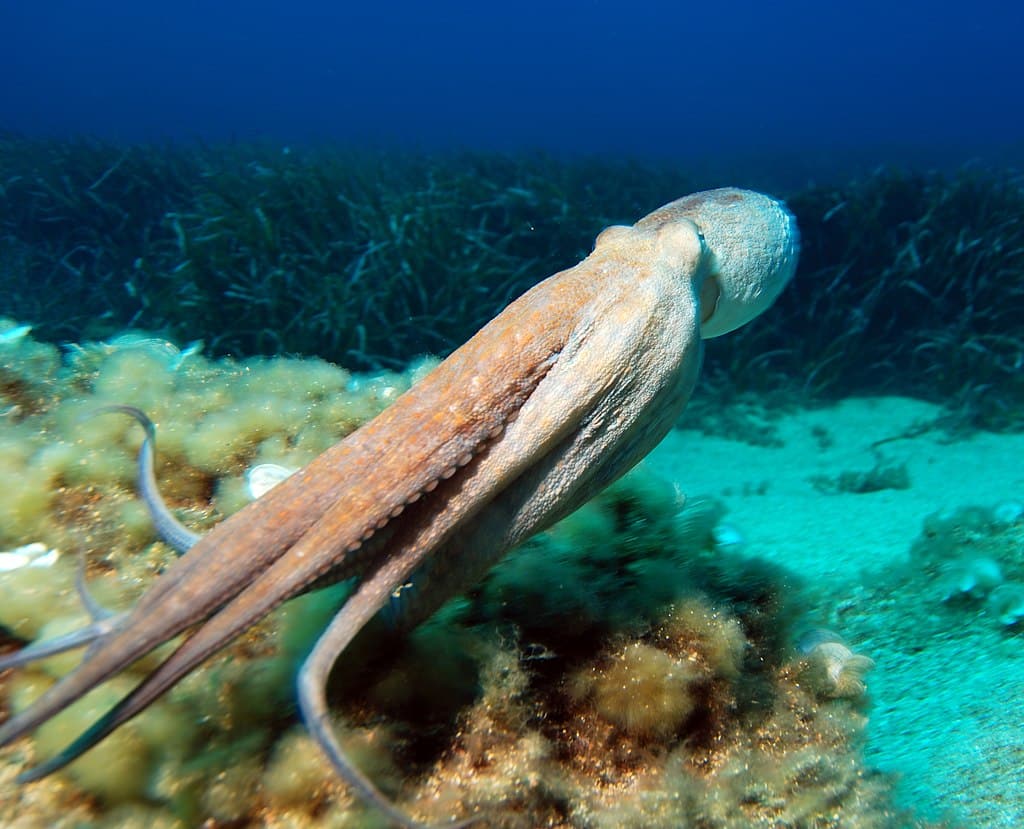
From July 1 to September 30, fish traps are prohibited because it’s the octopus breeding season. Credit: albert kok, CC BY-SA 3.0/Wikipedia
The environmental organization Sea Shepherd carried out a major operation against illegal octopus fishing in Greece’s Thracian Sea and Thermaic Gulf, with its vessel Sea Eagle removing tens of thousands of traps and hundreds of kilometers of rope.
The ship, which docked in the port of Thessaloniki, will be open to the public until Sunday to raise awareness about the destructive practice of illegal fishing in Greece.
Massive retrieval of octopus traps and awareness campaign
During a 41-day mission, the Sea Eagle collected a staggering 34,546 plastic traps and 288 kilometers (179 miles) of rope from critical marine habitats. The operation, which covered areas including Alexandroupoli, Kavala, and Thessaloniki, also successfully released approximately 1,500 octopuses that were trapped, many of them in the process of breeding.
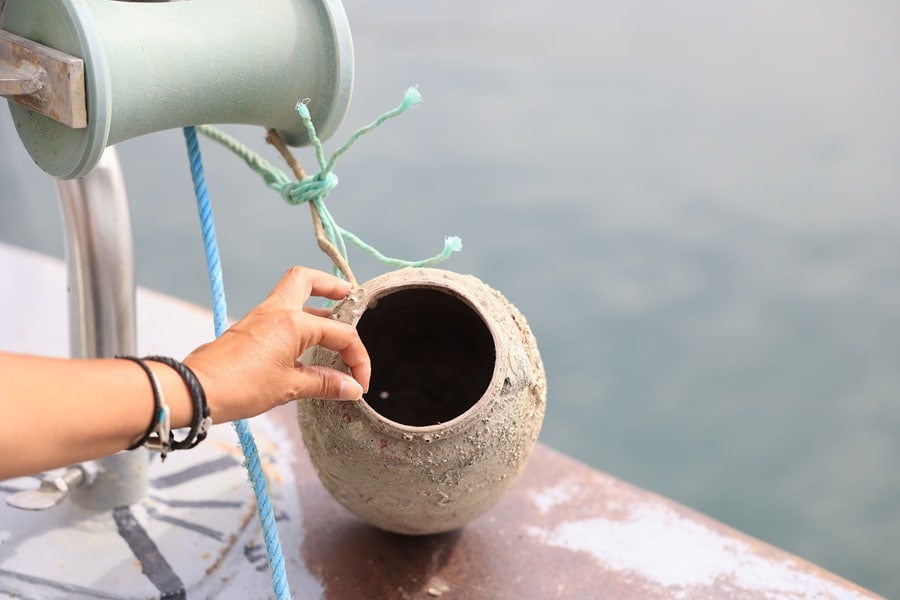
An octopus trap was retrieved in the Greek seas. Credit: AMNA/Nikos Arvanitidis
The head of Sea Shepherd Greece, Valia Stefanoudaki, explained that this “harvest” exposes a widespread problem of illegal fishing and plastic pollution.
Illegal octopus fishing is a threat to the ecosystem in Greece
According to Stefanoudaki, the traps, which are often improvised from plastic containers weighted with cement, are a significant threat to the ecosystem.
“From July 1 to September 30, fish traps are prohibited because it’s the octopus breeding season,” she told the Athens-Macedonian News Agency (AMNA). Despite this, they found a reality of “thousands of traps” on the seabed, with many containing octopuses in the midst of giving birth. Stefanoudaki estimates that over 500,000 illegal traps may be on the seabed of the Thracian Sea alone, causing immense environmental damage.
Legal loopholes and difficulty in enforcement
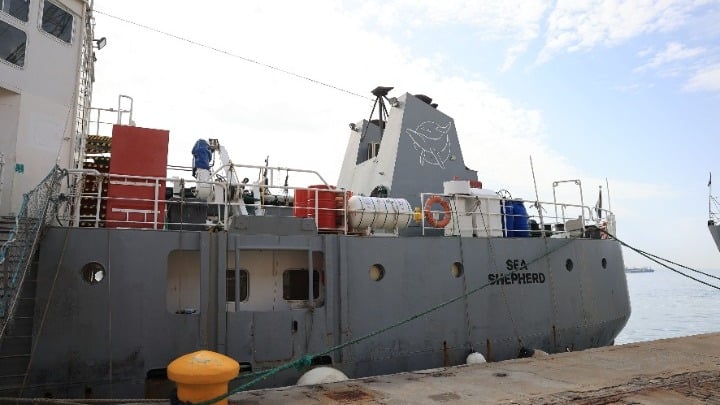
The Sea Shepherd’s vessel, the Sea Eagle, docked in Thessaloniki. Credit: AMNA
The illegal traps, unlike legal ones, lack the necessary license numbers, making it nearly impossible for authorities to identify and fine the owners.
The legislation also has a loophole. While octopus fishing with traps is prohibited in the summer, it’s difficult to prove how an octopus was caught once it is served as a dish in a restaurant. This makes enforcement challenging and allows the destructive practice to continue.
The Sea Eagle is scheduled to sail for its final destination in Italy after its public visit to Thessaloniki.
Related: Is Eating Octopus Moral? Alexander Payne Calls on Greeks to Stop Habit