
Artificial intelligence is going to mean big changes for the energy industry. But no one knows exactly what those changes will be.
That’s the takeaway from the first two days of the second annual Future of Energy Forum at Tulane University, which has drawn nearly 2,000 attendees —twice as many as last year – to hear presentations from energy executives, policymakers, and other experts looking at how innovation, competition and collaboration will shape the industry in the decades to come.
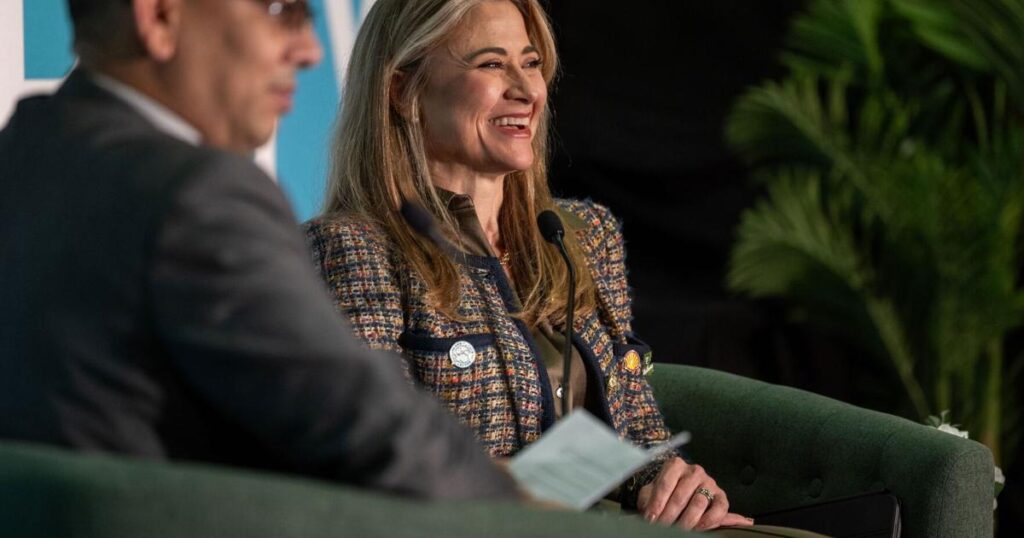
“We’re all on this AI journey,” said New Orleans native Colette Hirstius, head of oil giant Shell’s U.S. operations, during an onstage conversation Thursday. “Some aspects of our industry will find it easier to use than others, and the answer to how it can be useful will be different in six months than today.”
Throughout two dozen panels over the forum’s first two days, others discussed how AI has already transformed the industry.
At “Forging the Future Grid,” three utilities experts discussed ways AI is helping companies efficiently deploy recovery teams after storms and better predict when wildfires are likely to break out so preventative measures can be taken.
Deanna Rodriguez, CEO of Entergy New Orleans, said the utility has an AI pilot program that uses data from drone inspections to detect problems in the transmission infrastructure.
Arushi Sharma Frank, an energy consultant, said that the technology is also helping the nation’s 3,000 utilities, which use many different software systems, collaborate.
“It’s creating ways for very complex fiefdoms to use the same analysis process so they can bring things to the grid faster and upgrade better,” she said.
In the energy and petrochemical industry, Hirstius sees the technology as a competitive edge rather than a threat.
“Whatever role we do plus AI is more powerful than our minds independently,” she said.
Clean energy will have to wait
Some of the presentations at the energy forum reflected a shift in the industry away from prioritizing the clean energy transition in favor of an approach that emphasizes energy availability, affordability and reliability along with sustainability.
Policy changes in Washington, where the Trump Administration has doubled down on fossil fuels, and the growing energy demand from AI data centers are two reasons behind the change.
Bobby Tudor, a Houston-based investment banker and global energy consultant who spoke Wednesday, said the war in Ukraine is another big reason for the shift in thinking.
“It changed everything because it reminded the world the degree to which our society is highly dependent on our energy systems and, at this moment, highly dependent on fossil fuels,” he said.
He said the industry, government and academia need to tackle the problem, but it’s going to be expensive and it’s going to take a long time – although technology will help.
“A few years ago, if you told people the majority of power in Texas would one day be provided by renewable energy sources, they would have laughed,” he said. “On a recent hot sunny day this year, renewables provided 71% of our grid’s power. It’s technology that changes the game.”
In an onstage interview Wednesday, Entergy Corp. CEO Drew Marsh said the three natural gas-fueled power plants the utility is building for Meta’s new north Louisiana data center will likely keep the utility from meeting its goal to cut emissions in half by 2030.
“It makes it harder to reach our goals in the near term, but I think it has the potential to make it easier in the long term,” said Marsh, who heads the only Fortune 500 company headquartered in New Orleans. “2030 is going to be tough, but I think we still have a good shot at 2050, because Meta can bring its $2 trillion company to bear on this problem and help us clean up.”
Forum speakers also talked about how policy changes and tariffs have created uncertainty that makes it harder for investors to make bets.
“Right now we’re at a point where we swing from one extreme to another between different administrations” in Washington D.C., which makes it challenging for companies like Shell to manage the transition from fossil fuels to sustainable energy sources, Hirstius said.
Tudor said the “regulatory whipsaw” translates to less capital that’s more expensive to account for the increased risk.
“Energy investors, leaders and boards are hungry for a less volatile regulatory environment than they are seeing in this country today,” he said. “But they deal with it other places, so they’ll deal with it here.”