
13.09.2025. 15:05h
A visit to Romania had been in our minds for several years and had been planned for several years. We had mainly considered the popular castles and Bucharest as a destination. In the meantime, the road across the Romanian Carpathians, known as the Transfagarasan, had become increasingly popular, so it had emerged as a reason to visit Romania. It also dictated the timing of the visit, as it is only open from the end of June to the end of October. We set off on this long-awaited trip in mid-July, despite the extreme heat and crowds. We went by car and on our own, so we included parts of Serbia and Bulgaria in the route, as well as several cities in Romania.
Miloš made a detailed travel plan, booked accommodation and headed to the local culinary specialties, while my task was to “comb over” the tourist attractions along our way that were worth visiting. Ana and Duško helped with the packing.
On the third day, late in the evening, we arrived in Bucharest, the capital of Romania. Romania is a country with about 20 million people. It had a rather turbulent history, like most countries in this region. Bucharest’s golden age was between the two World Wars. During World War II, the city experienced heavy bombing by the Allies. In 1977, the city was hit by an earthquake that killed over 1.500 people. One of the darkest periods in its past was the period of Nicolae Ceausescu’s rule (1965-1989). After a nationwide uprising that resulted in the execution of the hated dictator and his wife Elena, Romania began to develop on an upward trajectory. It became a member of the European Union in 2007, which further contributed to its flourishing in every area of life and economy, including tourism. Bucharest is a city with a population of about two million. In the day and a half we spent touring the capital of Romania, we were able to see some of the reasons why this city is becoming increasingly popular among tourists.
Since we settled in the city center, we set off on a tour at dawn the next day. In the past, Bucharest mostly used the services of French and Italian architects, and later Romanians also studied at French architectural schools, so this style of construction continued later on. Therefore, it is clear why the city was nicknamed “Little Paris” or “Paris of the East”. As soon as we left the building where we were staying, fantastic facades began to line up in front of us. Whether they were recently restored or pending, they were admirable. Some people may not like such monumental buildings, but a lot depends on the space in which they are located, and in Bucharest, which has a large number of wide boulevards and squares, there is enough space. This previously written does not apply to the part of the city that is near the old town. Everything was so packed that it was difficult to take a few photos of the entire building.
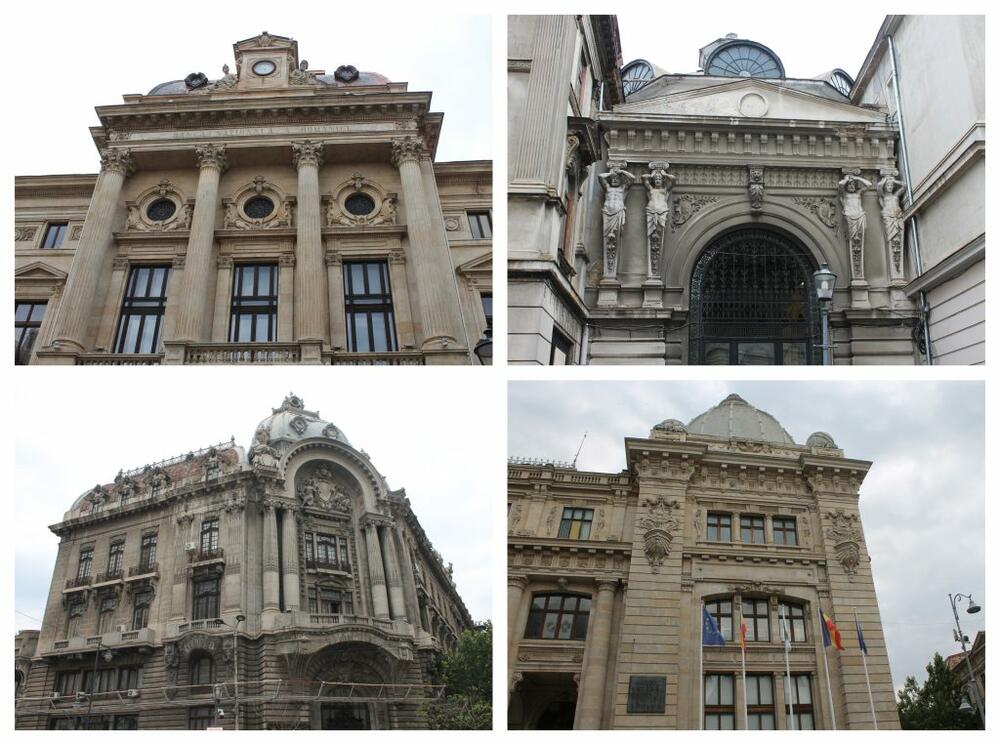
photo: Jasninaputovanja.me
We passed by the monumental building of the National Bank, and then, in the middle of these huge buildings with thick walls and grandiose facades, we came across a gem – the Church of the Holy Archangels Michael and Gabriel. We didn’t immediately realize that in Romanian the word for church is “pearl”. This became clear to us after we visited several of them. I liked that word. This little church is one of the architectural gems of the city, a real pearl, many agree.
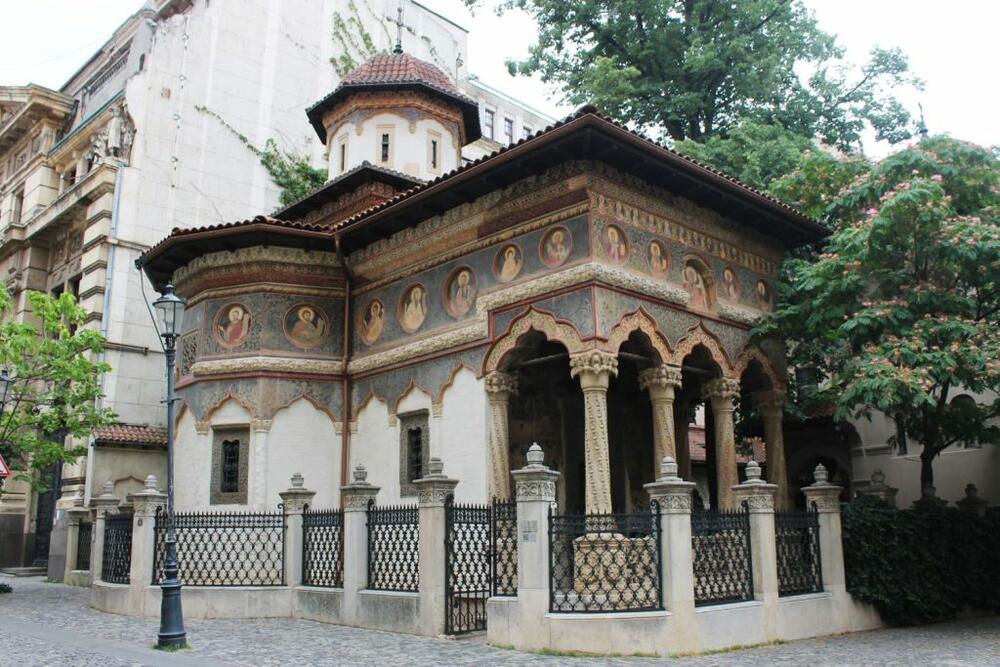
photo: Jasninaputovanja.me
We continued our walk towards the most famous symbol of Bucharest, the Parliament building, originally called the House of the People. With an area of 340.000 m2, it is the largest administrative building in Europe and the second largest in the world, after the Pentagon. This information is enough to attract any tourist. But when you read how and why the building was built, how many buildings were demolished, how many people were displaced, how much it cost in a period when Romania was a country with an extremely low standard of living, then the admiration for the building subsides for a moment, but again… This building has 12 floors, 4 of which are underground, a nuclear bunker and 1100 rooms. Today, both houses of the Romanian Parliament are located here, as are the offices of many government officials, reception halls and museums. Despite this, it is believed that only 30% of the building is actively used. Maintaining the building is fabulously expensive – over 6 million euros are spent annually on electricity and heating alone, I read somewhere.
Part of the building is open to tourists and houses the National Museum of Contemporary Art, but that visit was not part of our plans.
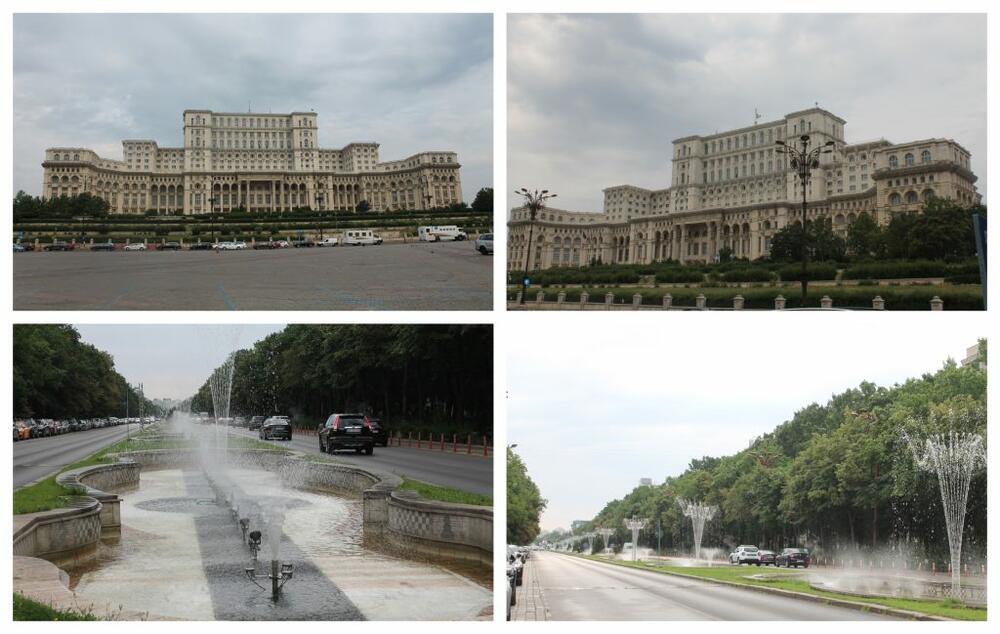
photo: Jasninaputovanja.me
In most modern cities today, the most beautiful buildings are banks and hotels. Bucharest is no different. However, numerous museums (over 100 of them) and cultural institutions still stand out, both in number and beauty of objects. Romania is a country where culture is given great attention, both theatrical and musical, and visual. There are many theaters, galleries, operas… The National Theater building is impressive in every sense. Without a drone, its size and beauty cannot be captured or understood. In front of it is a very nice sculpture dedicated to the initial steps of dramatic art, to traveling troupes.
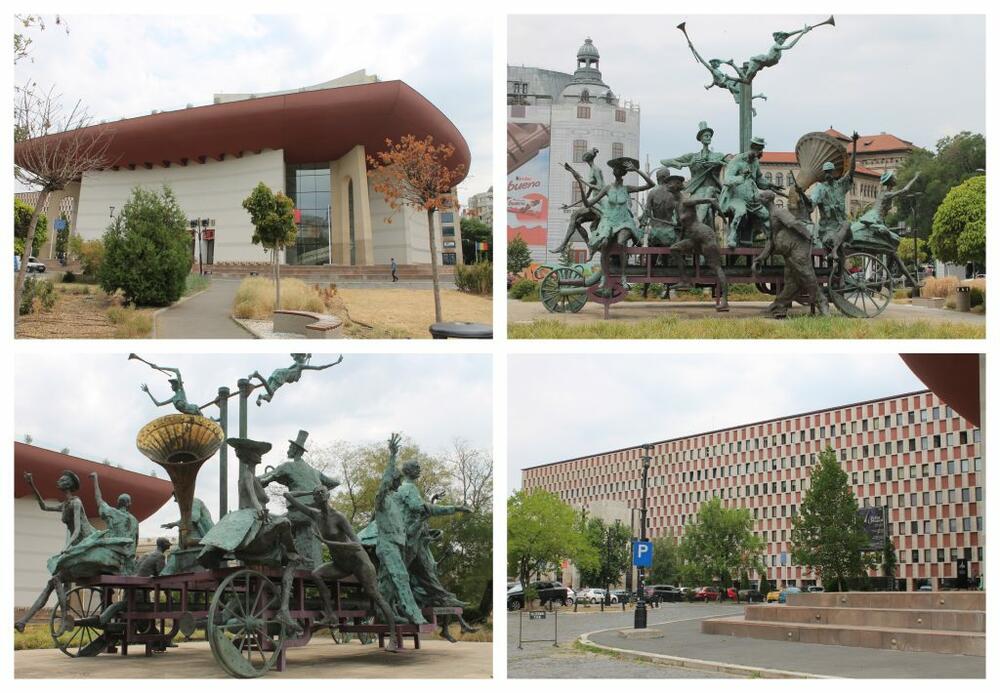
photo: Jasninaputovanja.me
Music is also given special attention in Bucharest. We managed to reach the Romanian Athenaeum, a magnificent concert hall that is a symbol of Romanian culture. It was built in 1888, in the neoclassical style. Today it is the headquarters of the Romanian Philharmonic. We also saw the opera house.
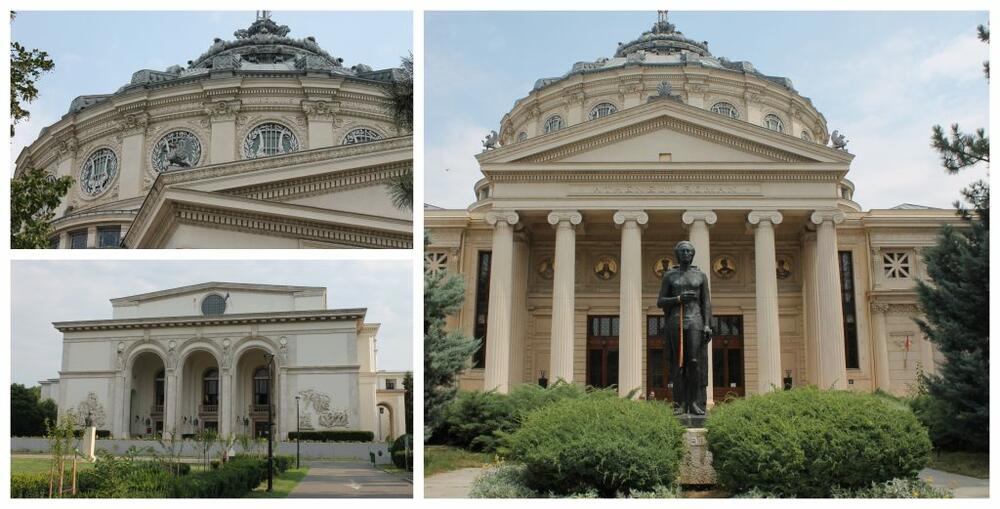
photo: Jasninaputovanja.me
Not far from the Athenaeum is Revolution Square. It was named after the Romanian Revolution of December 1989, when Nicolae and Elena Ceaușescu were brought to trial and shot. The square is home to the former Central Committee of the Romanian Communist Party, and in front of it is the Monument to Rebirth, erected after the revolution. The most beautiful building on this square is the Central Library, in front of which is a large sculpture of Carol I on horseback, the work of Croatian and Yugoslav sculptor Ivan Meštrović. Across from the library is the National Museum of Art. The square is not closed to traffic, and it is not easy to cross the streets because pedestrian crossings are far apart, and underground passages are not always where you would like them to be. It was almost impossible to take a photo without a car.
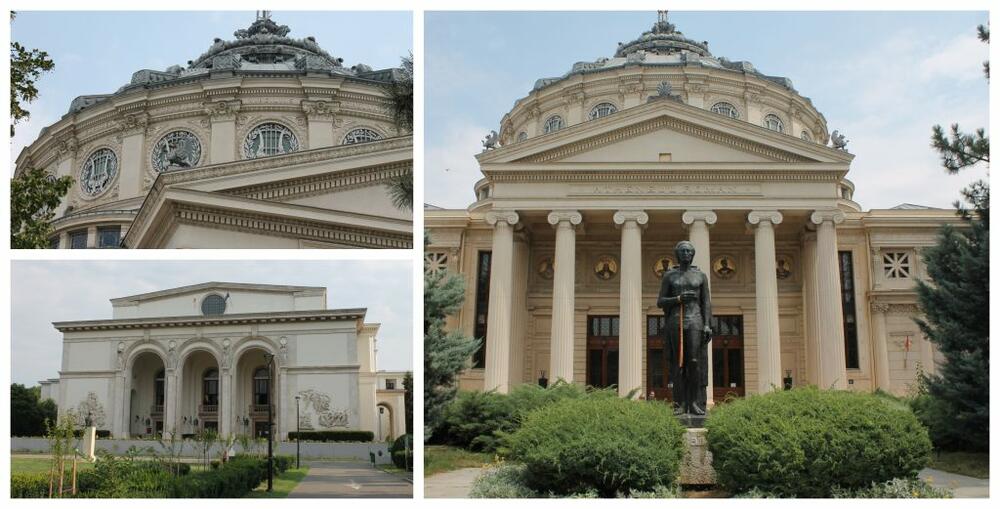
photo: Jasninaputovanja.me
Along the way, we passed by numerous fantastic buildings. Some we identified, and some remained anonymous. We would never have been able to repeat this route, because we went in a zigzag, back and forth, left and right, as if something caught our attention. That’s how we arrived at Čišmidžija Park, which is located, so to speak, in the city center, and in it – a pond. It was landscaped in the mid-19th century. About 30.000 indigenous trees were planted in the park, and the final appearance of the park was shaped by a German botanist and a German painter of natural motifs, they wrote on the information board at the entrance to the park. We did not go on a further tour of the park, but sat on the first bench by the lake to gather strength for the rest of the walk. I think we broke the record for steps taken that day – over 34.000, although we later used the bus.
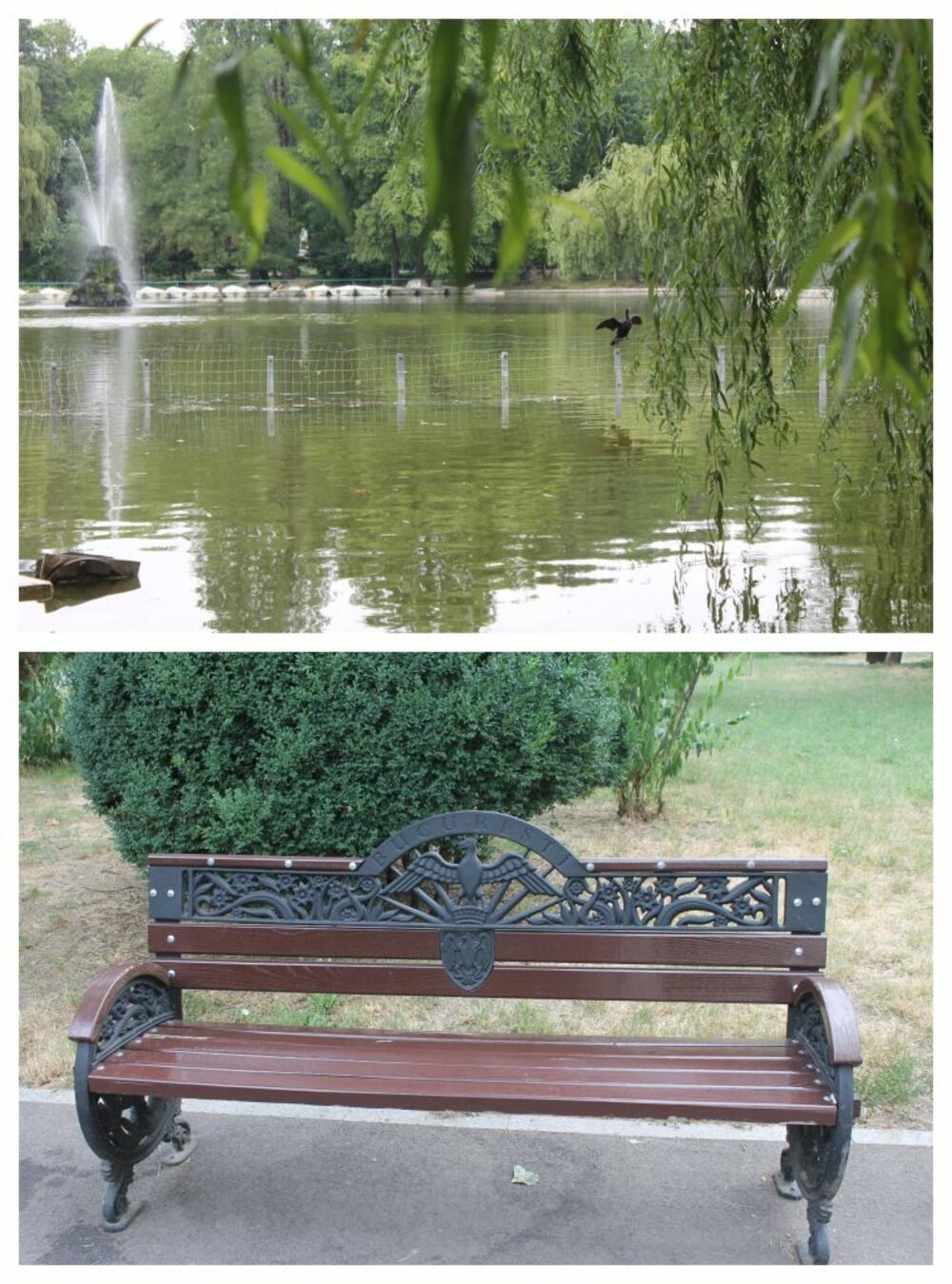
photo: Jasninaputovanja.me
We also reached University Square, where we finally came across a larger area intended only for pedestrians. There are numerous buildings next to the square, and 4 striking monuments on the perimeter of the square. Some of the information on the sculptures was written in such small letters and inaccessible that I used Google. The statues, therefore, depict Ion Heludi Radulescu, Mihael the Brave, Georfi Lazar and Spira Haret. You can Google who is who, but, obviously, each of them made an exceptional contribution to the development of Romania in their fields of activity as soon as they deserved this place.
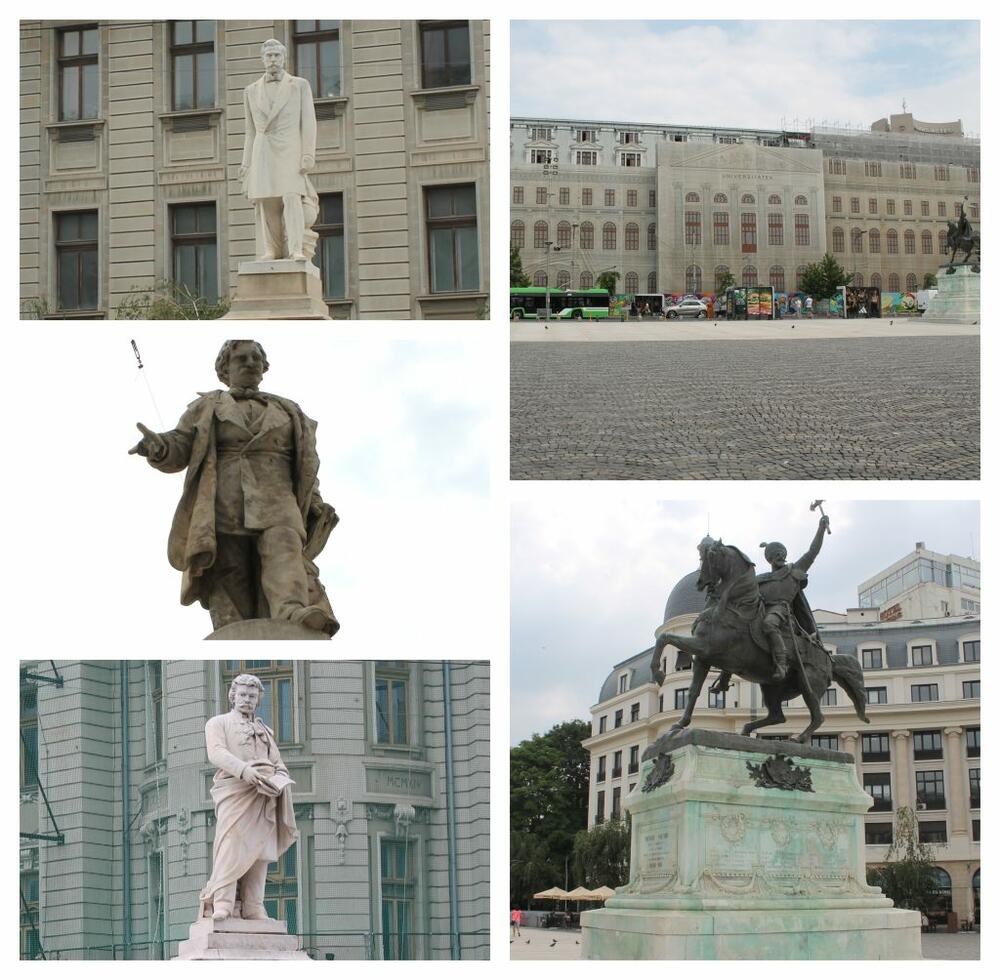
photo: Jasninaputovanja.me
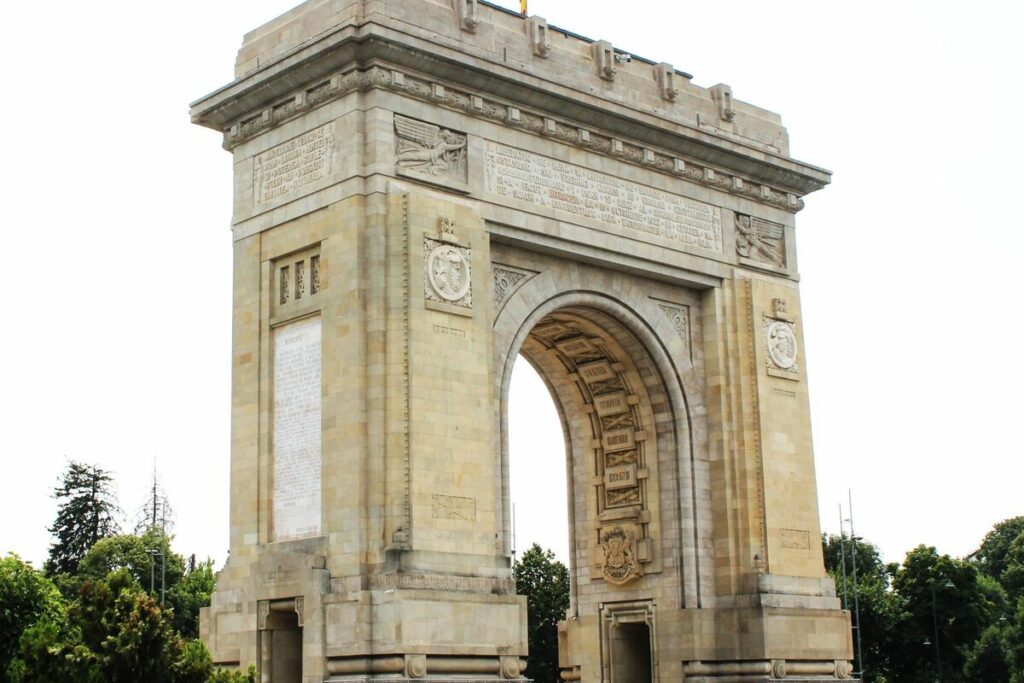
Here we sat down to think about what to do next. We had several ideas, but I insisted on going to the “Dimitrie Gusti” Village Museum. We bought bus tickets and got on the bus that took us to the Arch of Triumph, another of Bucharest’s attractions, and another detail that justifies its nickname “Little Paris.” It was built in 1936 to honor the soldiers who fought in World War I. The Village Museum is not far from here. We only had to wait for a few traffic lights to cross the wide boulevards.
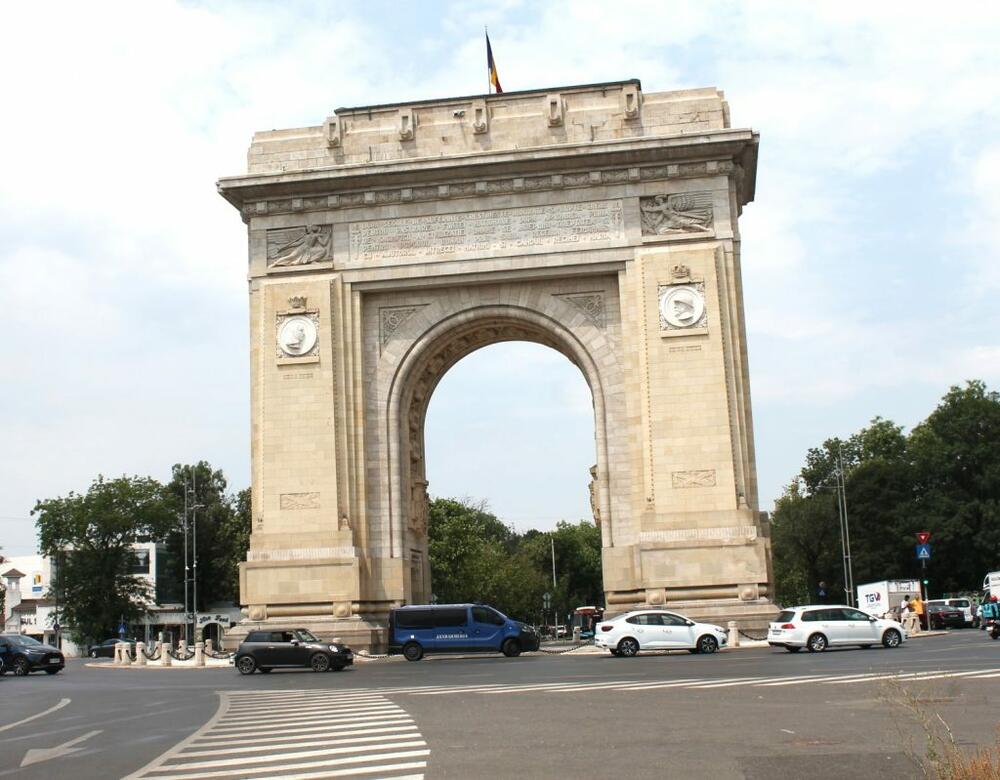
photo: Jasninaputovanja.me
This phenomenal ethnographic museum contains over 270 farmhouses, wells, flower gardens that used to grow around the houses, various oil mills, winemaking equipment, fences, granaries for grain, hay, wood, and other curiosities from all over Romania from the 17th to the 20th centuries. Even two old wooden churches have found their place here. I don’t remember a museum that has thrilled me more in my life. It would take at least a day and a separate blog to describe it. As a child, I walked through a department store full of toys. I snapped so many pictures that my camera battery ran out, so I kept taking photos with my phone because I wanted every detail to be documented so I could look at it again someday. Next to each house was a small information board with information about the location of the house, the time period, the detailed layout of the rooms, and their contents. It’s fortunate that at that moment only a few houses were open for viewing the interior, because I believe the guards would have kicked us out at the end of working hours. I enthusiastically sent countless photos to Miloš and Ana, who were on the other side of town. The answer came from Miloš: “God, Jasna, we brought you to the city – you go to the countryside.” If I could choose what I would most like to see again from everything I saw on this nine-day tour, it would be this incredible setting. Congratulations, Romanians: this is how the past is preserved and celebrated. The museum is located in Herastrau Park, i.e. King Mihaj I Park, the largest and most beautiful park in Bucharest and much beyond. As part of the park, there is a lake of the same name above the shores of which this open-air museum is located. We were so tired when we packed everything that we didn’t have the strength for the park. We barely made it to the bus stop thinking where we could have lunch (dinner). When we get caught up in the walking fever of unfamiliar cities, we forget about fatigue, hunger and thirst. We are champions here, both of us. Out of about a hundred photographs of the Village Museum, it has never been harder for me to choose nine representative ones, not in terms of quality but in terms of what they represent.
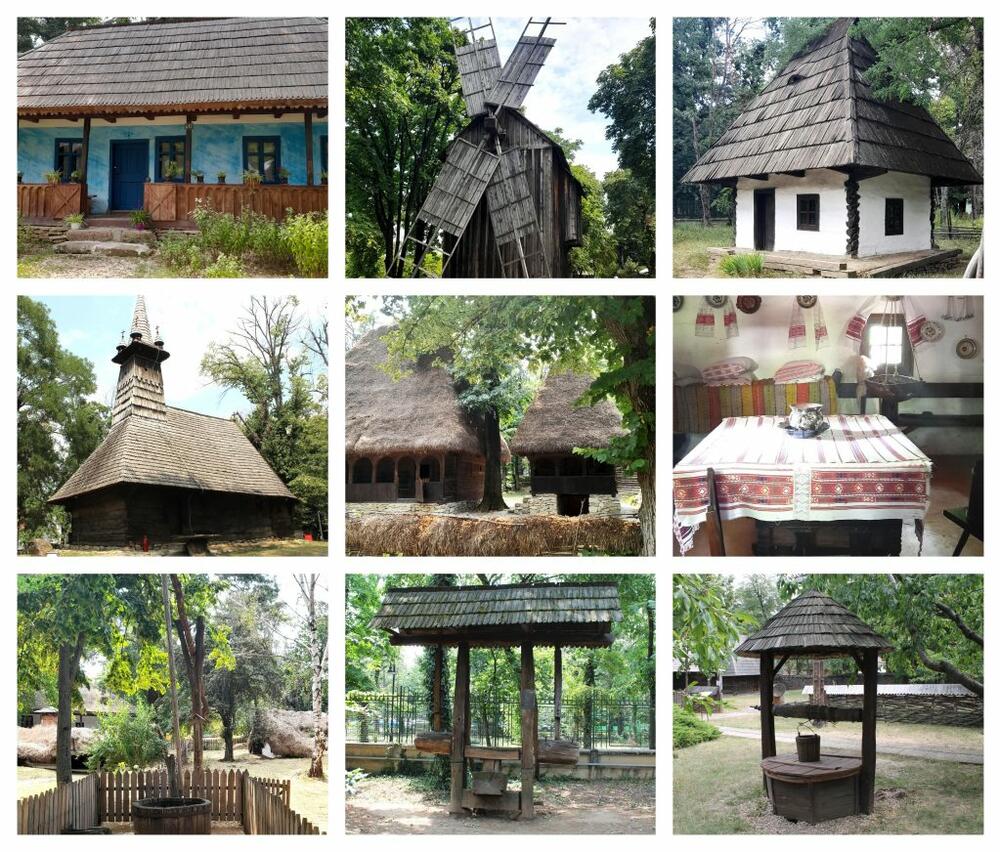
photo: Jasninaputovanja.me
In the evening, although tired, we went back to the Old Town to at least get a taste of Bucharest’s nightlife, which is much written about, and which is the center of entertainment. It was very crowded, countless cafes and restaurants were full, and to our surprise, the dancers were so scantily dressed, as if they were living advertisements for the strip clubs that are also located there, but open later. It was around 9 o’clock, and there were children among the passers-by and spectators. I didn’t really like it, but I was probably in the minority.
The next day we went to the Parliament again, and came across the “Temple of the Salvation of the People”, an Orthodox church under construction, which, judging by the scale of what has been completed and what is still planned, seems to us to aspire to be the largest religious Orthodox building in the world. There was also the University building, ministries that we were unable to figure out what they were related to, wealthy houses of interesting architecture, more churches and many monuments. A representative neighborhood, in any case. We ran past all of that because our companions were waiting for us to continue our journey towards the famous Romanian castles, the main lures for tourists, Peles and Bran.
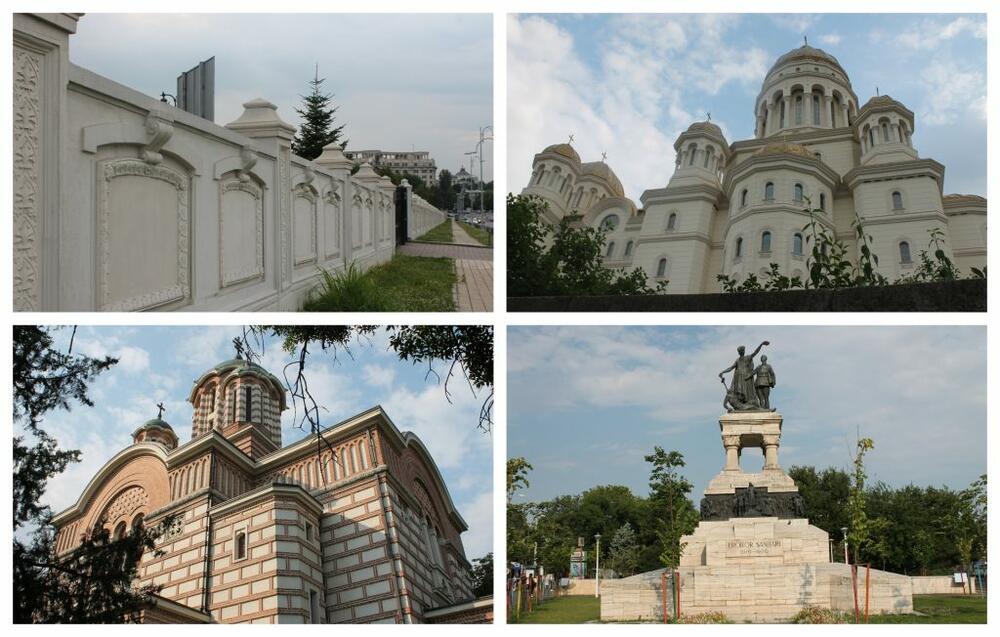
photo: Jasninaputovanja.me
We missed out on another attraction in Bucharest, the Multimedia or “musical” fountain, because it was being renovated during our stay in the city. This complex originally contained 44 fountains and stretched over a radius of 1,4 km, making it the largest fountain complex in Europe. We will have the opportunity to see what it will look like when the extensive renovation that has “captured” this part of the city is complete, at least online.
Our stay in Bucharest is over and we left with great impressions. I read a lot about it, preparing for the trip. Nowhere have there been such conflicting opinions from numerous travel bloggers as when it comes to this city. From comments about how boring and worthless it is to the fact that it is one of the most beautiful and interesting cities in Europe. In a nutshell, I would not say that Bucharest should be bypassed, on the contrary. We only “scratched” what can and should be seen in it. First of all, I am thinking of museums. However, how many people have so many different interests, so each story, each text about Bucharest was different, with an emphasis on what interests the author, which is to be expected. I offered various things, so choose, deepen visits to what I did not get to. Finally, another collage of interesting buildings that I managed to catch a glimpse of while walking around Bucharest: from the Church of Saint Anthony, one of the oldest churches in the city, the Russian Church of Saint Nicholas to the extraordinary building of the “Officers’ Circle Palace”, the police building, numerous monuments and hotels. I don’t know who can say that Bucharest is a boring city? You just have to take a step and find what interests you. Good luck!
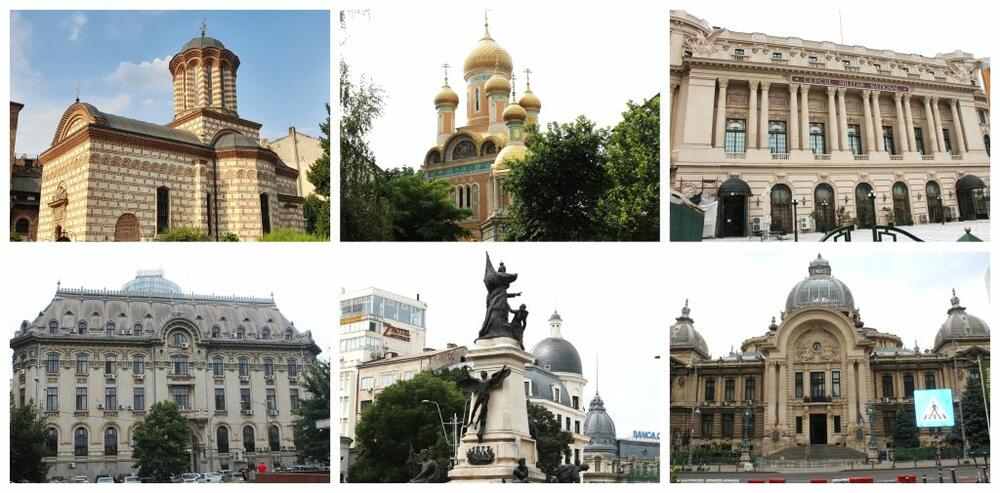
photo: Jasninaputovanja.me

News