
Albania opens new chapters towards the EU, North Macedonia gets stuck at Kajmakcalan

Express newspaper
13/09/2025 12:21
“This Tuesday, September 16, the Danish Presidency of the EU invites us, in the presence of the Foreign Ministers of all member states, to open 4 more chapters of the accession negotiations,” declared the Prime Minister of Albania, Edi Rama.
According to him, these chapters are added to the 24 opened in just 11 months, which constitutes “an absolute record for the speed of a negotiation process”. Rama stressed that the Green Agenda and Sustainable Connectivity, which include important areas such as transport, energy, trans-European networks and the environment, are already on the table. “Another milestone was set on the road to Albania’s top 2030 in the EU,” he concluded.
While Albania is rapidly moving towards the European Union, North Macedonia finds itself involved in new rapprochements with Serbia and the “Serbian World” project. In early September 2025, Belgrade organized a series of coordinated actions that go beyond historical memory and affect current politics.
On September 7, at the ceremony in Kajmakcalan, Serbian Defense Minister Bratislav Gašić, along with other members of the Serbian government, used the event to reinforce the narrative of the “unity of the Serbian people” and Serbia’s historical presence in Macedonian territories. Serbian Minister Milica Đurđević Stamenkovski repeated the rhetoric that North Macedonia and Kosovo are “Serbian territories,” provoking strong reactions.
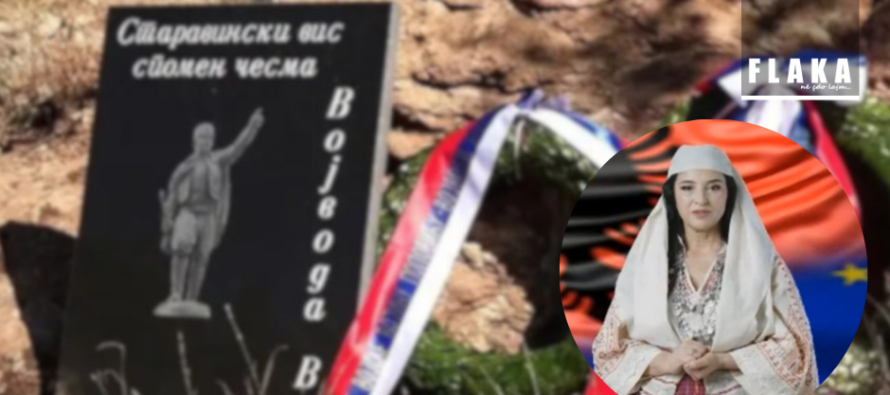
Part of this offensive is the installation of plaques for Serbian soldiers and figures involved in the occupation of Macedonia, such as Voivoda Vuk, bringing to mind painful periods for Macedonians. Within just five days, Serbia’s actions were also accompanied by the signing of a Memorandum of Cooperation between the Pension Insurance Fund of North Macedonia and the Fund of Republika Srpska, extending the influence from historical symbolism to state structures.
This strategy represents a sophisticated form of “soft power,” where history is used as an instrument to legitimize Serbia’s political and cultural presence in the region. Recent actions risk igniting interethnic tensions within North Macedonia and undermining its political stability.
Analysts warn that this is not simply a matter of historical memory, but a real challenge to the country’s sovereignty and Euro-Atlantic orientation. By glorifying past occupation and building bridges of institutional cooperation, Serbia is trying to create spaces for legitimacy for the “Serbian World” project within North Macedonia.
Faced with this situation, it remains imperative that the Macedonian state institutions react with clarity and transparency, informing the public and curbing any attempt to instrumentalize history in the service of hegemonic policies. Only a firm stance can guarantee that the country does not deviate from its path towards European integration and preserves multiethnic cohesion and national sovereignty. Flaka Media