
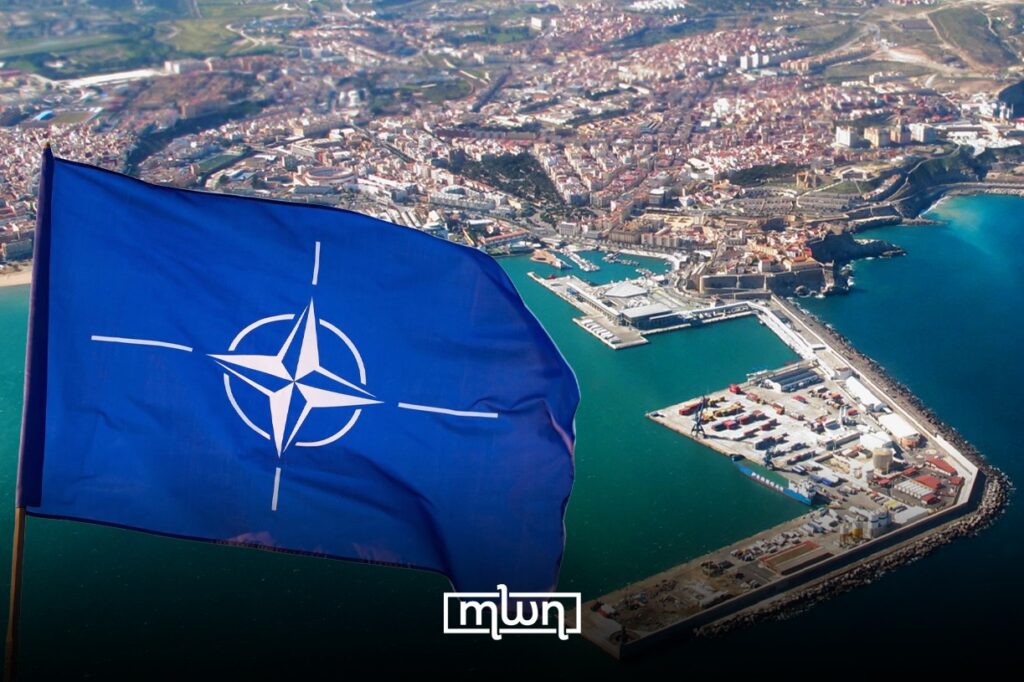
Marrakech – For the first time in its history, the NATO Parliamentary Assembly will descend on Melilla, an occupied Moroccan city, on September 26-27.
The visit, engineered by Fernando Gutiérrez Díaz de Otazu, a retired general, senator for the Popular Party (PP), and now vice-president of the NATO Parliamentary Assembly, will bring around 50-60 parliamentarians from 16-17 NATO countries to Spanish-held territory in North Africa.
According to multiple Spanish news outlets, the program has been approved by both chambers of the Spanish parliament (Congress and Senate), with the collaboration of four ministries – Foreign Affairs, Defense, Interior, and Social Inclusion.
The delegation will meet with local authorities, Spanish police and military commanders, and visit the CETI migrant detention center, as well as attend a weapons display and military exercise at the Rostrogordo range. They will not, however, tour the militarized border fence with Morocco.
The Spanish government itself appears uneasy. Madrid fears Rabat will see the NATO delegation as a direct provocation – a step that threatens to reopen old wounds just weeks after Morocco shut down the “trial” customs at Ceuta and Melilla, both under PP control.
Yet, despite this official hesitation, Spain is hosting what can only be described as a theatrical display of colonial arrogance, parading NATO parliamentarians through occupied Moroccan territory as if sovereignty were not in dispute.
Melilla and Ceuta: Symbols of colonial hypocrisy
Spain claims to defend international law and condemns occupations abroad, particularly in Palestine. Yet, at home, it clings to two Moroccan cities – Ceuta and Melilla – seized by force centuries ago and held ever since as colonial outposts.
Ceuta, occupied since 1415, was the first. Portuguese forces under King John I seized the city, exploiting internal instability in Morocco. For over two centuries, Ceuta remained under Portuguese control until 1580, when Portugal and Spain were united under one crown.
After Portugal regained independence in 1640, Ceuta chose to remain under Spanish rule in 1641, cementing its colonial fate. For more than 600 years, Spain has clung to Ceuta against Morocco’s continuous rejection.
Melilla followed in 1497, just five years after the fall of Granada and the expulsion of Muslims from Spain. While Morocco faced dynastic struggles, Spanish forces captured Melilla outright.
Unlike Ceuta, which passed from Portugal to Spain, Melilla was from the beginning a direct Spanish colonial grab. For over five centuries, it has been fortified, militarized, and used as a European gate inside Africa.
Madrid attempts to disguise these occupations by granting and dressing up both cities with the status of “autonomous communities,” equal on paper to mainland Spanish regions. But this administrative façade cannot erase reality: they remain remnants of European colonialism on African soil.
Morocco has never recognized Spanish sovereignty over Ceuta and Melilla. Since its independence in 1956, Rabat has demanded their return, including at the United Nations Decolonization Committee.
For Moroccans, the two cities are not “Spanish enclaves” but symbols of unfinished liberation. Colonial occupation in general shattered Morocco into fragmented zones: the north under Spain, the center under France, the Sahara torn apart – with its eastern part lost to Algeria.
Until Ceuta and Melilla are returned, Morocco’s decolonization remains incomplete. The reason Morocco does not open this file publicly today is to avoid creating multiple fronts at once, as the country is now focusing all its efforts on first finalizing the Western Sahara dossier.
Even NATO indirectly acknowledges this uncomfortable truth. Article 6 of the 1949 Washington Treaty explicitly excludes territories in continental Africa. Ceuta and Melilla lie outside NATO’s defense umbrella not by accident, but because they are not legitimate Spanish territories. NATO knows it, Europe knows it, Spain knows it, and Morocco knows it.
The PP, already on thin ice with Rabat after repeated diplomatic missteps, has now chosen to escalate matters. By pushing NATO parliamentarians into Melilla, PP is sending the message that Spain can flaunt its colonial trophies under an allied banner. The move is reckless, destabilizing, and historically tone-deaf.
Spanish officials whisper concerns about Moroccan reaction, but the hypocrisy remains glaring. When it comes to Palestine, Spain presents itself as a moral actor, denouncing Israeli “occupation.” Yet in North Africa, Madrid continues to practice the very same colonialism it condemns elsewhere.
Royal visit would deepen the crisis
To make matters worse, talk of a possible visit by King Felipe VI to Ceuta and Melilla has resurfaced. If realized, it would mark the first trip by a Spanish monarch to the enclaves since 2007. Far from being a gesture of unity, such a royal appearance would be seen in Morocco as a red line crossed – a direct challenge to Morocco’s sovereignty.
This would risk returning relations to the dark days of 2021, when Spain secretly allowed separatist Polisario leader Ibrahim Ghali to enter its territory for medical treatment under a false identity.
That decision provoked one of the worst bilateral crises in decades: Morocco recalled its ambassador, suspended high-level contacts, and allowed migratory pressure at the Ceuta border to spike in May 2021.
Trust collapsed, and relations froze for months until painstaking efforts – facilitated by shifts in Spain’s position on Western Sahara – restored dialogue in 2022.
By pairing the NATO visit with a possible royal tour of the enclaves, Spain risks reopening the same wounds, undoing years of recovery, and sending bilateral relations back to a level of hostility and mistrust that both sides had hoped to bury.
For Moroccans, Ceuta and Melilla are not “enclaves” or “autonomous cities,” but living scars of colonialism. Their continued occupation is an affront to Morocco’s territorial integrity and a reminder that decolonization remains incomplete.
The NATO visit – timed just as Spain debates a possible royal trip to Ceuta and Melilla – only deepens the wound. It aligns Spain not with justice or history, but with a colonial mindset that belongs to another century.
As Rabat has made clear time and again: true partnership between Morocco and Spain cannot coexist with colonial relics on Moroccan soil. Until Ceuta and Melilla return, Spain will remain trapped in contradiction – preaching justice in Palestine while denying it in Morocco.
Read also: Samir Bennis: Spain Must Return Its African Enclaves To Morocco