
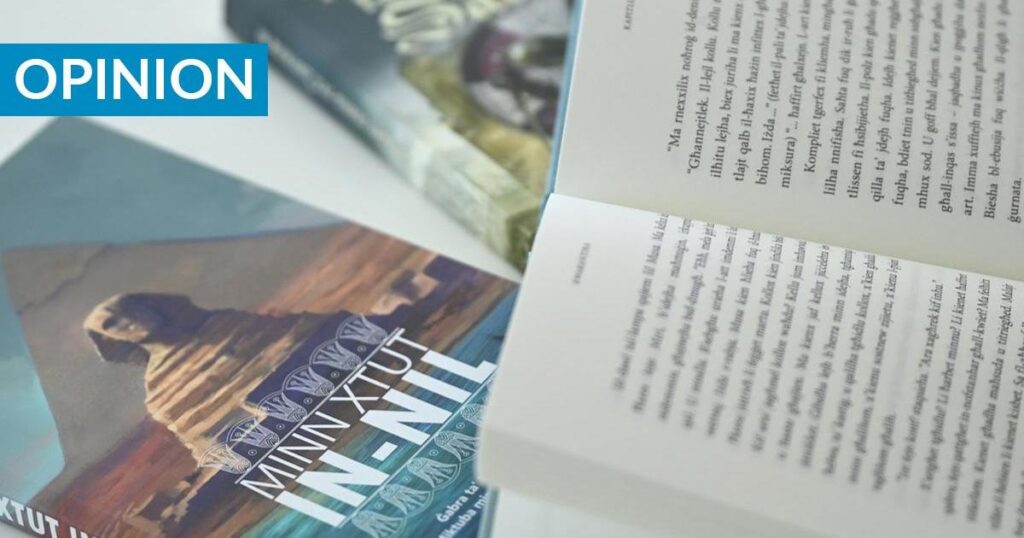
As Malta celebrates Independence Day, il-Malti battles for survival in some homes, schools and hearts.
How free are we if, when schools reopen, many, though not all, Maltese children prefer English over il-Malti, even when speaking to their Maltese peers? For some, TikTok, Fortnite, YouTube and Netflix have made English cooler and more familiar. Il-Malti, by contrast, is too often tied to grandparents, festas and Sunday mass. A language treated as outdated is already half lost.
Some parents, grandparents and carers address children in English, believing it sounds smarter, softer or more respectful. In doing so, they pass on the old wound that English is the language of intellect and opportunity, while Maltese is merely a kitchen language, fine for daily talk but unfit for correspondence, serious thought or ambition.
Perhaps unconsciously, this is colonialism still speaking through us. Wherever the British ruled, they left their mark and made English the language of intellect and status. That mindset still seems to persist.
While both Maltese and English are official, English is the University of Malta’s language of instruction. All lectures, except Maltese, are delivered in English. This is not simply to accommodate international students.
German, French and Italian universities lecture in their own languages, even when international students are in class, using English only when publishing research for international communication.
In Cyprus, universities uphold Greek or Turkish despite decades of British occupation. In Egypt, once a British colony, Arabic dominates public universities, with English limited mainly to scientific fields.
By contrast, Maltese is marginalised in higher education, reinforcing the perception that it is less academic or intellectual. And when subject terminology in Maltese is used, it often sounds complicated or unnatural, simply because we aren’t accustomed to hearing it.
Maltese is, of course, a minority language, spoken by around half a million people worldwide but this is no excuse. Icelandic, with fewer than 400,000 speakers, thrives as the language of instruction in its universities. Minority does not mean weak.
The difference is in mindset, not numbers. We can learn from immigrants such as Filipino, Italian, Colombian and Bulgarian families, who keep their heritage languages alive in Malta. In their communities, they pass them on to their children and refuse to let them fade. Why are some Maltese less willing to do the same with our own language?
Research shows that bilingual children develop stronger memory, empathy, problem-solving and social skills- Jacqueline Zammit
Defiantly, our ancestors fought for Maltese. They knew it was more than words; it was their dignity. In the 19th century, the British made it clear that English was the language of progress. Workers were told they needed English for promotion.
Many resisted, clinging to Maltese and Italian, because English felt foreign and imposed. Slowly, the pressure mounted. Survival left little choice. English was first resisted, then endured, then accepted, until it became not only the coloniser’s tongue but also a status symbol we still carry today.
This goes beyond national pride. It is about survival. Research shows that bilingual children develop stronger memory, empathy, problem-solving and social skills. Families who speak Maltese at home are not ‘holding their children back’; they are giving them a double inheritance. Children speaking two languages are gifted, not burdened.
And, if this is the power of being bilingual, just imagine the possibilities of being multilingual.
English will come anyway through school, media, games and daily life and parents/carers can nurture it at home alongside Maltese. But Maltese will only survive if we speak it, use it and live it in e-mails, songs, plays, poems, WhatsApp and social media chats, as well as on TV, in films, adverts, music, games and streaming, so children grow up hearing and using it in the words and messages that shape them.
So, celebrate bilingualism and ultimately multilingualism, instead of fearing them. Maltese and English can coexist: one feeds the soul; the other opens the world. Yet, a language cannot survive in private spaces alone. To stay alive, it must be seen and heard in our shared spaces.
A language hidden away cannot grow; it must stand proudly in the light.
There are writing competitions, plays and festivals but Maltese must become visible, natural and appealing to Gen Z and Gen Alpha in digital stories and games, in Minecraft and virtual reality, on YouTube, TikTok and every platform where the next generations live their lives.
Maltese withstood centuries of Latin, Italian and British dominance in law, culture and education. But it cannot survive indifference. Indifference is choosing English in shops, restaurants, offices, calls, chats, e-mails or classrooms when Maltese would do. Indifference is staying silent when the young dismiss Maltese as old-fashioned. Every act of indifference digs its grave with our own hands.
Il-Malti is not just a language. It is our identity. To lose it is not to lose words but to lose ourselves.
If il-Malti dies, so do we.
Jacqueline Zammit is a resident senior lecturer in Maltese pedagogy at the University of Malta.