
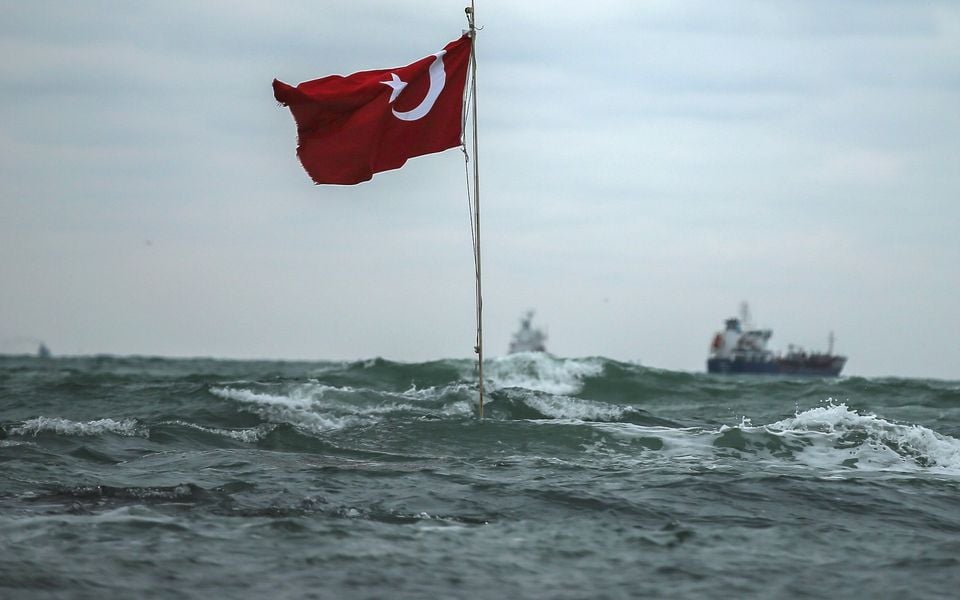
With a Navtex (navigational telex) notice – widely seen as a sign of Turkey’s irritation over developments in the Eastern Mediterranean – Ankara announced that beginning Monday, and for the next ten days, its research vessel Piri Reis will conduct scientific surveys in parts of the Aegean Sea.
While the Piri Reis may conduct such research, the move immediately raises the issue of jurisdiction over the issuance of Navtex notices, since the vessel’s planned route passes through sections of the Aegean that lie within the territorial waters of Greek islands and, crucially, over the Greek continental shelf.
According to Navtex 0863/25, issued by the Izmir station of Turkey’s Office of Navigation, Hydrography and Oceanography, the ship’s track will take it west of Lesvos, then south of Chios, and onward to the islet of Kalogeros, located in open waters between Chios and Andros.
In the case of Kalogeros, the passage of the Piri Reis carries additional symbolism: Turkey has long objected to the fact that the islet is included almost year-round in a permanent firing range of the Greek Armed Forces.
Athens quickly responded with its own Navtex (154/25, issued by the Limnos station), challenging Ankara’s notice and the implications behind it. The coming 24 hours will show how the vessel proceeds – almost certainly under close Greek scrutiny both diplomatically and at sea.
Oceanographic research in the central Aegean may not in itself amount to a serious provocation, but it nonetheless constitutes a breach of established rules in the archipelago. The timing is also notable, coming just days after developments south of Crete and renewed debate over the planned Greece–Cyprus electricity interconnection, an issue recently complicated by frictions between Athens and Nicosia.
Ankara, meanwhile, has displayed pronounced sensitivity – at least rhetorically – over its rights in the Eastern Mediterranean. Most recently, Foreign Minister Hakan Fidan insisted that Turkey’s claims must be respected. His remarks, however, were widely interpreted as an expression of Ankara’s displeasure at Chevron’s decision to submit a proposal for two blocks south of Crete, in disregard of the Turkey-Libya maritime memorandum.