
Cyberwarfare / Nation-State Attacks
,
Finance & Banking
,
Fraud Management & Cybercrime
RUSI’s William Dixon on How Trade Wars Lead to Inflation and Cyber Risks
Mathew J. Schwartz (euroinfosec) •
September 16, 2025
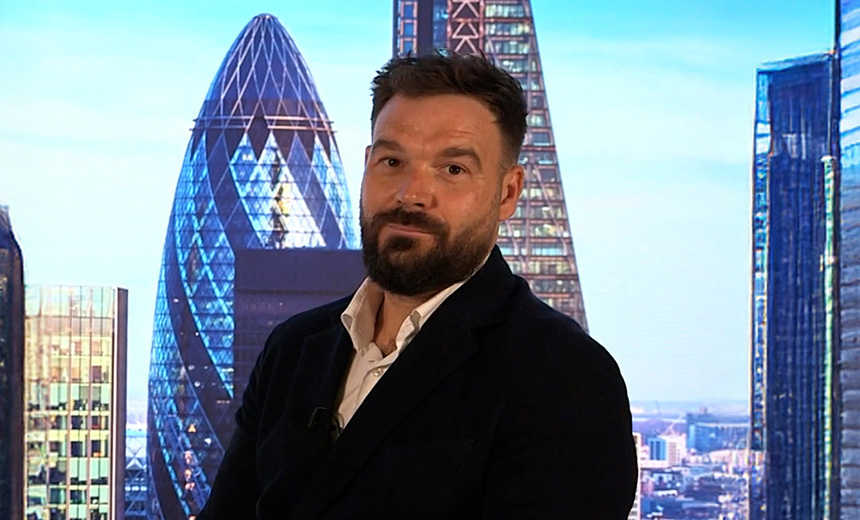
William Dixon, senior associate fellow, cyber and international security, Royal United Services Institute
Geopolitical instability has reshaped the cybersecurity priorities of financial services. Trade wars have strained global markets, while rising interest rates have restricted investment. Security teams that once expected stronger capital flows are now facing slower growth and receiving fewer resources.
See Also: The Rising Threat of Fake Business Accounts
Boards see security as a financial burden rather than a growth driver. “Cybersecurity, as much as we love to think of it as an enabler of business, is, of course, a cost center. Cyber leaders have been expected to do more for less,” said William Dixon, senior associate fellow for cyber and international security at the Royal United Services Institute.
These economic pressures are compounded by reduced global cooperation on cyberthreats. “Geopolitical fractures in particular means, from an international relations perspective, that there will be limited cooperation on cybercrime for the foreseeable future. A lot of the threats that the financial services industry face do come from organized crime groups in hard-to-reach jurisdictions,” Dixon said.
In this video interview with Information Security Media Group at the London Financial Services Summit, Dixon also discussed:
- The emergence of chief geopolitical officers to address systemic risks;
- The role of regulation and governance in strengthening cyber resilience;
- Why a strong security culture is critical beyond tools and technology.
Dixon began his career in the U.K. Intelligence Community, where he was an operational and strategic lead for a range of national security and cyber programs for HMG. After leaving the government, he was an agenda contributor for cyber and tech at the World Economic Forum, as well as global head of intelligence at Barclays.