
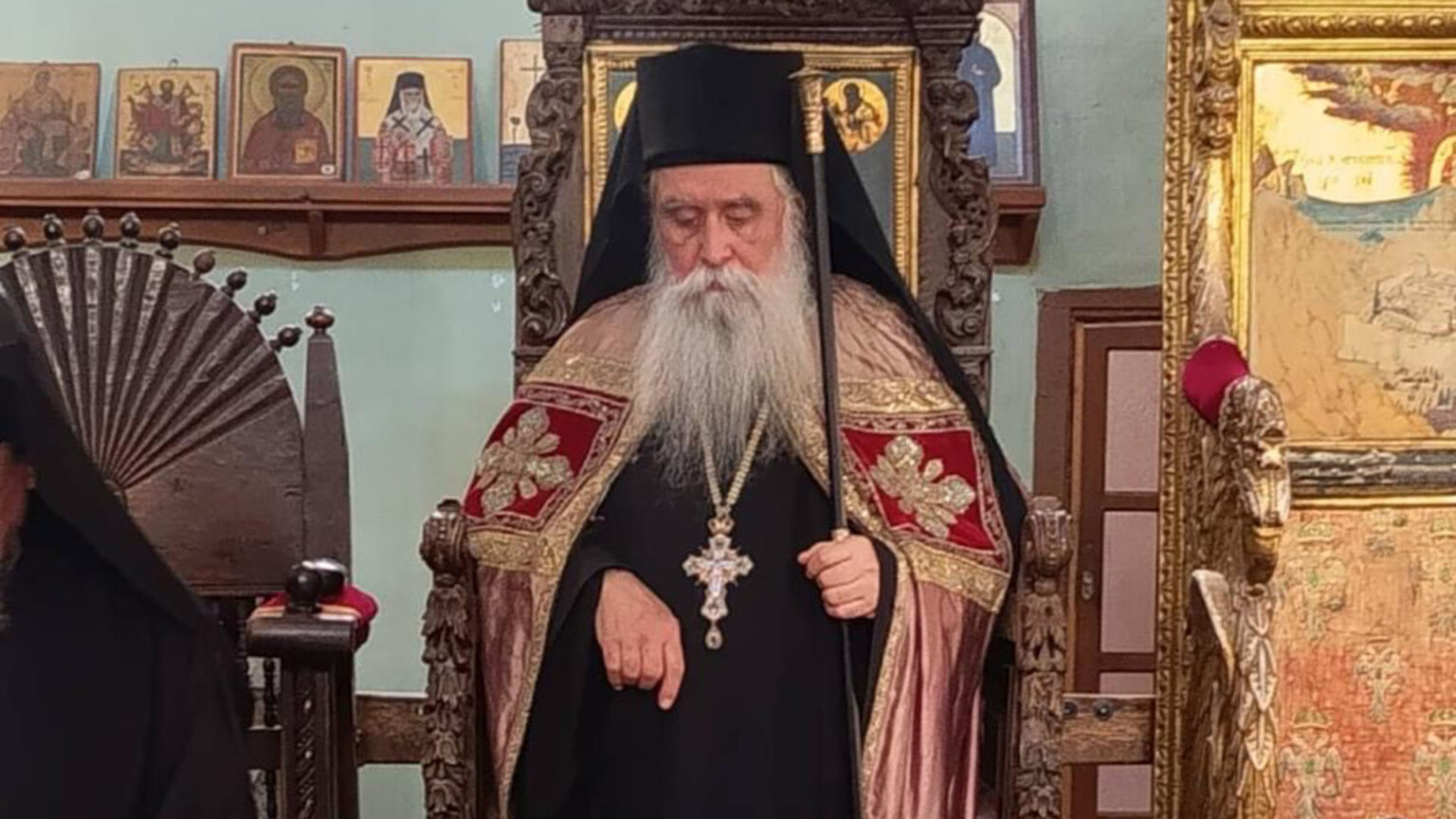
St. Catherine’s newly elected abbot, Archbishop Symeon Papadopoulos of Sinai. Courtesy of Orthodoxia Info.
The monastic community at the ancient monastery of St. Catherine’s elected a new abbot on Sunday.
The vote came after a crisis in the monastery’s sovereignty — triggered earlier this year by the transfer of a portion of its assets to the Egyptian state, and complicated by a bid to administer the monastery from abroad.
The challenge to the monastery’s autonomy played out in the Greek parliament and was backed by the outgoing abbot, Archbishop Damanios of Sinai, prompting his ouster by the monastery’s bureaucracy.
After months of upheaval, the Council of Monks unanimously elected Symeon Papadopoulos as the new abbot and archbishop earlier this week.
But rather than putting an end to the contest over St. Catherine’s management, Papadopoulos’s election was seen by some as evidence of Greece’s influence, with an informed source telling Mada Masr Athens clearly “had a hand” in ensuring his victory.
Out of three eligible candidates for the position, two were effectively removed from the running by ecclesiastical authorities. The source said that both belonged to monastic brotherhoods or held ecclesiastical residencies in Greece, and required ecclesiastical release in order to be nominated. But their release documents were withheld, disqualifying both from running and one from voting altogether.
“That’s how the margin narrowed, leaving the monks with only one choice,” the source said, noting that both monks were previously expelled by Damianos for disagreeing with his policies.
Speaking to Mada Masr, a source within the monastery said Papadopoulos, meanwhile, is perceived to have covered up for the former abbot, Damanios, when the latter approved the Greek law which handed sweeping control over the monastery’s assets inside and outside Sinai to a state authority in Athens. His election was also celebrated in the Greek press, with news outlet iefimerida describing him as “gentle and cooperative with Greece,” predicting that his election would pave the way for a new agreement with Egypt over the monastery’s assets.
Papadopoulos’s victory came after an internal vote in July deposed Archbishop Damianos, ending his five decade tenure. But Damianos retaliated a month later, ordering several monks forcibly removed from their cells by private security guards. They were thrown and locked outside — an unprecedented event at the world’s oldest inhabited monastery.
For recourse, the monks turned to the Orthodox Patriarchate, which intervened in favor of Damanios’s dismissal in July and summoned the archbishop for review.
Damianos then traveled to Greece under growing pressure, consenting last week to resign from the monastery’s leadership and calling for new elections, while claiming, in aa statement reviewed by Mada Masr, that his health would prevent him from attending the vote.
Damianos also declared he was lifting sanctions against the “dissident monks” and called for the withdrawal of mutual legal complaints “to avert schism,” adding that he would retire to “spend his remaining days in Greece.”
The informed source said that the monks agreed to drop their complaints against Damanios and that the Orthodox Patriarchate likewise backed down from defrocking the archbishop following his decision to step down.
Papadopoulos is expected to be formally ordained by the Orthodox Patriarchate of Jerusalem within three weeks, after which the archbishop’s three-member advisory council will be elected.
He will then present his agenda, which should clarify his stance on unresolved disputes, including the new Greek law and the legal battle over the monastery’s land holdings in Egypt.