
Published on
September 20, 2025
By: Rana Pratap

By 2025, all of the countries Saudi Arabia joined with UAE, Turkey, Qatar, Jordan, Egypt, and Oman have seen an unprecedented surge in tourism, as Saudi Arabia welcomed thirty two million tourists in the summer which is a staggering twenty six percent increase from the last year. The tourism boom is unprecedented in the region spurred on by National policy frameworks, and investments in the burgeoning megaprojects, all of which are driven by a burgeoning appetite for luxury, cultured, and ecologically responsible tourism. Their increasing investment in the region underscores the Middle East’s anticipated importance to the global tourism market by 2025.
Saudi Arabia’s tourism success is powered by its Vision 2030 initiative, which has sparked massive investments in mega-projects like NEOM, Qiddiya, and the Red Sea Project, alongside the country’s focus on hosting world-class events that attract millions of visitors. Meanwhile, the UAE continues to thrive as a global tourism hub, benefiting from its extensive airport connectivity and high-profile events. Qatar, capitalizing on its post-World Cup infrastructure, is now a major destination for sports tourism and MICE (Meetings, Incentives, Conferences, and Exhibitions). Despite facing mid-year challenges, Turkey saw a 5.6% revenue increase in Q1 2025, while Jordan, Egypt, and Oman are driving growth through their cultural heritage, luxury resorts, and eco-tourism initiatives.
This regional tourism boom is fueled by strategic national visions, large-scale infrastructure investments, and an increasing demand for unique, authentic experiences, positioning the Middle East as one of the fastest-growing global tourism markets in 2025.
Saudi Arabia: The Epicenter of the Middle East Tourism Boom
Saudi Arabia has emerged as the dominant force in the Middle East’s tourism boom in 2025. The country has experienced record-breaking tourist arrivals, driven by its Vision 2030 initiative, which focuses on diversifying the economy and reducing dependence on oil revenue. Tourism has become a central pillar of this transformation, and the results are extraordinary.
Record-Breaking Arrivals and Spending
In the summer of 2025, Saudi Arabia welcomed a staggering 32 million tourists, marking a 26% increase compared to the previous year. This surge is not just about more visitors but also about higher spending, as international visitors are flocking to experience the country’s evolving tourism landscape. By the end of 2025, Saudi Arabia’s tourism sector is expected to contribute a record SAR 447.2 billion ($119 billion) to the national economy.
Giga-Projects and Mega-Events Driving Growth
A significant driver of this tourism boom is the country’s massive investment in mega-projects. Saudi Arabia is transforming its cities and landscapes to create world-class destinations that attract international tourists. Key projects like NEOM, the futuristic city planned for the north, and the Red Sea Project, which is introducing luxury resorts and cruise tourism, are reshaping the country’s tourism offerings. Another highlight is Qiddiya, an entertainment city near Riyadh, which will soon be home to the world’s tallest and fastest roller coaster, Falcon’s Flight, as part of its Six Flags Qiddiya theme park.
Moreover, Saudi Arabia has adopted an event-driven tourism strategy, with initiatives like the Riyadh Season in 2025, which is packed with exclusive events that bring tourists from across the world. From the Six Kings Slam tennis tournament to the WWE Royal Rumble and the MDLBEAST Soundstorm music festival, these mega-events are becoming essential to attracting high-spending international visitors and boosting the global profile of the Kingdom.
The Impact of Vision 2030
Saudi Arabia’s tourism strategy is heavily driven by its Vision 2030 plan, which is designed to diversify the economy and position the country as a global leader in tourism. The national blueprint has already led to significant changes in infrastructure, with projects that create entirely new cities, resorts, and attractions, reshaping the tourism landscape. NEOM, Diriyah, and AlUla are just a few examples of how the Kingdom is transforming its natural and cultural assets into global tourism destinations.
The Saudi Tourism Authority (STA) is at the helm of this transformation, promoting the country globally and overseeing initiatives to enhance the visitor experience, including innovations like the SARA AI virtual travel assistant. These efforts are ensuring that Saudi Arabia isn’t just attracting tourists—it’s ensuring they have a unique and memorable experience.
Challenges and Strategic Navigation
While the future of Saudi Arabia’s tourism looks exceptionally bright, there are challenges ahead. The rapid pace of development and the scale of mega-projects bring risks related to execution, including potential delays and budget overruns. Moreover, geopolitical tensions in the region remain a concern, though the robust growth and global events hosted by Saudi Arabia seem to insulate it from some of the broader regional risks.
Saudi Arabia: Exploring the Kingdom’s TransformationPlaces to Visit:
- Riyadh: The capital city, where modernity and tradition meet. Must-see sites include Masmak Fortress, King Abdulaziz Historical Center, and National Museum.
- Jeddah: Known for its historical significance, the Al-Balad district (a UNESCO World Heritage site), and the King Fahd Fountain are iconic. The Jeddah Corniche offers beautiful views of the Red Sea.
- Mecca: The holiest city in Islam, home to the Kaaba at the Grand Mosque (Haram). Visit during the Hajj pilgrimage or explore its rich Islamic history.
- Al-Ula: Known for Madain Saleh, an ancient Nabatean city that rivals Petra in Jordan. Al-Ula’s rock formations and historical tombs are a must-see.
Things to Do:
- Visit NEOM, a futuristic smart city under construction that promises to redefine travel and living.
- Explore Qiddiya, an entertainment mega-project with theme parks, concert venues, and adventure experiences.
- Enjoy desert safaris and camel rides in the Rub’ al Khali (Empty Quarter), the largest continuous sand desert in the world.
United Arab Emirates (UAE): Steady Growth Amidst Global Hub Status
The United Arab Emirates (UAE) continues to solidify its status as one of the most resilient and dynamic tourism destinations in the world. Known for its opulent skyscrapers, luxury shopping, and extravagant experiences, the UAE’s tourism sector has remained a key economic driver, experiencing consistent growth even amidst global challenges.
A Global Hub with Record Visitor Numbers
In the first half of 2025, the UAE welcomed 9.88 million overnight visitors, marking a 6% increase from the previous year. Dubai, the country’s flagship emirate, continues to lead the charge with its world-class tourism infrastructure, making it a global hub for both business and leisure travelers. As a key aviation hub, Dubai International Airport (DXB) has reaffirmed its place as the world’s busiest international airport, handling millions of passengers and connecting visitors to every corner of the globe.
The UAE’s Ongoing Appeal
The steady growth of the UAE’s tourism industry is driven by its ability to adapt and diversify its offerings. While luxury shopping and high-end hotels have long been the hallmark of the country’s tourism appeal, Dubai and other emirates are now increasingly catering to a broader demographic. From adventure tourism in the desert to cultural experiences and wellness tourism, the UAE is expanding its reach to attract travelers of all interests.
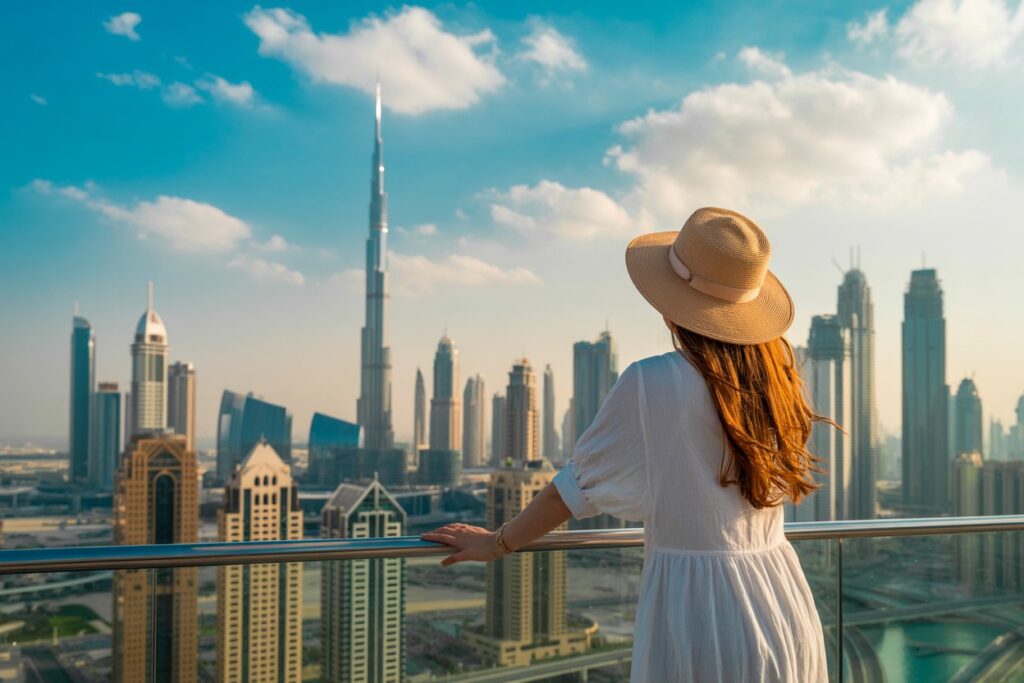
Major attractions such as the Burj Khalifa, Dubai Mall, and Palm Jumeirah continue to draw millions of visitors, but new additions, including House of Hype, Glitch, and the virtual reality-themed Chaos Karts, are also gaining traction, especially with younger audiences seeking immersive experiences. The UAE is also tapping into the family tourism segment, with new offerings like the Dubai Parks and Resorts, which cater to a more diverse set of visitors.
Strategic Events and Growing Revenue
The UAE’s tourism calendar is packed with high-profile events that keep the country in the international spotlight. From the Dubai Shopping Festival to major concerts, sporting events, and exhibitions, these events continue to be a major draw for tourists. The Expo 2020 Dubai has proven to be a milestone, cementing Dubai’s position as a major global event host and driving sustained tourism growth.
In 2025, the UAE’s tourism sector is projected to contribute an impressive AED 228.5 billion ($62 billion) in international visitor spending, continuing a trend of high-spending tourists. Additionally, the UAE’s hospitality industry is thriving, with hotels and resorts continuing to provide world-class experiences that make the UAE a top destination for luxury seekers.
Economic and Political Stability
Unlike some of its neighbors, the UAE benefits from political stability and is seen as a safe haven for tourists even amid regional uncertainties. Its diversified economy, coupled with progressive visa policies such as e-Visa and visa-on-arrival systems, make it an attractive destination for travelers from all over the world. The UAE’s long-term tourism vision, outlined in the UAE Tourism Strategy 2031, focuses on maintaining its position as a global leader in the tourism industry while adapting to the changing demands of modern travelers.
UAE: A Global Hub for Luxury and AdventurePlaces to Visit:
- Dubai: Known for its Burj Khalifa, Palm Jumeirah, Dubai Mall, and the Dubai Aquarium. Explore the Dubai Creek for a taste of the city’s heritage, or visit Dubai Marina for upscale dining and nightlife.
- Abu Dhabi: Visit the stunning Sheikh Zayed Grand Mosque, explore the cultural hubs like Louvre Abu Dhabi, and take a thrilling drive on the Yas Marina Circuit or Ferrari World.
- Sharjah: Known for its museum scene, the Sharjah Art Museum and Al Noor Mosque are key attractions.
Things to Do:
- Go shopping at the Dubai Mall, the world’s largest shopping center.
- Experience an adventure in the desert with dune bashing and sandboarding, or enjoy camel trekking.
- Visit Dubai Parks and Resorts for family fun, with attractions like Legoland Dubai and Bollywood Parks.
Turkey: A Tale of Contradictory Growth Amid Economic and Environmental Challenges
Turkey’s tourism sector in 2025 has been a story of initial growth followed by mid-year setbacks, reflecting both the resilience of the country’s tourism market and the challenges it faces in a dynamic global environment. While the country began the year with strong momentum, various economic and environmental factors led to a decline in visitor numbers by mid-year.
Strong Start to 2025: Initial Growth and Record Revenue
In the first quarter of 2025, Turkey saw an impressive 9.1 million international visitors, marking a 1.2% increase compared to the same period in 2024. This early performance signaled that the country’s tourism sector was off to a strong start, building on the momentum from previous years. The surge in international arrivals translated into a 5.6% increase in tourism revenue, with $9.45 billion generated in the first quarter alone.
Turkey’s appeal as a sun, sea, and sand destination, combined with its rich cultural heritage, continued to attract tourists from around the world. The country’s iconic sites, like Istanbul, Cappadocia, and Ephesus, remained top draws, along with its luxury coastal resorts along the Aegean and Mediterranean coasts.
Mid-Year Setbacks: Economic Pressures and Environmental Disruptions
Despite the strong early performance, Turkey faced a significant downturn in tourism by mid-year. In July 2025, the country recorded a 5% decline in foreign arrivals compared to the same period in 2024. Several factors contributed to this sudden shift:
- Currency Strengthening: The Turkish lira’s strengthening in 2025, driven by domestic anti-inflationary policies, made Turkey a more expensive destination for foreign visitors, particularly from countries with weaker currencies.
- High Inflation: Domestic inflation in Turkey remained persistent, further driving up the cost of living and increasing the overall price of travel for both locals and visitors.
- Wildfires: Devastating wildfires along key tourist regions, such as the Aegean and Mediterranean coasts, disrupted infrastructure and created safety concerns. These environmental disasters negatively affected traveler sentiment and led to a decrease in bookings, particularly in affected areas.
Shifting Market Preferences
As a result of these challenges, a noticeable market shift occurred. Many travelers opted for all-inclusive resorts where they could better control costs and avoid the uncertainties related to inflation and rising prices. While this trend benefited large resort operators, it created challenges for smaller, independent businesses, particularly those that rely on the traditional cultural tourism segment.
Despite the decline in visitor numbers, Turkey’s tourism sector remains deeply attractive due to its rich history, diverse culture, and natural beauty. The historic sites of Istanbul, Pamukkale, and the Turkish Riviera continue to be essential to its tourism appeal.
Long-Term Outlook: A Need for Diversification
Turkey’s mixed performance in 2025 highlights a critical need for diversification in its tourism product. While traditional attractions like sun, sea, and sand tourism will always be important, there is a growing demand for cultural and ecological tourism. Turkey’s natural parks, mountain regions, and archaeological sites offer great potential to capture the interest of tourists seeking more immersive and experience-driven trips.
To remain competitive, Turkey must continue to invest in sustainable tourism initiatives, particularly in light of the wildfires and environmental risks that have become more pronounced in recent years. Ensuring the protection of its natural resources will be essential to maintaining the long-term viability of its tourism sector.
Turkey: A Mix of Ancient History and Modern CulturePlaces to Visit:
- Istanbul: A city straddling two continents, home to the Hagia Sophia, Blue Mosque, and Topkapi Palace. Basilica Cistern and the Grand Bazaar offer a rich historical experience.
- Cappadocia: Famous for its fairy chimneys, cave dwellings, and hot air balloon rides at sunrise.
- Pamukkale: The natural wonder of thermal mineral springs and white terraces (travertines) is a must-see.
- Ephesus: One of the best-preserved ancient cities in the world, including the Temple of Artemis and the Celsius Library.
Things to Do:
- Take a hot air balloon ride over Cappadocia at sunrise for breathtaking views of the fairy chimneys and caves.
- Experience a traditional Turkish bath (Hammam) for a unique cultural and wellness experience.
- Visit the ancient ruins of Ephesus, a UNESCO World Heritage site.
Qatar: Capitalizing on Post-World Cup Legacy and Sustainable Growth
Qatar’s tourism sector in 2025 showcases a remarkable example of leveraging a major international event, the FIFA World Cup 2022, to establish long-term growth in tourism. The country has built on its event-driven infrastructure to create a sustainable and diversified tourism economy that attracts visitors year-round, not just for sports events but for a variety of experiences.
Post-World Cup Growth and Record Visitor Numbers
In the first half of 2025, Qatar welcomed 2.6 million visitors, marking a 3% increase compared to the same period in 2024. This steady growth demonstrates Qatar’s success in translating its World Cup legacy into a flourishing tourism economy. The country’s ability to maintain visitor numbers, even after the global spotlight from the World Cup has faded, speaks to the strength of its tourism infrastructure and marketing efforts.
Qatar’s tourism is now deeply integrated with its growing reputation as a regional hub for sports tourism, MICE (Meetings, Incentives, Conferences, and Exhibitions), and luxury leisure travel. The massive investments in stadiums, hotels, and transport infrastructure that were made for the World Cup continue to serve the country’s tourism sector, ensuring its resilience even amid geopolitical and economic challenges.
Sporting Events and Diversified Tourism
One of Qatar’s primary strategies for sustaining growth is its focus on hosting major sporting events. In 2025, the country is continuing to build on the success of the World Cup by hosting events like the Formula 1 Qatar Grand Prix and the FIFA Arab Cup. These events draw large international crowds, attracting high-spending visitors and enhancing Qatar’s global tourism profile.
Beyond sports, Qatar has been actively developing its MICE sector to attract corporate tourists for business meetings, conferences, and exhibitions. The country’s investments in conference centers, luxury hotels, and transportation networks are designed to support Qatar’s aspirations of becoming a top destination for international events.
Additionally, Qatar has also made strides in building its cruise tourism sector, with a record 87 ship calls in the 2024/2025 season, bringing over 360,000 visitors to Doha. The country’s modern port infrastructure and commitment to enhancing its maritime tourism make it a prime destination for regional and international cruise ships.
Economic Contribution and Growth in Revenue
In 2024, tourism contributed QR 55 billion ($15 billion) to Qatar’s GDP, accounting for 8% of the economy. This growth trajectory is expected to continue, with Qatar’s National Tourism Strategy 2030 targeting a further increase in tourism’s contribution to the economy, aiming for a share of 10-12% of GDP. With a growing number of visitors, particularly from the Gulf Cooperation Council (GCC), Qatar is expanding its regional market share, positioning itself as a premium destination for both leisure and business tourism.
Qatar: A Rising Cultural and Sports DestinationPlaces to Visit:
- Doha: The capital city is home to the Museum of Islamic Art, Doha Corniche, and the Souq Waqif, a bustling marketplace with traditional food, crafts, and music.
- Katara Cultural Village: A hub for cultural events, galleries, and performances.
- The Pearl-Qatar: An artificial island with luxury shops, restaurants, and marinas.
Things to Do:
- Attend major sporting events like the FIFA World Cup or the Formula 1 Grand Prix.
- Explore the Desert Safari and visit Khor Al Adaid, a UNESCO-listed inland sea.
- Relax at the luxury resorts along West Bay or enjoy a traditional dhow boat ride along the coast.
Jordan: Resilient Growth Driven by Heritage Tourism and Stability
Jordan’s tourism sector in 2025 is a shining example of resilience and adaptability, fueled by its rich cultural heritage and political stability. Despite the ongoing challenges faced by the broader region, Jordan has successfully positioned itself as a safe, reliable destination, attracting growing numbers of international visitors, especially from Europe and the Americas.
A Strong Resurgence in Visitor Numbers
In the first half of 2025, Jordan welcomed 3.29 million visitors, marking an 18% increase from the same period in 2024. This growth is a clear indicator of the Kingdom’s ability to attract tourists even amid regional instability. Jordan’s diverse tourism offerings, centered on its historic sites and natural beauty, have proven to be a major draw, particularly for European tourists seeking cultural and heritage experiences.
Petra and Beyond: The Heart of Heritage Tourism
At the core of Jordan’s tourism success is the ancient city of Petra, one of the Seven Wonders of the World. Petra continues to attract millions of tourists each year, drawn to its awe-inspiring rock-cut architecture and rich history. However, Jordan has made great strides in diversifying its tourism offerings to include other attractions that cater to a wide variety of travelers.
In addition to Petra, Jordan is focusing on other key heritage sites, such as Jerash, Madaba, and the Dead Sea, which have long been important attractions for tourists. The Dead Sea is particularly popular for wellness tourism, with visitors flocking to its mineral-rich waters for health and relaxation.
Tourism Revenue Growth
Jordan’s tourism revenue reached JD 2.17 billion ($3.05 billion) in the first five months of 2025, marking a 16% increase from the previous year. This impressive revenue growth is largely driven by a combination of factors: the strength of the country’s heritage offerings, increasing interest in medical tourism (particularly at the Dead Sea), and the stability that Jordan offers compared to other countries in the region. As more international travelers recognize the country’s safety and security, its tourism sector is becoming an increasingly vital contributor to the economy.
Targeting New Markets: European and American Tourists
A key element of Jordan’s success in 2025 has been its ability to attract tourists from more risk-averse regions, particularly Europe and the Americas. European tourist arrivals surged by 82% in the first half of the year, reflecting the Kingdom’s ongoing success in marketing itself as a safe and stable destination. This shift towards a more diverse array of visitors strengthens Jordan’s position in the global tourism market, reducing its reliance on more volatile regional markets.
Niche Tourism and Sustainable Growth
In addition to its traditional cultural and heritage offerings, Jordan is focusing on developing niche tourism markets to ensure long-term growth and sustainability. The Kingdom is increasingly targeting wellness, medical, and adventure tourism segments. For example, the Dead Sea remains a hub for wellness tourists, while the country is also investing in adventure tourism by promoting its Wadi Rum desert and Jordan Trail as prime locations for trekking and eco-tourism.
Jordan’s government has also focused on enhancing its infrastructure and tourism services. The Jordan Tourism Strategy (2021-2025) continues to emphasize improvements in transport, digital platforms, and the overall visitor experience, ensuring the country remains competitive in the rapidly changing global tourism landscape.
Jordan: A Haven of Heritage and Natural BeautyPlaces to Visit:
- Petra: The ancient city, famously carved into rose-red rock, is Jordan’s most iconic site.
- Amman: Visit the Roman Theater, Citadel, and the Royal Automobile Museum.
- Dead Sea: Known for its saline waters, where visitors float effortlessly and indulge in mud therapy.
- Wadi Rum: A stunning desert landscape, also known as the Valley of the Moon, where you can camp under the stars and enjoy jeep tours.
Things to Do:
- Hike through Petra and explore its ancient tombs, temples, and the Siq.
- Relax in the therapeutic waters of the Dead Sea and enjoy a mud bath.
- Trek in Wadi Rum or go on a 4×4 desert safari.
Egypt: A Cultural and Coastal Renaissance Driving Tourism Growth
Egypt is experiencing a powerful resurgence in its tourism sector in 2025, fueled by a combination of cultural heritage, coastal development, and the opening of world-class attractions. The country’s rich historical assets, coupled with a focus on luxury resorts and significant infrastructure investments, have contributed to a dynamic and growing tourism market.
Remarkable Growth in Visitor Numbers
In the first half of 2025, Egypt welcomed 8.7 million tourists, reflecting a 24% increase compared to the same period in 2024. This surge comes on the heels of strong tourism numbers in 2024 and marks a critical turning point in Egypt’s post-pandemic recovery. The country’s tourism industry, which is historically one of its key economic drivers, is poised for continued growth as international interest in Egypt’s offerings grows.
The Grand Egyptian Museum (GEM): A Game-Changer for Cultural Tourism
One of the most significant catalysts for Egypt’s tourism boom is the opening of the Grand Egyptian Museum (GEM), slated to formally open in November 2025. The GEM, which houses a comprehensive collection of 5,600 artifacts from King Tutankhamun’s tomb, is expected to be a game-changer for Egypt’s tourism sector. Its cultural significance, combined with its state-of-the-art facilities, is expected to attract millions of high-spending visitors annually, further solidifying Egypt’s status as a top cultural destination.
Even with delays in its official opening, the GEM’s partial opening in 2025 has already fueled massive international interest, and its full inauguration is expected to be a major driver of long-term tourism growth.
Coastal Development and Luxury Tourism
Beyond its historical sites, Egypt is also focusing on the development of its coastal tourism sector. The country’s North Coast is being transformed into a year-round luxury destination, with high-end resorts and infrastructure projects designed to attract wealthy international tourists. Key projects like the $35 billion Ras El Hekma development and the $21 billion SouthMED project are pushing Egypt into a new phase of tourism development.
These projects are designed to add tens of thousands of luxury hotel rooms and make Egypt a premier destination for beach tourism. The country is also enhancing its appeal as a cruise destination, with Egypt’s coastal regions, such as Sharm El Sheikh and Hurghada, offering high-end resorts alongside world-renowned diving and marine experiences in the Red Sea.
Increased Tourism Revenue
Tourism revenues in Egypt reached $8 billion in the first half of 2025, marking a 22% increase compared to the same period in 2024. This growth reflects not only an increase in the number of visitors but also higher-spending tourists who are flocking to Egypt’s luxury resorts, cultural landmarks, and historical attractions. By the end of 2025, Egypt expects to welcome 18 million visitors and generate even higher revenue, signaling a strong recovery trajectory for the sector.
A Focus on Sustainable Tourism
Egypt’s government is also prioritizing sustainable tourism practices, focusing on balancing growth with environmental preservation. As new luxury developments take shape along the coast and in desert regions, sustainable practices are being integrated to ensure that the country’s natural and cultural resources are preserved for future generations. This includes eco-lodges, waste management systems, and sustainable water practices, particularly in areas facing water scarcity.
Egypt: Ancient Wonders and Coastal RetreatsPlaces to Visit:
- Cairo: Visit the Pyramids of Giza, Sphinx, and Egyptian Museum for a deep dive into ancient history.
- Luxor: Explore the Valley of the Kings, Karnak Temple, and Hatshepsut Temple.
- Sharm El Sheikh: Famous for its Red Sea diving and resort offerings, including Ras Mohammed National Park.
- Alexandria: A historic coastal city with ancient landmarks like the Library of Alexandria and the Qaitbay Citadel.
Things to Do:
- Cruise along the Nile River from Luxor to Aswan to see Egypt’s famous temples and tombs.
- Dive or snorkel in the Red Sea off Sharm El Sheikh or Hurghada.
- Explore the Great Pyramids and Sphinx at Giza, a once-in-a-lifetime experience.
Oman: Focusing on Niche Markets and Sustainable Tourism for Growth
Oman is demonstrating how a focus on authentic experiences, sustainability, and niche tourism markets can lead to significant growth, even in a competitive region. While its tourism sector may not be as large-scale as some of its neighbors, Oman’s strategic focus on the development of eco-tourism, adventure tourism, and cultural heritage has positioned the Sultanate as one of the standout performers in the Middle East’s tourism boom.
Sustained Growth in Visitor Numbers
In the first half of 2025, Oman welcomed 1.14 million tourists, reflecting a steady and consistent growth trajectory. While this number may seem modest compared to larger regional players, Oman’s focus on quality tourism has allowed it to carve out a niche for itself. This growth is also reflected in the country’s hospitality sector, which saw hotel revenues rise by 18.2% in the same period, reaching OMR 141.21 million ($367 million).
With eco-tourism and adventure tourism increasingly popular among high-value tourists, Oman has become a preferred destination for those seeking a more tranquil and immersive experience compared to the bustling cityscapes of its neighbors.
Niche Tourism: Adventure, Eco-Tourism, and Cultural Heritage
Oman has strategically chosen not to compete directly with larger tourism markets in the region, instead focusing on niche segments. The Sultanate’s mountainous landscapes, desert areas, and coastal regions offer unparalleled opportunities for adventure tourism—including trekking, Wadi explorations, and camping. These activities are attracting eco-conscious and adventure-seeking tourists looking for unique, off-the-beaten-path experiences.
In addition to adventure tourism, Oman has also embraced cultural heritage as a cornerstone of its tourism strategy. The country is focusing on experiences like the Falaj system (traditional water management) and the aromatic tourism experience, which immerses visitors in Oman’s rich history of fragrance-making. This culturally immersive tourism, combined with Oman’s pristine natural beauty, has led to a rising demand for sustainable tourism practices that focus on preserving the environment.
Tourism Revenue and Investments in Infrastructure
Oman’s tourism sector is expected to contribute RO 3.5 billion ($9.1 billion) to the country’s GDP in 2025, and long-term forecasts show this could grow significantly. The Sultanate’s Oman Vision 2040 focuses on increasing private investment in tourism, with the goal of securing $7.8 billion in tourism-related investment by the end of 2025. As of 2025, $6.7 billion of this target has already been secured, with investments flowing into developing eco-lodges, sustainable resorts, and cultural heritage sites.
Additionally, Oman is expanding its tourism infrastructure to make the country more accessible to international travelers. This includes expanding airport capacity and improving connectivity to key tourism sites. The expansion of national airports is expected to increase capacity from 14.5 million passengers to 50 million by 2040, ensuring that the country is ready to handle future growth in international arrivals.
Strategic Partnerships and International Collaboration
To further drive tourism growth, Oman has been forging international partnerships to develop new tourism offerings. In September 2025, Oman signed a landmark agreement with TUI Group, one of the world’s largest travel companies, to jointly develop and operate five new hotels in the southern Dhofar Governorate. This collaboration aims to position Oman as a top destination for European tourists seeking sun-and-beach experiences along with cultural and adventure tourism.
Oman: A Quiet Paradise of Nature and CulturePlaces to Visit:
- Muscat: The capital city offers the Sultan Qaboos Grand Mosque, Royal Opera House, and the historic Muttrah Souq.
- Nizwa: Famous for its Nizwa Fort and vibrant souks.
- Salalah: Known for its lush landscapes, especially during the Khareef monsoon season.
- Wahiba Sands: Experience the desert with camel rides and camping under the stars.
Things to Do:
- Visit the Muscat Corniche for scenic views of the harbor and mountains.
- Take a desert safari in Wahiba Sands or explore the Al Hajar mountains for hiking and natural beauty.
- Enjoy the Khareef season in Salalah, with its lush landscapes and cool weather.
Saudi Arabia joins the Middle East’s tourism boom in 2025, welcoming a record 32 million tourists, a 26% increase from the previous year, driven by Vision 2030, mega-project investments, and a surge in demand for luxury, cultural, and eco-tourism. Alongside Saudi Arabia, UAE, Turkey, Qatar, Jordan, Egypt, and Oman are all experiencing record growth in tourist arrivals, thanks to ambitious national strategies and major infrastructure developments.
Conclusion
The Middle East’s tourism sector in 2025 has truly experienced a transformation, with Saudi Arabia, UAE, Turkey, Qatar, Jordan, Egypt, and Oman all making significant strides in attracting record numbers of international visitors. This growth is driven by a combination of strategic national visions, large-scale infrastructure investments, and a shift toward offering luxury, cultural, and sustainable tourism experiences.
As each country continues to invest in its tourism sector, the Middle East is poised to maintain its position as one of the fastest-growing regions in the global travel market. With Saudi Arabia leading the charge through its Vision 2030 and mega-projects, the region’s tourism boom shows no signs of slowing down, positioning the Middle East as a dominant force in global tourism for the foreseeable future.
