
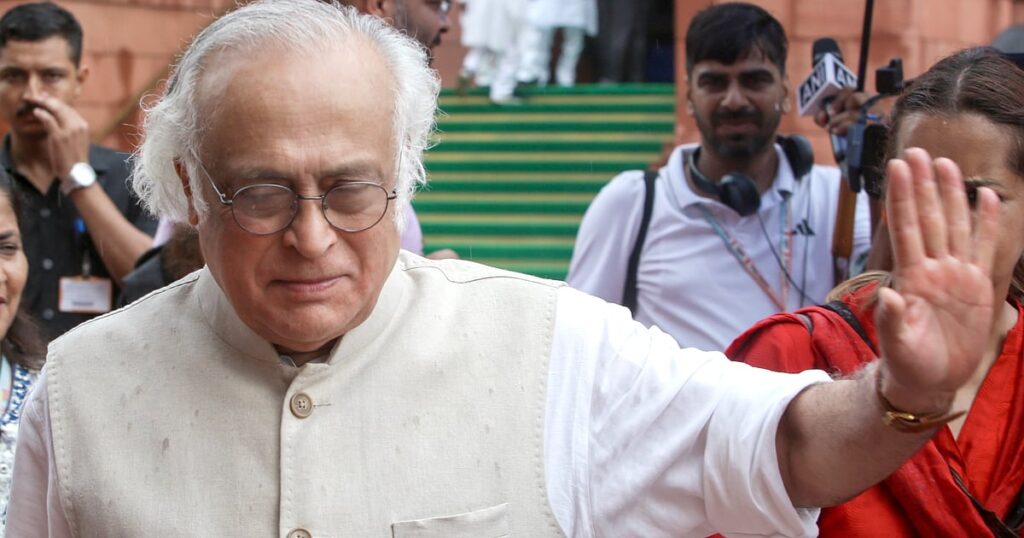
“The Union Minister of Environment, Forests, and Climate Change Shri Bhupender Yadav has accused the Indian National Congress of doing what he calls ‘negative politics’ on the Great Nicobar mega infrastructure project. Drawing the nation’s attention to an imminent ecological and humanitarian disaster is NOT ‘negative politics’. It is an expression of grave concern,” Ramesh said on X.
Ramesh raised concerns over the project’s impact on endangered species such as leatherback turtles, megapodes, saltwater crocodiles, and the island’s coral ecosystems. He also questioned the sustainability of the project in a high-seismic zone with a history of severe tsunami subsidence. He called for transparency, asking why critical documents, including the ground-truthing exercise reports for the proposed transshipment port, were not publicly available.
Yadav had accused Congress of indulging in “negative politics”, asserting that only 1.78 per cent of Great Nicobar’s forest area would be used for the Rs 72,000 crore project, which he described as essential for national security and strategic connectivity in the Indian Ocean Region. He defended the plan as a transformative initiative, featuring an international container transshipment terminal, greenfield airport, 450 MVA gas- and solar-based power plant, and a township spanning 16 sq km.
Congress Parliamentary Party chairperson Sonia Gandhi had earlier described the project as a “planned misadventure”, warning it threatens the survival of the Shompen and Nicobarese tribes, destroys a unique ecosystem, and risks natural disasters. She highlighted that ancestral villages of the Nicobarese, evacuated after the 2004 tsunami, would face permanent displacement, while the Shompen reserve would be denotified and subjected to large-scale human influx.
Ramesh concluded by urging the government to heed environmental and tribal safeguards, emphasising that ecological integrity and community rights cannot be sidelined in the pursuit of infrastructure and strategic goals.
With PTI inputs