
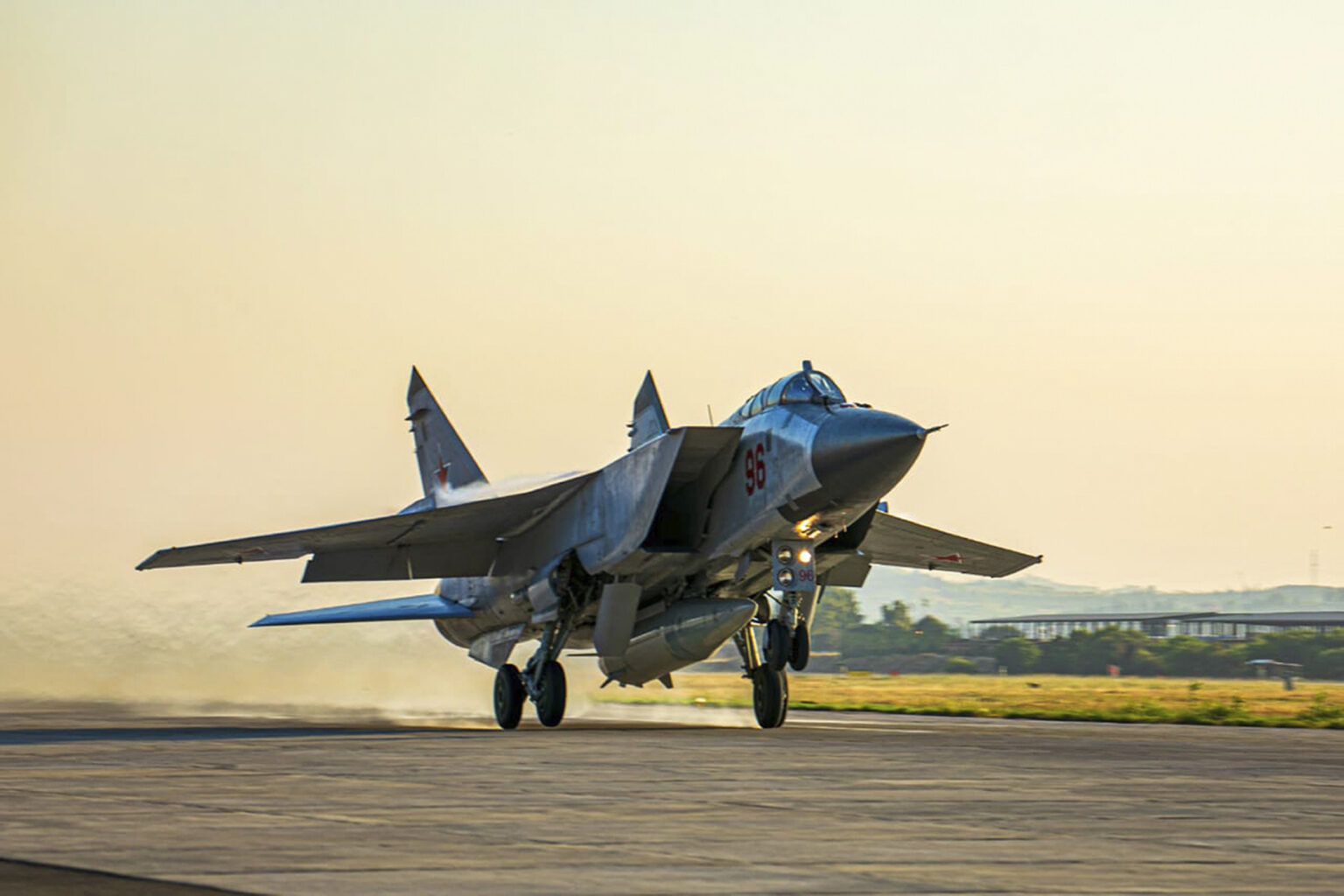
Russian pilots ignored signals when they flew into NATO airspace on Friday, a senior Estonian military official told The Associated Press.
Three MiG-31 fighter jets entered Estonian airspace between 9:58 a.m. and 10:10 a.m. local time on Friday in the area of Vaindloo, an island in the Gulf of Finland, the Estonian Defense Forces said. The jets had ignored signals from Italian aircraft from NATO’s Baltic Air Policing Mission, the official told the AP.
The Russian Defense Ministry on Saturday denied the jets flew into Estonia’s airspace, saying they stayed over neutral Baltic Sea waters. Estonian officials dismissed that, pointing to radar information and visual identification confirming the Russian jets entered the country’s airspace.
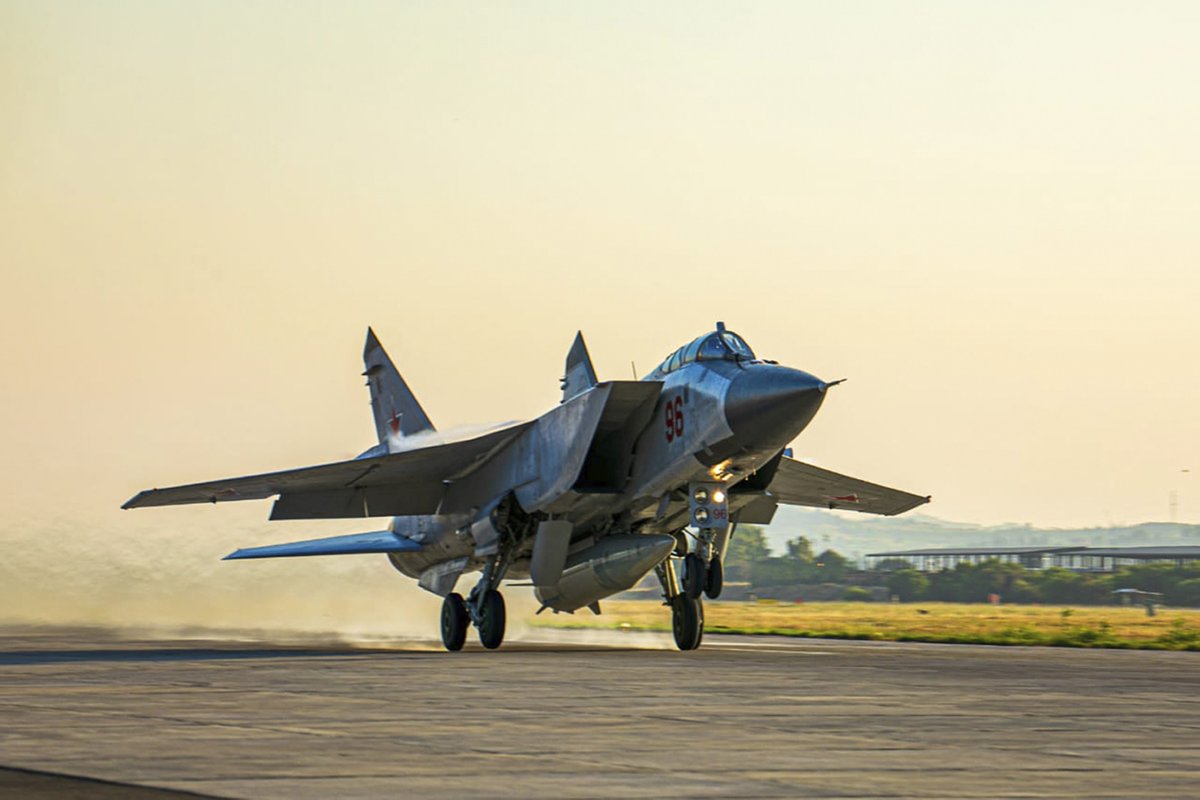
A file photo shows a Russian MiG-31 fighter jet taking off from an air base in Syria on June 25, 2021.
A file photo shows a Russian MiG-31 fighter jet taking off from an air base in Syria on June 25, 2021.
Russian Defense Ministry Press Service via AP, File
Why It Matters
Tensions have risen in the Baltic region in recent weeks as Russia’s war with Ukraine continues.
The 12-minute incursion was the fourth violation of Estonian airspace by Russia this year, the Estonian military said. It came just a week after multiple Russian drones entered Polish airspace earlier this month, some of them downed by NATO jets. This prompted Poland to invoke NATO’s Article 4.
The incidents have raised concerns that Russia is using such incursions to test NATO responses and to divert Western resources from Ukraine.
What to Know
Colonel Ants Kiviselg, the commander of Estonia’s Military Intelligence Center, told the AP that the Russian pilots did not pose a “military threat.”
But he said that although they acknowledged communication from the Italian pilots flying F-35 fighter jets, they apparently ignored it and “didn’t actually follow the signs.”
Kiviselg said the Russian jets came from an airfield near the city of Petrozavodsk, in northwestern Russia, and were heading to Kaliningrad, the Russian exclave on the Baltic Sea between Lithuania and Poland.
They were tracked by two Finnish fighter jets before being escorted by the two Italian aircraft, which took off from Estonia’s Ämari Air Base and followed them into international skies.
What People Are Saying
Estonian Foreign Minister Margus Tsahkna said in a statement on Friday: “Russia has already violated Estonia’s airspace four times this year, which in itself is unacceptable. But today’s incursion, involving three fighter aircraft entering our airspace, is unprecedentedly brazen. Russia’s increasingly extensive testing of boundaries and growing aggressiveness must be met with a swift increase in political and economic pressure.”
The Russian Defense Ministry said on Telegram, according to Reuters: “The flight was carried out in strict conformity with international rules governing airspace with no violation of the borders of other states as is confirmed by independent checks.
“During the flight, the Russian aircraft did not deviate from the agreed flight path and did not violate Estonian airspace.”
It added that the route taken by the fighter jets “was over neutral waters of the Baltic Sea at a distance of more than 3 km from the island of Vaindloo.”
President Donald Trump told reporters on Friday: “Well, I’m gonna have to look at it. They’ll be briefing me in a short while, so I’ll let you know about it tonight or tomorrow.”
He added: “I don’t love it. I don’t like when that happens. It could be big trouble, but I’ll let you know later.”
NATO spokesperson Allison Hart told Newsweek on Friday: “Earlier today, Russian jets violated Estonian airspace. NATO responded immediately and intercepted the Russian aircraft. This is yet another example of reckless Russian behaviour and NATO’s ability to respond.”
What’s Next
Estonian officials have said there was not a need to trigger Article 5, NATO’s collective defense clause, despite the repeated violations by Russian jets and drones.
But Estonia has invoked Article 4, which allows a NATO member to request consultations among the alliance if it believes its territorial integrity, political independence or security are threatened.
This article includes reporting by The Associated Press.