
Published on
September 22, 2025
By: Tuhin Sarkar

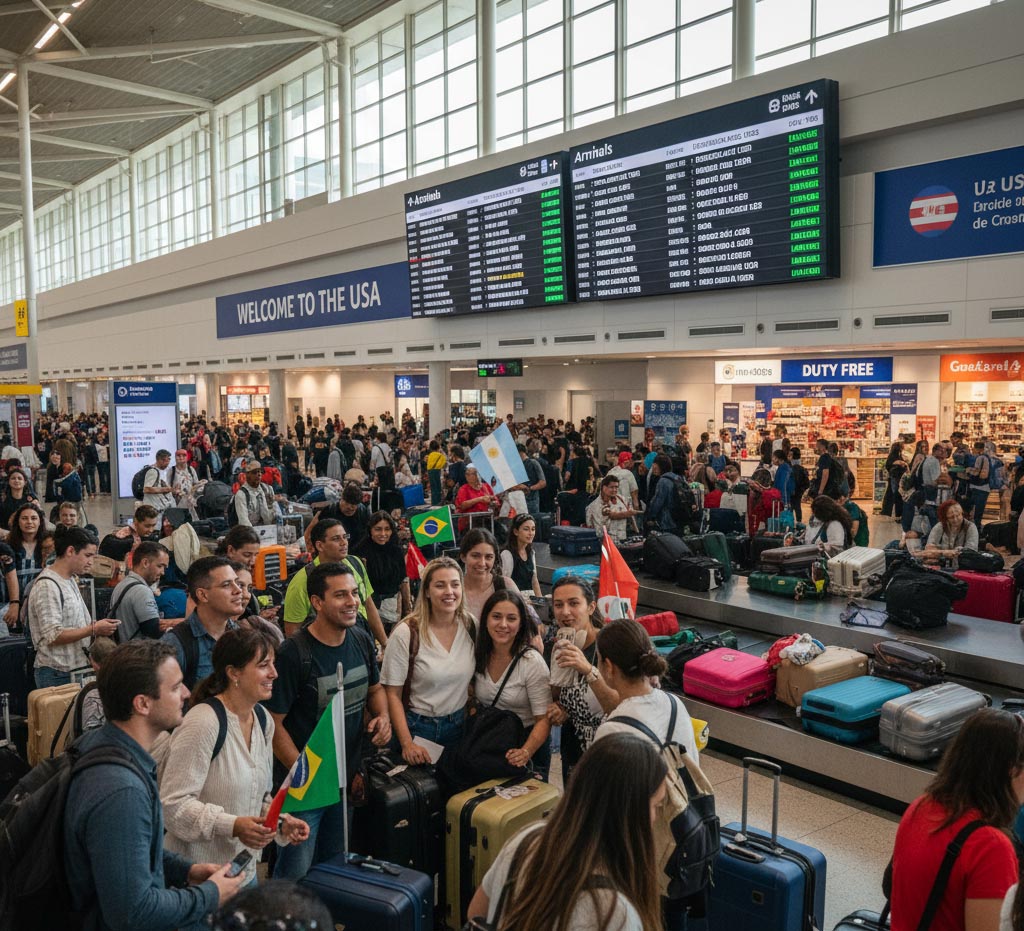
Peru has joined an exclusive group of nations, including Argentina, Spain, Mexico, Canada, Brazil, and the Bahamas, sending a record number of tourists to the U.S. This surge in visitors is not just a statistic; it’s a game-changer, propelling American visitor spending into overdrive. As South American and global travellers flood U.S. shores, spending patterns are shifting, breaking new records. With each passing month, these countries are contributing massively to the booming U.S. tourism industry. What does this mean for the future of American travel and the economy? How are these nations driving the surge, and why is the U.S. seeing such a rush in tourism? Stay with us to uncover the fascinating details behind this unprecedented rise in international visitors and what it means for both the U.S. and its eager tourists.
In 2024, the travel dynamics between Peru and the U.S. are witnessing significant shifts, marked by impressive growth in both inbound and outbound travel volumes. These changes are reshaping not only the tourism landscape but also the economic impact and employment opportunities tied to international travel. Let’s explore the latest figures, trends, and key insights into how travel between these two nations is evolving and what it means for the future of both tourism and trade.
Travel Volume to and from Peru in 2024
The year 2024 is proving to be a year of robust growth for travel between Peru and the U.S., with figures indicating a strong upward trajectory for both inbound and outbound volumes. Peru’s inbound travel to the U.S. is on the rise, reflecting a 7.3% increase compared to the previous year, bringing the total number of visitors to a healthy 364,000. This marks a recovery and growth trend following the challenging years during the pandemic when the figures were significantly lower.
Outbound travel from the U.S. to Peru also saw a sharp increase. With a notable rise of 42.9%, outbound travel numbers reached a total of 751,000. This surge is reflective of the growing interest among American travellers to visit Peru, with the destination becoming increasingly popular for its cultural richness, natural beauty, and historical sites.
Top U.S. Entry Ports for Peruvian Visitors
Miami, Florida, continues to dominate as the primary port of entry for Peruvian visitors to the U.S., accounting for 181,000 visitors, or 49.7% of total arrivals. New York follows with 35,000 visitors, while Atlanta ranks third with 31,000. Other significant entry points include Los Angeles and Fort Lauderdale, with 27,000 and 14,000 visitors, respectively.
These figures highlight the U.S. cities that serve as the main gateways for Peruvians travelling for various purposes, including tourism, business, and education. Miami’s dominance as the key entry point emphasizes the importance of Florida’s tourism infrastructure and the strong cultural and business connections between the U.S. and Latin American countries, particularly Peru.

Argentina: Leading the Charge with a 25% Visitor Growth
Argentina has experienced the most notable growth among South American countries sending tourists to the U.S. in 2024. In fact, the first four months of 2024 saw a striking 25% increase in Argentine visitors compared to the same period in the previous year.
This surge can be attributed to several factors, including Argentina’s improving economic stability and increasing air connectivity between Buenos Aires and major U.S. hubs. As Argentina recovers from its economic struggles, more Argentinians are able to afford international travel, with the U.S. emerging as a prime destination due to its diverse attractions and strong cultural ties to the Latin American country.
Argentina’s improved visa application process also contributed to this boost. The U.S. has worked closely with Argentina to streamline the visa issuance process, making it easier for Argentinians to visit the U.S. for both short vacations and long-term stays.
Economic Impact
The surge in Argentine tourism to the U.S. has not only benefitted the tourism sector but also had a positive economic impact across various industries. In 2024, Argentine visitors spent significantly on tourism-related services such as accommodation, dining, shopping, and entertainment, contributing to local economies across the U.S.
Brazil: A Strong and Steady Player in U.S. Tourism
Brazil remains one of the largest sources of international visitors to the U.S. Among South American countries, it consistently ranks high in terms of visitor numbers. In 2024, Brazil’s contribution to U.S. tourism continued to grow, with 215,604 Brazilian nationals arriving in December alone, reflecting a steady 5.8% increase from the previous year.
Brazil’s well-established tourism connections with the U.S. are reinforced by a large Brazilian diaspora living across various U.S. cities, including Miami, New York, and Los Angeles. Many Brazilians visit friends and family or travel for business purposes, but there has also been a steady increase in leisure travel, particularly to cities with cultural or natural attractions.
Economic Contributions
Brazilian tourists are some of the highest spenders in the U.S. tourism market. Their expenditures support several sectors, including hospitality, retail, and transportation. Shopping remains a major attraction for Brazilian tourists, particularly in cities like Miami, where designer brands and luxury goods are popular.
Colombia: A Steady Increase in Visitors to the U.S.
Colombia, another important South American market for U.S. tourism, has also seen notable growth in 2024. In December of the same year, 133,265 Colombian nationals visited the U.S., marking a 13% increase compared to the previous year.
The relationship between Colombia and the U.S. has evolved from political and business ties to a thriving tourism partnership. Many Colombians travel to the U.S. for leisure, with destinations like Orlando, New York, and Miami being the most popular. The increased ease of travel for Colombians, supported by more flight options and a simplified visa process, has contributed significantly to this growth.
Economic Impact
Colombians are increasingly spending on high-end travel experiences in the U.S. The growth of Colombian tourism has benefited U.S. hotels, restaurants, and local businesses, particularly in cities that attract large Colombian communities or where there is significant cultural exchange.
Chile: A Growing Source of U.S. Visitors
Chile, while not experiencing the same explosive growth as Argentina or Brazil, has steadily increased the number of tourists it sends to the U.S. in 2024. Chile’s position in South America, along with its strong economic ties to the U.S., makes it a reliable source of tourists.
Most Chileans visiting the U.S. travel for leisure or business. Popular destinations include cities with rich cultural offerings, like New York, Los Angeles, and Miami. With a well-educated population and a growing middle class, Chileans are increasingly travelling to the U.S. to experience its landmarks, attractions, and business opportunities.
Economic Contributions
Chile’s growing middle class is driving tourism expenditures in the U.S., especially in sectors like retail, hospitality, and entertainment. U.S. businesses are increasingly recognising the value of Chilean tourists and catering to their needs, from luxury shopping to fine dining.

Peru: A Steady Contributor with a Focus on Cultural Tourism
Peru has consistently been a source of U.S. visitors, with tourism numbers continuing to rise in 2024. Peruvians visit the U.S. primarily for business, education, and cultural reasons. Popular destinations for Peruvian tourists include major metropolitan areas like New York, Los Angeles, and Washington, D.C.
Economic Impact
The increasing flow of Peruvian tourists has benefited U.S. educational institutions, as many Peruvians travel for academic purposes, including university exchanges and short-term study programs. Additionally, tourism-related services in cities with a significant Peruvian population have seen an uptick in demand.
Uruguay: A Small but Consistent Player
Uruguay, a smaller South American country, maintains a consistent level of tourism to the U.S., although its numbers are smaller than those from larger nations like Brazil or Argentina. Uruguayans primarily travel to the U.S. for leisure, with destinations such as Miami and New York being popular.
Economic Contributions
While not as economically impactful as Brazil or Argentina, Uruguay’s steady visitor numbers contribute to U.S. tourism revenues, particularly in the hospitality sector, where Uruguayan tourists spend on accommodations, dining, and entertainment.
Venezuela: Overcoming Challenges and Maintaining Interest
Venezuelans face significant challenges in obtaining U.S. visas due to ongoing political instability and economic hardships. However, despite these barriers, the U.S. remains an attractive destination for many Venezuelans, particularly for family reunification and educational opportunities.
Although the number of Venezuelan tourists is smaller compared to other South American countries, those who do visit contribute significantly to local economies. With many Venezuelans in the U.S. sending remittances back home, their visits often serve to strengthen family ties and foster greater cultural exchange between the two nations.
Economic Impact
Despite a lower visitor volume, Venezuelan nationals spend on educational services, particularly in institutions offering English language courses and university programs. Their presence also supports local businesses that cater to the needs of the Venezuelan diaspora.
Overall South American Tourism to the U.S.
In total, South American countries have become an increasingly vital source of visitors to the U.S. In 2024, the region as a whole contributed significantly to the overall international visitor numbers.
Economic Contributions from South American Tourists
Tourism from South America plays a crucial role in supporting the U.S. economy, particularly in sectors such as hospitality, retail, and transportation. The spending power of South American tourists is evident in the high amounts they spend on travel-related services, including accommodation, dining, shopping, and entertainment.
For example, Brazilian tourists are known for spending considerable amounts on shopping, especially in cities like Miami, where luxury goods and designer brands are abundant. Similarly, Argentine, Colombian, and Chilean tourists have contributed to a growing demand for cultural experiences, luxury travel, and education-related expenditures.
Travel Trends and Insights
Travel patterns from South American countries to the U.S. show a distinct preference for major urban centres with diverse cultural, business, and educational offerings. Cities like New York, Los Angeles, Miami, and Orlando remain dominant travel hubs, attracting tourists from across South America.
Additionally, a growing trend among South American visitors is the increasing interest in business travel and educational exchanges. As these countries continue to grow economically, more individuals are travelling to the U.S. for professional purposes, academic pursuits, and opportunities to further their careers.
Conclusion: The Future of South American Tourism to the U.S.
The data from 2024 reveals that South America remains a key region for the U.S. tourism market, with countries like Brazil, Argentina, and Colombia driving the largest visitor numbers. This trend is expected to continue as travel barriers are reduced, economies stabilise, and cultural exchanges increase.
As South American nations continue to grow economically and expand their middle class, the number of U.S. visitors from the region will likely rise. Both the U.S. and South American governments must continue working together to streamline the visa process and promote tourism, ensuring that both regions benefit from the positive economic impact of international travel.
Moving forward, the U.S. will continue to be a major destination for South American tourists, whether for leisure, business, or education. This growing relationship between the U.S. and South America promises to bring long-term benefits, not just for the tourism industry but also for trade, culture, and international diplomacy.
Visa Types and Their Impact on Visitor Demographics
One key factor influencing travel patterns is the type of visa required for entry into the U.S. In 2024, tourism remained the dominant reason for visiting, with 332,000 visitors entering the U.S. for leisure purposes. Business travel accounted for 18,000 visitors, while student travel comprised 13,000 individuals. The growth in tourist numbers demonstrates the increasing importance of Peru as a leisure travel destination for Americans.
Demographics of Peruvian Visitors to the U.S.
Visitors from Peru tend to be predominantly young, with an average age of 41.9 years. Interestingly, there is a slight gender split, with 59.2% of visitors being female, and 40.8% being male. In terms of travel group size, the average party consists of 1.47 people, suggesting that solo and small group travel is common.
Accommodation preferences also show that most Peruvians choose traditional lodging options, such as hotels or motels (59.6%), while a significant portion of travelers (15.5%) opt to stay in private homes, indicating a preference for a more homely or culturally immersive experience.
Transportation Trends: How Peruvians Travel in the U.S.
When it comes to transportation, most Peruvians use autos, either private or rented, to get around in the U.S. This is the preferred mode of transportation for 47.5% of visitors. Air travel between U.S. cities also plays a significant role, with 32.1% of visitors choosing this option to reach their destinations. Public transportation, such as buses between cities, and subway or tram systems, also see notable use, though they are less popular than private transport options.
Economic Impact of Travel Between Peru and the U.S.
The economic impact of travel between Peru and the U.S. in 2024 is substantial. U.S. travel exports from Peru are estimated at $1,551 million, while travel imports from the U.S. are valued at $912 million. This results in a positive trade balance of $639 million, highlighting the increasing flow of economic value between the two nations through tourism.
Tourism exports also play a significant role in supporting U.S. jobs. In 2024, an estimated 10,400 U.S. jobs were supported by Peru-U.S. travel, with each million-dollar expenditure by tourists sustaining seven jobs. This statistic emphasizes the vital contribution of international tourism to the U.S. economy, particularly in areas related to hospitality, transportation, and retail sectors.
Travel Exports and Their Contribution to the U.S. Economy
Travel exports from Peru are responsible for a significant share of the total U.S. exports in the tourism sector. These exports account for 10.4% of the overall share, with an average travel export per arrival of $4,259. This highlights the economic importance of Peruvian travelers to the U.S., as each visit generates a substantial amount of revenue for the tourism industry.
U.S. Employment Impact from Peruvian Tourism
The employment impact of tourism extends beyond just the numbers of tourists. For every million dollars spent by Peruvian visitors, seven U.S. jobs are supported. Moreover, the influx of visitors from Peru supports 35 U.S. jobs for every 1,000 visitors. This demonstrates the ripple effect of tourism, where increased travel volume directly contributes to the creation of jobs in a range of sectors, from hospitality to transportation.
Most Popular U.S. States and Cities Visited by Peruvians
In terms of U.S. destinations, Miami continues to be the top city for Peruvian visitors, with 31.2% of visitors choosing this vibrant city as their entry point. Other major U.S. cities visited include Orlando-Kissimmee-Sanford (23.7%) and New York-White Plains-Wayne (16.6%). Notably, California’s Los Angeles-Long Beach-Glendale area also remains a popular destination for Peruvian tourists, ranking highly among U.S. cities.
The trend of city visits indicates a preference for large urban centres with a mix of cultural, historical, and leisure activities. Miami, with its diverse cultural offerings and proximity to Latin America, is a natural destination for many Peruvians. Additionally, cities like New York and Los Angeles attract visitors due to their renowned tourist attractions, shopping districts, and vibrant cultural scenes.
The Growth of Peru as a U.S. Tourism Market
The increase in travel from Peru to the U.S. reflects broader global tourism trends. Peru’s growing economy, increasing middle class, and improved air connectivity are contributing to its position as an emerging market for U.S. tourism. The rise in outbound travel from the U.S. to Peru further illustrates the growing interest among American tourists in experiencing the country’s rich history, natural landscapes, and vibrant culture.
Peru’s government and tourism boards have also worked hard to promote the country as a prime travel destination, highlighting key attractions such as Machu Picchu, the Sacred Valley, and the Amazon Rainforest. Additionally, the country’s rich cultural heritage, including its cuisine, arts, and festivals, makes it a fascinating destination for both adventure and cultural tourists.
The Future of Peru-U.S. Travel Relations
In conclusion, the data for 2024 reveals an encouraging outlook for travel between Peru and the U.S. As the numbers of visitors continue to rise, both nations are experiencing positive economic impacts. U.S. tourism businesses are benefiting from the growing number of Peruvian visitors, while Peru continues to establish itself as a key market for U.S. tourism.
Looking forward, it is likely that the travel patterns between these two countries will continue to evolve, driven by factors such as economic growth, changing tourism preferences, and improved travel connectivity. Both governments, along with the private sector, must continue to collaborate to enhance the travel experience for visitors, promoting cultural exchange and ensuring that the benefits of tourism are shared across both nations.
This trend in international travel highlights how tourism not only bridges cultures but also fosters economic growth, creates jobs, and enhances global connectivity. As more people from Peru and the U.S. travel to each other’s countries, the relationship between the two nations will only grow stronger, leading to even more opportunities for collaboration and mutual benefit in the future.
