
The archipelago of Vesterålen, in the north of Norway, holds surprising landscapes that still remain relatively calm compared to the fame of Lofoten or Svalbard. Among these islands is Andøya, just 300 kilometers from the Arctic Circle, a place where nature coexists with small fishing villages that keep the sea tradition alive. Its most well-known locality, Andenes, became a worldwide reference point for being one of the best places to observe whales in the wild.
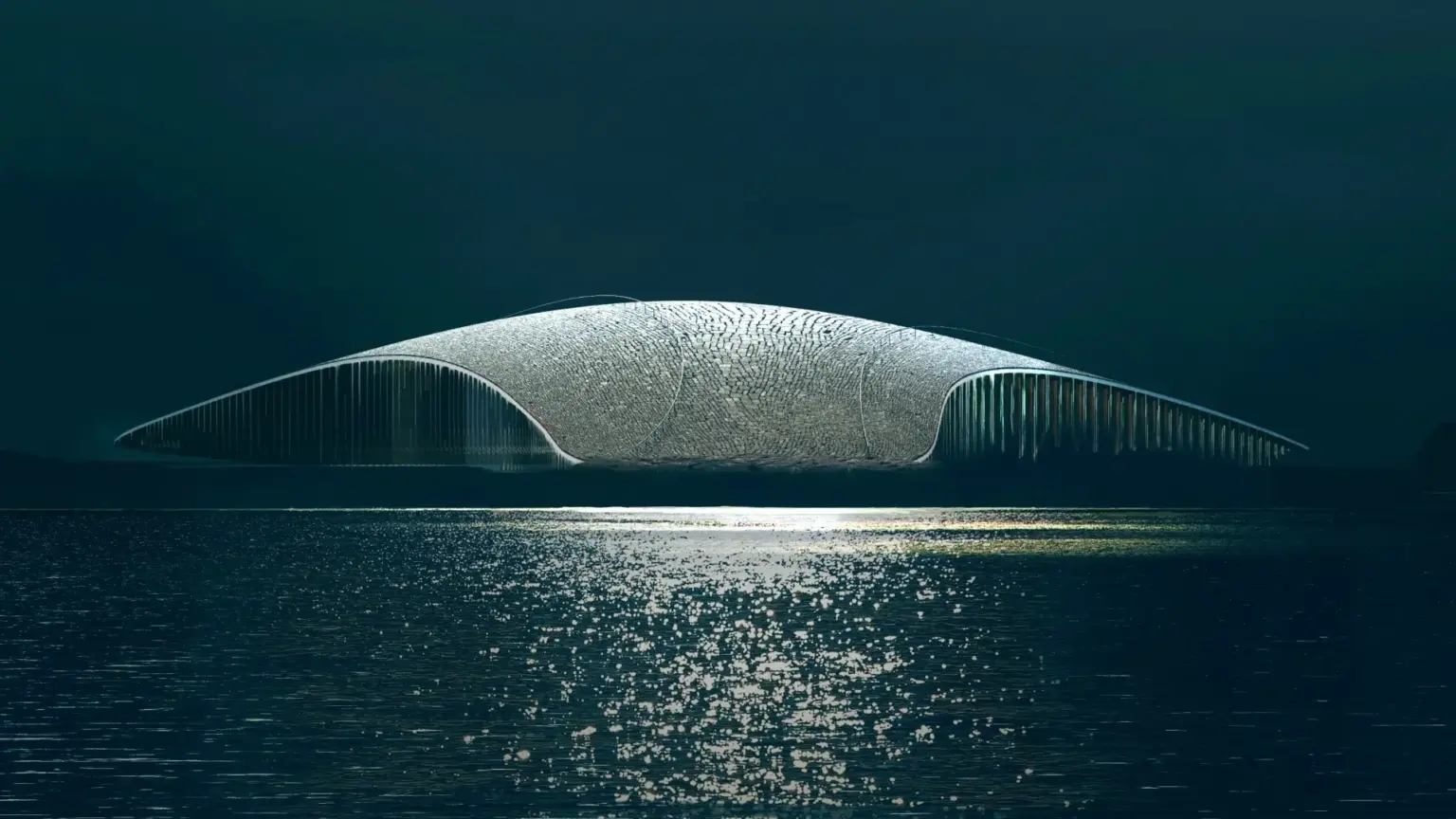
In this unique setting emerges The Whale, an architectural project that seems designed to integrate with the landscape and pay tribute to the marine giants that give identity to the region. More than a building, it is an experience that combines conservation, responsible tourism, and scientific knowledge in the same space.
The architectural proposal resembles a whale emerging from the Arctic waters. Its curved stone roof, merging with the terrain, invites you to walk on it as if it were a natural viewpoint towards the ocean and the mountains surrounding the archipelago. From there, it is possible to contemplate northern lights and track the movements of the whales in their annual migration.
Beneath this surface, the interior of the building offers an interactive tour where science and emotion intertwine. Large windows turn the landscape into part of the experience, while dynamic exhibits showcase the life of whales, their biology, their evolutionary history, and the importance of protecting their marine habitats.
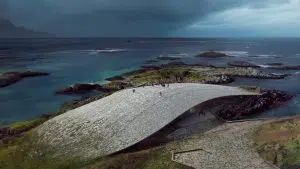 Norway promotes sustainable tourism with innovative architecture. Photo: The Whale.
Biomimetic Architecture: Design Inspired by Nature
The design of The Whale follows a concept of biomimetic architecture, which seeks to learn from nature and replicate its forms and principles. Inspired by the silhouette of a surfacing whale from the sea, the building not only symbolizes the connection of Andenes with the ocean but also integrates respectfully into the environment.
The walkable roof, made of local stone, minimizes the visual impact and acts as an extension of the landscape. This approach avoids the aesthetic disruption that large structures usually cause in pristine territories, favoring harmony between architecture and ecosystem. At the same time, it functions as an outdoor public space, accessible to visitors and residents of the region.
Inside, the use of large windows is not a decorative resource, but a way to strengthen the visitor’s relationship with the natural environment. Light, sound, and spatial arrangement evoke the sensation of diving under the sea, an immersive experience that aims to raise awareness about the fragility of ocean life.
This type of architecture also has an ecological dimension in its construction. The design optimizes resources, uses durable materials, and focuses on energy efficiency, minimizing the building’s environmental footprint. Thus, The Whale not only offers a tourist attraction but also becomes an example of how architecture can be sustainable and culturally significant.
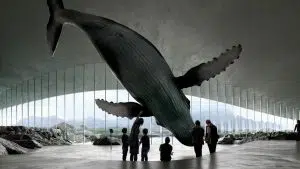 Norway promotes sustainable tourism with innovative architecture. Photo: The Whale.
A Symbol for Sustainable Tourism in the Arctic
Beyond its aesthetic value, The Whale is an emblem of Norway’s commitment to responsible tourism. Its goal is not only to attract visitors but also to educate and raise awareness about the importance of protecting marine biodiversity. The experience combines science, art, and ecology, inviting visitors to understand the relevance of conserving the oceans in a critical moment for the planet’s health.
The project is presented as a driver of local development, capable of attracting travelers interested in ecotourism and at the same time strengthening the cultural identity of Andenes. By integrating tradition, innovation, and sustainability, The Whale becomes a bridge between community and nature, showing that it is possible to grow economically without compromising respect for the environment.
In a territory where the sea dictates the pace of life and whales are protagonists, this architectural work offers a new way of encounter between humans and nature. Its message is clear: the future of tourism in the Arctic must be respectful, conscious, and deeply linked to the conservation of ecosystems that make it unique.