


Russian Fighters Overfly Estonia, and Neutral Areas of Baltic Sea
Over the weekend, German and Swedish Fighter Jets intercepted a Russian military reconnaissance plane over the Baltic Sea.German officials confirmed that NATO ordered Germany’s “quick reaction alert force” to investigate an unidentified aircraft flying without a plan or radio contact.
In a post on X, the German delegation to NATO described what was observed: “The aircraft turned out to be a Russian IL-20M reconnaissance plane. After visually identifying it, the Bundeswehr [German military] handed over the escort to our Swedish NATO partners @SwedenNato and returned to Rostock-Laage.”
This was the latest of a series of incursions by Russian military aircraft into NATO airspace just in this past month. Last Friday, three Russian MiG-32 fighter jets violating the airspace over the sovereign country of Estonia, and the fighter jets remained in Estonian airspace for more than 12 minutes over this small NATO member. This caused the country to instigate NATO’s Article 4 of the North Atlantic Treaty Organization agreement, which allows NATO members to hold consultations with the alliance when any state believes it is under threat.
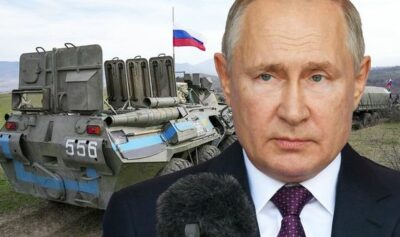
Vladimir-Putin-Russian-troops. Courtesy of Express.UK
Earlier this month, Russia directed nearly 20 military drones over Poland on September 10, and Romania on Sept. 14. Poland shot several down.
Over this past year, NATO has documented that Russia has been behind cyber attacks on the independent Baltic countries, and has repeatedly broken the massive underseas communications cables between Norway, Sweden and Finland and the rest of Europe.
As Ark Valley Voice has covered over the past few years since its invasion of Ukraine, Russia and its President Vladimir Putin have continued to test the boundaries and strength of the NATO alliance.
In typical Russian Russia’s Ministry of Defense has denied the allegation that it had violated Estonian airspace.They also denied that their drones crossed nearly the entire width of Poland, or that they have anything to do with the severing of underseas communications cables.
To say that all of this has led to heightened tensions between NATO and Russia is probably an understatement.