
Key Points and Summary – Baltic incidents—drones, airspace brushes, GNSS spoofing—could cascade into a NATO–Russia war driven by fear, honor, and interest.
-Opening phases likely favor NATO in air and sea with superior ISR, EW, and standoff fires; Russia counters with missiles, dense air defenses, cyber, and navigation attacks.
-Two plausible endgames emerge: a non-nuclear grind to an armistice shaped by attrition and political risk, or limited nuclear use to coerce termination, shattering the taboo and accelerating crisis instability.
-By Clausewitz’s test, NATO’s best “win” is defending territory without crossing the nuclear threshold; overall, no side truly wins—the result is a harsher, more brittle cold peace.
World War III? How NATO and Russia Could End Up At War
The Baltic has felt jittery again in recent days. Reports of alleged incursions into Polish airspace by Russian drones, a lumbering Il-20 buzzed by German and Swedish fighters, new allegations of navigation interference in crowded flight corridors.
None of it is a Hollywood provocation; all of it is friction—small, deniable, cumulative. If one of them snaps into gunfire the questions that follow are blunt: who wins, and how does it end? For Clausewitz, victory is the attainment of a political object at a cost your polity will endure; for Thucydides, honor, fear, and interest can drive leaders to gamble with calamitous stakes. By those measures a NATO–Russia war produces no true victor. NATO likely wins battles; politics, economics, and nuclear risk devour the gains.
NATO-Russia War: How the War Starts
The war’s opening would probably include several depressingly familiar incidents. Fighter crosses a line; interceptor fires; missiles answer; suppression missions fan out from Kaliningrad. Each move is justified in defensive terms; each one tightens the coil. Thucydides’ triad does the pushing—fear of being seen as weak, honor bruised by losses, interests tied to geography and alliance credibility. Clausewitz’s trinity does the pulling—passion in the street and the headquarters, chance in the fog, and policy in an escalatory bind.
The opening phase probably favors NATO at sea and in the air. Allied Intelligence Surveillance Reconnaissance (ISR) will rapidly identify the Russian order of battle; electronic attack will degrade targeting; standoff fires will peel away fixed air defenses, logistics hubs, and Baltic and High North naval assets.
Moscow will counter with land-attack salvos, layered air defense around key nodes, and aggressive electronic warfare—Global Navigation Satellite System (GNSS) denial and spoofing to complicate both military and civilian flows—augmented by cyber attacks on power and health infrastructure. Expect spillover in the Barents and Black seas, and political warfare designed to slow NATO decision cycles and fracture public consent.
Who Wins? A Loaded Question…
Who “wins” depends on the political object. For NATO, winning means holding Alliance territory, preserving credibility, and ending the war without crossing the nuclear threshold—at a cost publics will absorb. On the battlefield, that is plausible: the Alliance can blunt Russia’s offensive capacity near the Baltic rim and force a stop. But the price—shattered infrastructure, a convulsed European economy, global supply chains buckling—would be steep. If the nuclear threshold is crossed, the word ‘win’ becomes meaningless.
For Russia, the plausible “win” is different. It is not the conquest of NATO states. It is survival of the regime and coercive leverage over the postwar order: forcing an armistice on terms that dent NATO credibility (limits on basing or strike systems near Russian borders; political guarantees that constrain Alliance behavior), while demonstrating that Moscow can impose costs and manage escalation. Russian declaratory policy reserves nuclear use for a conventional attack that threatens the state’s survival or territorial integrity; Western planning therefore assumes a spectrum of coercive nuclear signaling—visible dispersals, exercises, force movements—and, if that fails, limited options designed to compel termination. Whether treated as doctrine or contingency, the practical effect is the same: any successful NATO offensive tightens the nuclear vise.
That is escalation by design, not accident.
How Does a NATO-Russia War End?
And how would it end?
Two broad paths, one barely survivable; the other unbearable.
In the first, the nuclear threshold is not crossed and the war grinds into interdiction and exhaustion. NATO exploits its maritime and air edge to constrict Russian logistics around Kaliningrad and the Gulf of Finland, attriting fixed air defenses and command nodes from standoff. Russia answers with short-range ballistic missiles and cruise-missile strikes, dense air defenses, electronic attack, and long-range artillery to keep pressure on Baltic airfields, ports, and rail hubs.
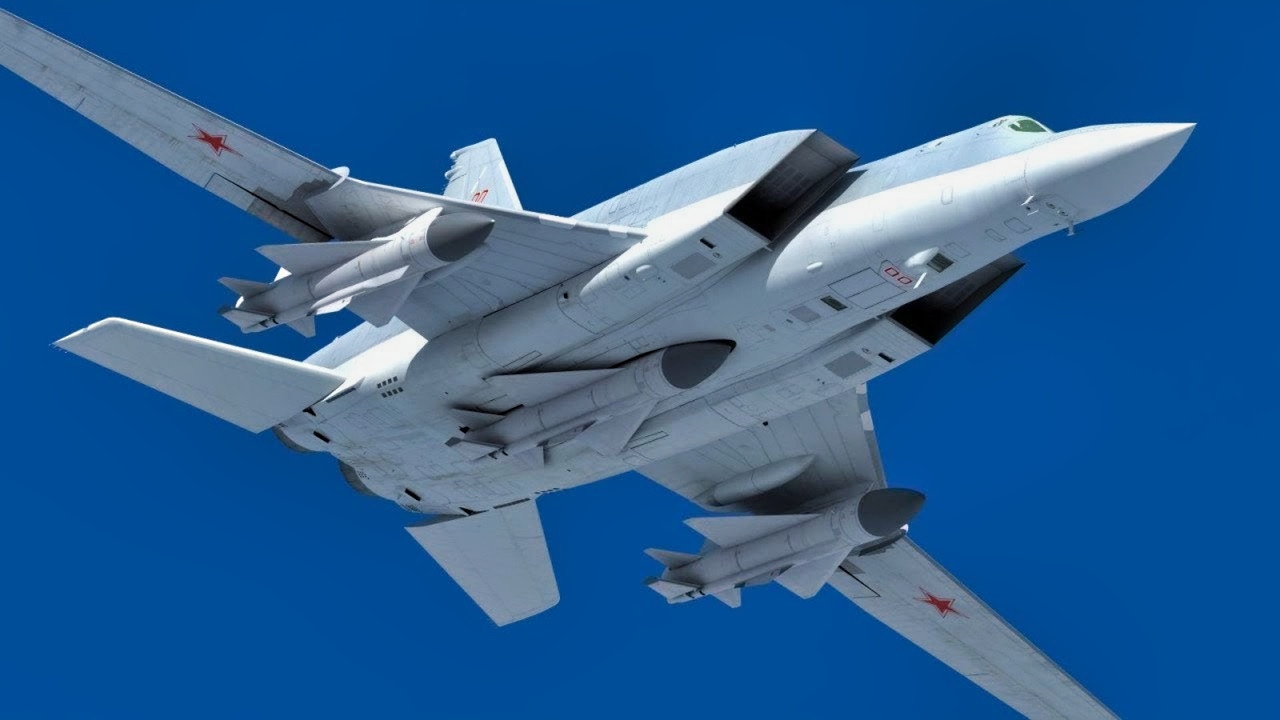
Tu-22M3 Bomber Russian Air Force. Image Credit: Creative Commons.
Cyber operations and GNSS spoofing become routine, producing rolling disruptions to aviation, shipping, energy, and health systems. Refugee flows from contested areas strain politics in Poland, the Baltics, and Germany; Russian domestic control tightens as mobilization drags on.
Neither side achieves a clean breakthrough: Russia cannot sustain a deep push against layered Alliance defenses; NATO will not drive a low-risk offensive into zones where air defenses are thick and nuclear tripwires ambiguous. Both pivot to coercive bargaining by firepower—curated target lists, pauses to test diplomatic channels, resumed strikes when talks stall.
The armistice that follows is transactional, not reconciliatory. Lines settle where attrition, magazine depth, and political risk intersect. Verification and deconfliction measures are bolted on—hotlines, air and maritime separation rules, exercise-notification regimes.
Sanctions harden into a long-war economy; defense spending skyrockets; forward posture near the Suwałki corridor becomes permanent and heavily shielded against electronic and cyber attack.
The postwar order is colder, more crisis-ready, and less forgiving of miscalculation. Deterrence is “restored” in a narrow sense, but at the cost of a militarized peace and a Europe living with chronic disruption.
Limited Nuclear War?
Following the second path, limited nuclear use breaks the taboo. If Moscow concludes conventional trends threaten regime survival or the integrity of critical territory, it signals first—conspicuous dispersals, alerting, perhaps a “demonstration” detonation over remote waters.
Should that fail to arrest allied operations, a single low-yield strike against a military target with limited collateral effects becomes plausible: an air base, a logistics hub, a naval concentration.
The military impact is modest; the political shock is seismic. Civil defense alerts ripple across Europe; markets convulse; allied cabinets split between punishment and pause. NATO’s most likely sequence is maximum conventional pressure inside strict geographic bounds—rapid suppression of the specific Russian unit(s) enabling the strike; expanded air and missile defense; visible but carefully calibrated nuclear readiness measures that stop short of matching use. Washington, London, and Paris move forces to survivable postures; Moscow showcases second-strike assets.
Diplomacy During War Won’t Be Easy
Crisis diplomacy becomes a race: Russia seeks a ceasefire that codifies limits on allied posture and standoff systems near its borders; NATO seeks a ceasefire that bars further nuclear use, restores violated territory, and preserves freedom to reinforce.
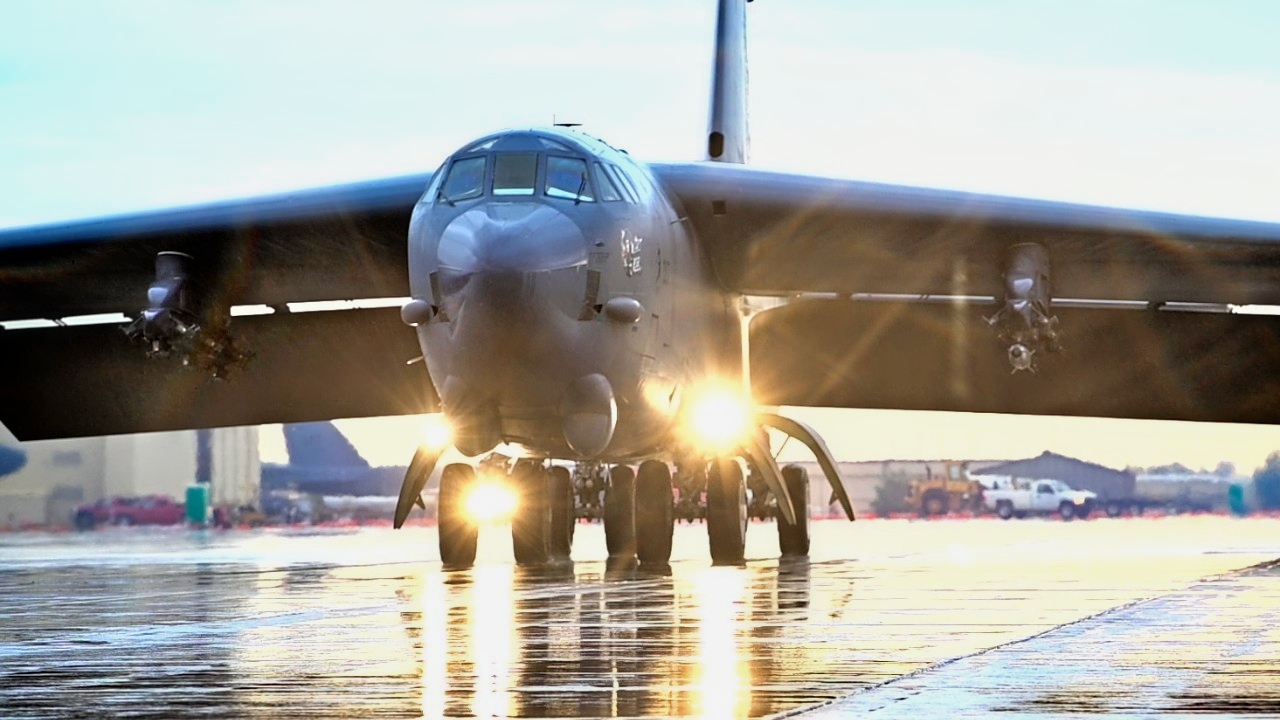
A B-52H Stratofortress taxis down the runway at Minot Air Force Base, N.D., Sept. 16, 2021. The bomber is capable of flying at high subsonic speeds at altitudes up to 50,000 feet. (U.S. Air Force photo by Airman 1st Class Zachary Wright)
Termination arrives faster than along the first path, but at a civilizational price: precedent broken, taboo degraded, and every future crisis conducted under a darker sky. Arms control revives in name, not in trust; every extensive NATO exercise and every Russian snap drill is shadowed by nuclear-use gaming. The “peace” that follows is decidedly more brittle than anything we have known since the dawn of the nuclear age.
Pray None of this Happens
By Clausewitz’s test, the first path is clearly preferable all around. NATO’s best “win” is a narrow political one: defending allied territory, avoiding nuclear use, and exiting the war with cohesion intact—even if the battlefield story ends in a bruising armistice rather than a parade. By Thucydides’ warning, Russia’s best “win” is a coercive stalemate that survives domestic pressures and dents NATO credibility without provoking annihilation. Neither outcome is triumph. Both are worse than the status quo.
No One Wins the ‘War’
The blunt response to the guiding questions is, therefore, as follows: if there is an all-out NATO–Russia war, NATO likely wins the battles; no one wins the war; and it ends—in the least bad scenario—with a hotter cold war than ever experienced during the real Cold War.
No one desires this, but then —as Thucydides has reminded us many centuries ago— war is a violent teacher. It bends judgment, inflames passions, and drags states to ends that they never intended.
About the Author: Dr. Andrew Latham
Andrew Latham is a Senior Washington Fellow with the Institute for Peace and Diplomacy, a non-resident fellow at Defense Priorities, and a professor of international relations and political theory at Macalester College in Saint Paul, MN. You can follow him on X: @aakatham. He writes a daily column for National Security Journal.
More Military
K3: The ‘Stealth’ Tank That Looks Like a B-21 Raider and Runs on Hydrogen
The U.S. Navy’s Ohio-Class SSGN Submarines Summed Up in 1 Word
The F-16V Viper Has a Message for the U.S. Air Force
The Iowa-Class Battleships Have A Message for the U.S. Navy
The Army Wanted Artillery That Could Fire From 1,000 Miles Away