
On Monday, September 22, Prime Minister Robert Abela announced at the United Nations that Malta was formally recognising the State of Palestine.
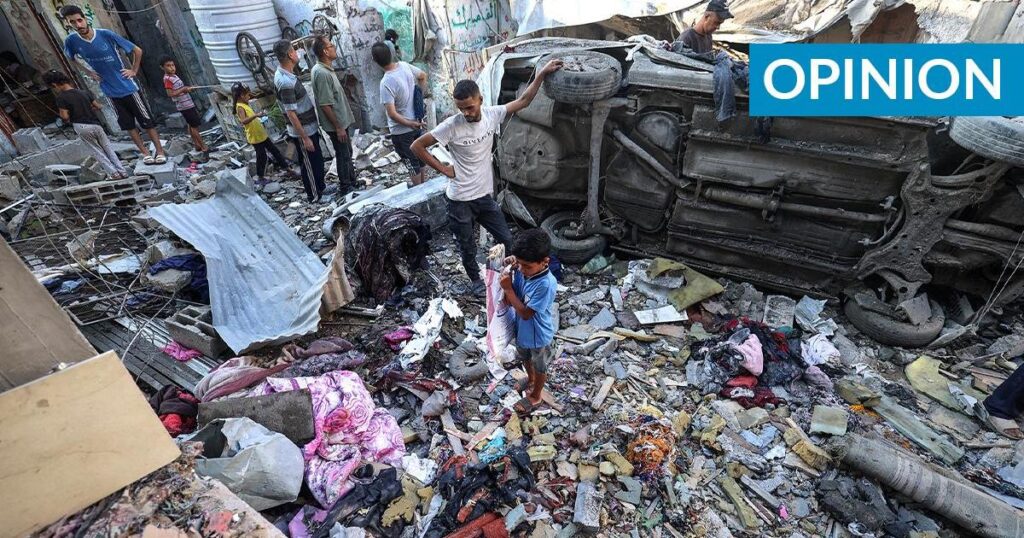
This took place in a context where Palestinians in Gaza and in the West Bank continue to endure violence, displacement and fear as a basic fact of their daily life. Since the beginning of the invasion of Gaza, following the attacks of October 7, 2023, Gaza has been razed to the ground and the lack of basic humanitarian access has precipitated famine and disease.
The expansion of Israeli settlements in the West Bank has had the clear and stated aim of interrupting the territorial integrity of a future Palestinian state, making it harder to envisage such a state.
In July, the prime minister announced before parliament that Malta would be recognising the State of Palestine as part of a concerted effort by a number of other countries to keep the two-state solution alive. Simultaneously, I transmitted this message to the High-Level Conference on the Implementation of the Two-State Solution and the Question of Palestine that was being held in New York. But Malta’s recognition of the State of Palestine was not a sudden lurch forward. It was the crescendo to a careful and patient process which was closely tied to the story of Malta’s own 61 years of independence.
Malta has continuously been a steadfast supporter of the right of the Palestinian people to a state of their own. Since 1989, Palestine has been represented in Malta by an ambassador with full immunities and privileges. These are reasons, in fact, why Malta’s recognition of Palestine has been described as a formality with no consequence: on the one hand, some have argued that it should have been done earlier, since recognition or lack thereof made no practical difference and since recognition was the logical next step in Malta’s support for the Palestinian cause. On the other hand, there has also been the argument that recognition was not necessary precisely because it would change nothing.
My reply to both positions has been the same: that Malta’s recognition of the State of Palestine was to come at the moment when it would have the maximum effect on the viability of the two-state solution and on a meaningful future for Palestine.
That moment arrived at this year’s UN General Assembly and we were joined in this assessment by 11 other countries, including France, the United Kingdom, Canada and Australia.
The recognition of the State of Palestine by two additional P5 members of the United Nations Security Council, France and the UK, was a significant step. Combined with Canada’s own recognition, it means that three G7 countries now recognise the State of Palestine. This critical mass, which the efforts of France and Saudi Arabia as co-chairs of the High-Level Conference made possible, has shone a renewed spotlight on the need for an immediate end to the atrocities taking place in Gaza. The fact that Malta was part of this effort added to this critical mass.
The international community has witnessed harrowing inhumanities in Palestine for the last half a century- Christopher Cutajar
 C
CThe unfortunate reality is that recognition on its own will not change the facts on the ground in Gaza or, more broadly, in the State of Palestine. An immediate and durable ceasefire, the unconditional release of all hostages captured by Hamas during the course of the attacks of October 7, 2023 and unimpeded humanitarian access into Gaza are essential for what must come next – a peace-building process which will result in two states living side by side in peace and security.
The peace-building efforts of the US, Qatar and Egypt are laudable and all diplomatic means must be used to bring about these objectives.
Until then, we must continue to insist that Palestinians be given access to food, electricity, fuel and medical supplies and other key assistance if we are to prevent even more lives needlessly being lost. Malta has made its own small contribution, sending supplies of flour to World Central Kitchen in Gaza with the help of the Republic of Cyprus and UNOPS. We will continue this effort under the Gaza Solidarity Fund established by the Ministry of Foreign Affairs and Tourism.
The international community has witnessed harrowing inhumanities in Palestine for the last half a century. These inhumanities have created the right conditions for generations of Palestinians to be lost to anger and suffering. The prospect of a two-state solution must not be allowed to slip away, for the sake of Palestinians but also of Israelis, who, likewise, deserve to live in peace and security.
It is my conviction that the recognition of the State of Palestine this week by 12 members of the United Nations, including Malta, has breathed fresh life into this process. If we are to be faithful to the principles of the UN Charter, the international community must now seize upon this momentum.
Christopher Cutajar is the permanent secretary at the Ministry of Foreign Affairs and Tourism.