
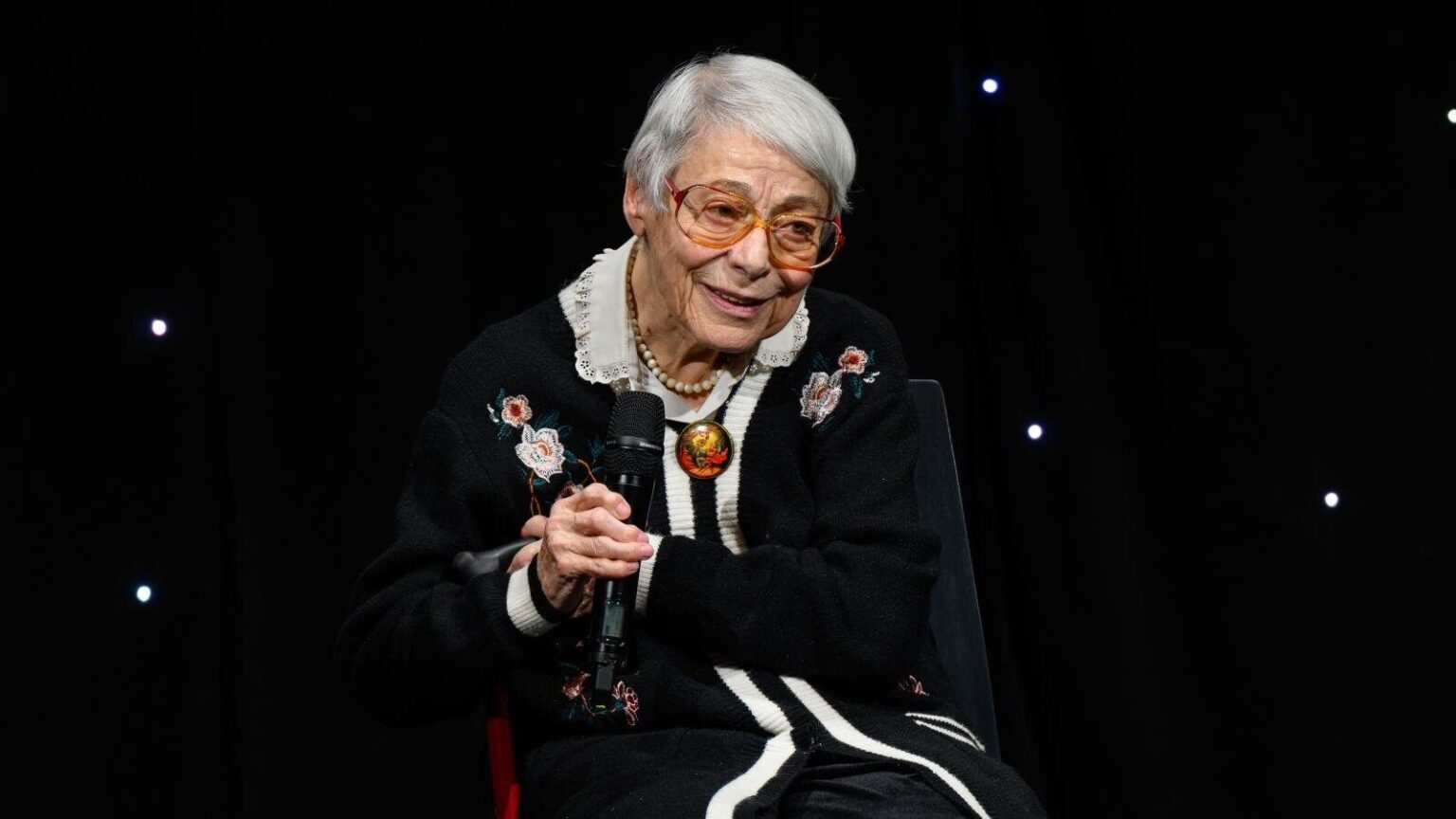
Budapest — Hungarian cinema has lost one of its most internationally acclaimed voices. Elek Judit, Kossuth and Balázs Béla Prize-winning director and screenwriter, passed away on October 1, 2025, at the age of 87 after a long illness. Her death came almost poetically in tandem with a Paris tribute screening of her 1967 documentary Meddig él az ember? (How Long Does Man Live?), the very film that first brought her global recognition at Locarno nearly six decades earlier.
For more than half a century, Elek stood as a bridge between Hungary’s auteur traditions and the international film world, championing deeply humanist themes that resonated far beyond her homeland.
From the Balázs Béla Stúdió to Cannes
Born in Budapest in 1937, Elek studied at the Academy of Theatre and Film Arts between 1956 and 1961, under the mentorship of Máriássy Félix. She soon became a founding member of the Balázs Béla Stúdió — the experimental film collective that became a breeding ground for Hungary’s New Wave of the 1960s and 1970s.
It was here that she began shaping her distinct voice: blending documentary realism with a deep sensitivity to history, identity, and the social fabric of everyday life.
Her breakout came with Meddig él az ember? (1967), a documentary that probed the social cycles of human life, with a particular emphasis on the value of work and community. The film was awarded at Locarno, Oberhausen, and recognized by critics’ bodies including FIPRESCI. At a time when Hungarian directors were beginning to claim spots on the international festival circuit, Elek established herself as one of the few female filmmakers from Eastern Europe to gain such visibility.
Just a year later, she made her narrative debut with Sziget a szárazföldön (Island on the Mainland, 1968), which confirmed her as a rising auteur in both Hungary and abroad.
A Festival Career Across Decades
Throughout the 1970s and 1980s, Elek’s films became fixtures on the international circuit. Vizsgálat Martinovics Ignác ügyében (Trial of Ignác Martinovics, 1980) revisited Hungarian revolutionary history through a lens of political and ethical complexity, earning praise for its historical authenticity.
Her 1984 feature Mária-nap (Maria’s Day) was selected for Cannes’ Un Certain Regard section — a rare achievement for a Hungarian filmmaker at the time. The film’s intimate portrayal of personal and collective memory cemented Elek’s status as a director with both artistic and intellectual authority.
The late 1980s brought another career-defining success with Tutajosok (Boat People, 1987–1989), which won the Jury Prize in Montreal and the Grand Prize in Créteil. Exploring Jewish identity and exile, it reflected a theme that would recur throughout her work: the interplay between historical trauma and contemporary life.
Even in the 1990s, Elek remained internationally relevant. Mondani a mondhatatlant: Elie Wiesel üzenete (To Speak the Unspeakable: Elie Wiesel’s Message, 1996) addressed Holocaust memory with both gravity and accessibility, and went on to receive the Grand Prize at Salerno.
An Internationally Decorated Auteur
Elek’s trophy case reflected both national and global recognition. She was awarded the Balázs Béla Prize in 1987 and Hungary’s highest cultural honor, the Kossuth Prize, in 2008. She also received the Magyar Köztársasági Érdemrend tiszti keresztje (2006), and late in life was recognized with lifetime achievement honors, including the Magyar Mozgókép Mestere title (2009) and the Hungarian Film Critics’ Award for Lifetime Achievement (2018).
But beyond national awards, her significance lies in how she consistently represented Hungarian cinema on the global stage. She was a member of the European Film Academy, served on international juries, and was regularly cited in the same breath as Miklós Jancsó, Márta Mészáros, and István Szabó when discussing Hungary’s auteur generation.
A Humanist Voice Across Borders
What made Elek’s work travel internationally was not just festival exposure, but its thematic universality. While firmly rooted in Hungarian history and identity, her films spoke to broader human concerns: exile, memory, injustice, and resilience.
Unlike many of her male contemporaries, Elek often foregrounded women’s experiences and Jewish identity in her narratives. In doing so, she carved a rare space in European auteur cinema, positioning her work alongside international voices such as Agnès Varda or Márta Mészáros, with whom she is often compared.
Her ability to merge documentary impulses with narrative fiction gave her films a distinctive quality that festival juries found compelling. As Berger László, her son and longtime cinematographer-producer, noted in announcing her passing: “Her films always sought to capture the truth of human experience, whether in Hungary or beyond. That’s why they continue to resonate in Paris, in Montreal, in Cannes.”
Closing a Circle in Paris
The symmetry of Elek’s passing has not been lost on the Hungarian and international film community. On the very day she died, Paris was hosting a special screening of Meddig él az ember? — the film that had launched her career onto the global stage in 1967. For many, it feels like a symbolic closing of a circle: a director whose work began by traveling abroad, now remembered in the same international spirit.
Her death marks the end of an era for Hungarian auteur cinema. But her legacy — of humanist filmmaking that transcended national borders — ensures that her voice will remain part of the conversation. For Hungary’s next generation of filmmakers, especially women entering a still male-dominated field, Elek Judit remains a beacon: proof that a deeply personal and socially conscious vision can indeed travel the world.