
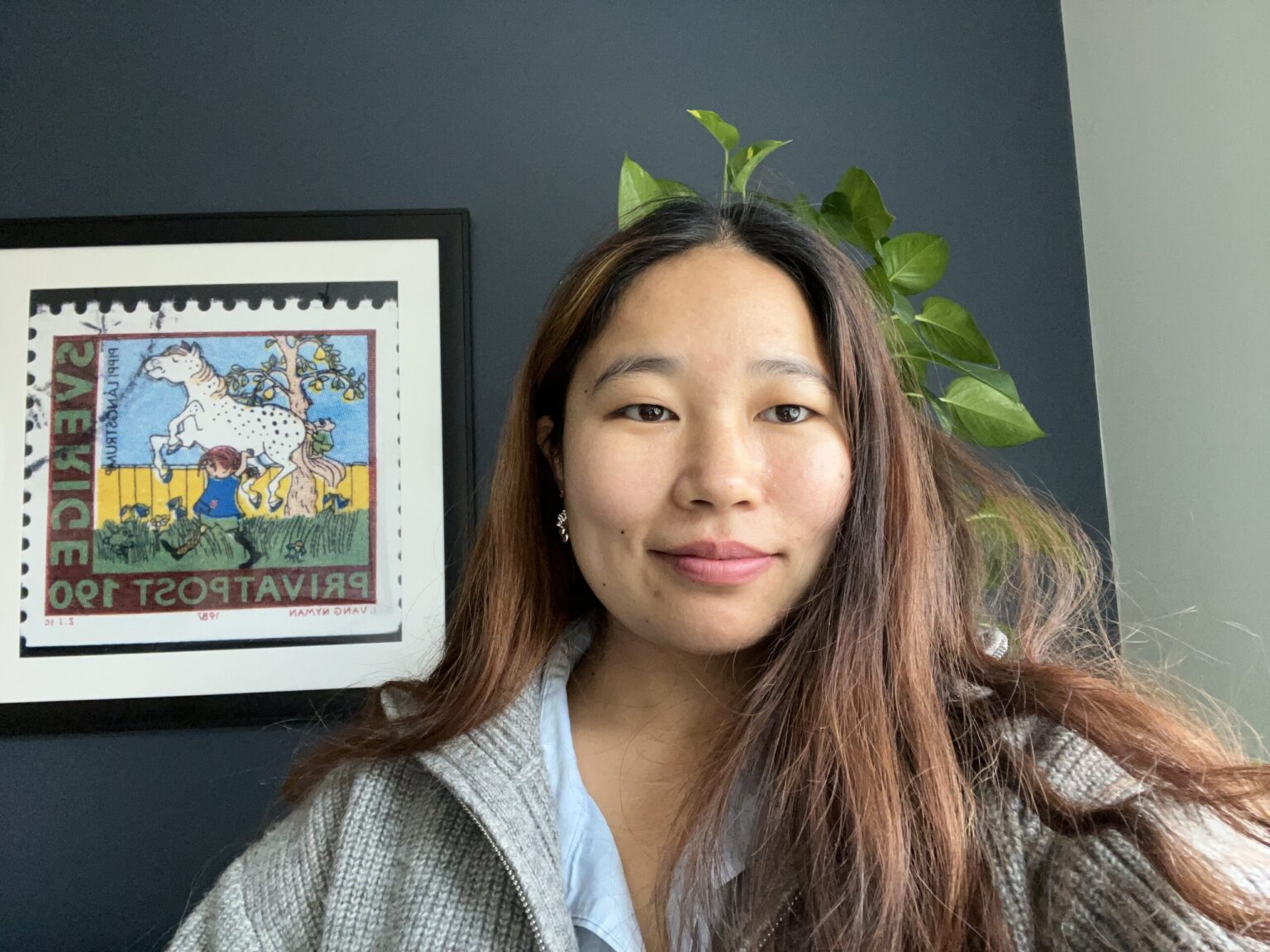
As a Nepalese student pursuing my Master’s degree in Culture Communication and Globalization at Aalborg University, I came here with hope. Denmark, to me, represented fairness, equality, and opportunity values that inspired me to leave home and invest in my future.
I came on a scholarship I worked hard to earn – recognition of my academic potential and commitment. This is not charity, but an opportunity I intend to honor by contributing positively to both my field and the society I am now part of. Like many international students, I pay tuition, contribute to the local economy, and dedicate myself fully to my studies. Yet in recent weeks, the Nepalese community in Denmark has been forced into the spotlight for all the wrong reasons.
We have been accused of “using back doors” and reduced to being from a “third world country.” For those of us who are here legally, studying hard, and dreaming of contributing to Danish society, these words cut deeply. They do not just hurt; they stigmatize.
When an entire nationality is painted with suspicion, the effects ripple far beyond headlines. A fellow Nepali student told me: “I came to Denmark because of its strong academic reputation. But after the news, even my classmates started asking if I was ‘really’ planning to finish my degree.”
A civil engineer from our community added: “I have worked in Denmark as a civil engineer for nine years and have never faced unfair treatment. Nepalese people are honest and hardworking, and I don’t believe Danish authorities need to worry – we are here to contribute positively.”
And a Nepali IT professional, who has been working in Denmark for over five years, told me: “I have been contributing positively to the Danish labor market. Yet the mistakes of a small minority have cast suspicion on the whole community. This is damaging. The issue should be addressed carefully and responsibly, rather than through articles that create negative perceptions. The Danish government also needs to recognize that our goal is not to use visas as a ‘back door’ to the labor market, but to pursue education and gain professional experience legitimately.”
These stories are not isolated. Many Nepalese in Denmark are in respected professions: working as IT specialists, engineers, teachers, and healthcare workers. Students like myself are striving to succeed academically, while workers are filling important roles in a country that often struggles with labor shortages. Yet the narrative being pushed suggests we are here to exploit the system. That is not only unfair – it is false.
I am not denying that individuals can make mistakes. Every society, every nationality, has people who go against the rules. But to take those few cases and generalize them to thousands of students, workers, and families is unjust – and it risks erasing the very real contributions we make.
The label “third world” is more than outdated; it is an insult. It reduces a proud nation like Nepal – a country with resilience, history, and global ties – to a stereotype. Words like these matter. They shape how we are perceived by others, and eventually, how we are treated.
I did not come to Denmark looking for shortcuts. I came because I believed in Danish values of fairness and opportunity. I came to grow academically, to challenge myself, and to prepare for a future where I can build bridges between cultures. Many Nepalese students and workers share the same aspiration: not to take from Denmark, but to stand alongside Danes as contributors and partners.
But integration is not a one-way street. We can study, work, and adapt – but Denmark also has a responsibility: to look beyond stereotypes, to see individuals instead of labels, and to replace suspicion with dialogue.
Being called “third world” does not define us. It reflects the narrowness of those who choose to label instead of understand. Denmark is better than this. And now, more than ever, it has the chance to prove it – by living up to the very values that drew so many of us here in the first place.