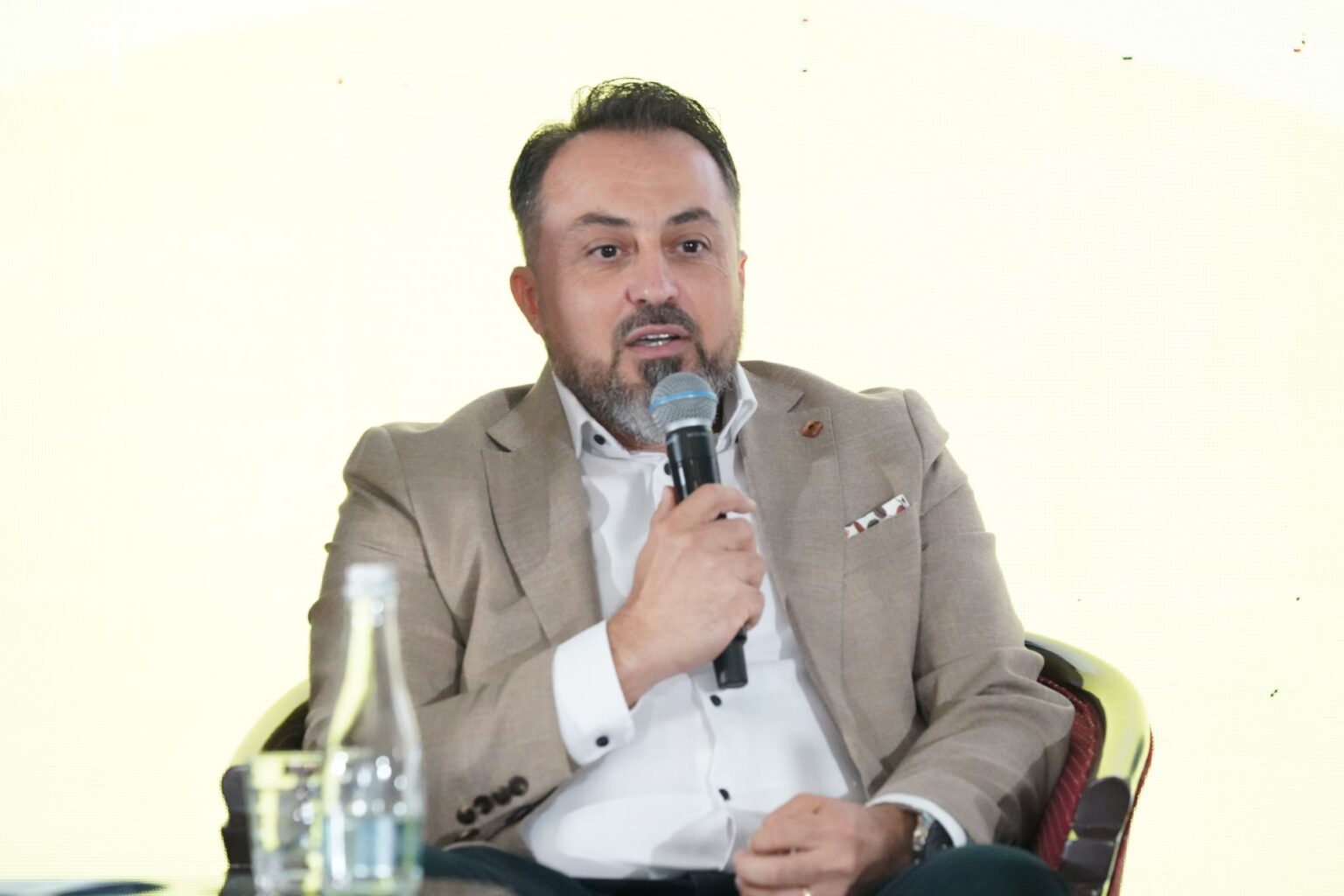
At the Environmental & Sustainability Summit 2025, Sorin Macoveiu, Commercial Manager at Vastint Romania, spoke about the solutions that developers have at their disposal to realize a project capable of benefiting the community that lives in an area, not just those who occupy the offices. As well as the fact that buildings must stand for decades in an ever-changing regulatory environment.
We often talk about ecosystems and a wide range of services, but developers have only certain solutions at hand. Regulations are also essential, including ensuring easy access to public services. We have a traffic problem, we talk about it all the time, and we always select spaces where we know we have easy access to public transit. But that’s not the only important thing, you also have to understand that you’re not going to be able to serve the entire community. You can emphasize certain public services, but it can’t be all of them.
Mr. Sorin Macoveiu pointed out the importance of adjacent services such as schools near a real estate project. Employees who have children are always interested in schooling facilities close to them or on the road they have to travel every day.
In our Timpuri Noi Square project, we saw real success once we began highlighting nearby schools—parents immediately became more interested. This shows why partnerships with public authorities are vital. We already provide facilities such as electric vehicle charging stations, which are not yet fully used, but they are there to support environmental goals. And from a community perspective, our responsibility is to create access not only for those who work in our offices, but also for the people who live in the area.
I can’t wait to finish the second phase at Timpuri Noi, where we will also have the largest foodcourt in an office building in Romania, designed to function as such. A concept that does not have the office community as its main target, but the whole area and the people who live there.
The characteristics of each project are different from one city to another or from one region to another, and not only in terms of traffic and public services, but also in terms of the geological characteristics of the area.

In our industry, things happen in a certain time. We build projects over a number of years that have to last for decades. Thus, the analysis part and the choice of technical solutions, including those characteristic of the area, are very important from the design stage. For example, Bucharest is in a seismic zone and we build differently in terms of structure compared to other European cities. We have to implement solutions that ensure that in a number of years when the building is ready we will comply with the regulations in force at the time of delivery. Such as the Timpuri Noi project, where we already knew that from 2030 gas burners would have to be phased out. We will see if this dead line is kept or will be extended, but we have made sure that the building will comply with the regulation from 2027, when they will be finished.
Resilience also means reducing costs, but also extending tenant comfort. Employees who populate office spaces need good service and long-term comfort, considering we’re talking 5-7 year lease cycles.

In addition to regulation, we are also thinking about resilience. And this from several perspectives: from the economic one, but also from the comfort of the person using the space. It’s important not to lose sight of the fact that companies have a lot of employees who will be using the spaces and don’t look at them in the same way that decision-makers do. They want a good workspace and adjacent services to ensure their comfort.