
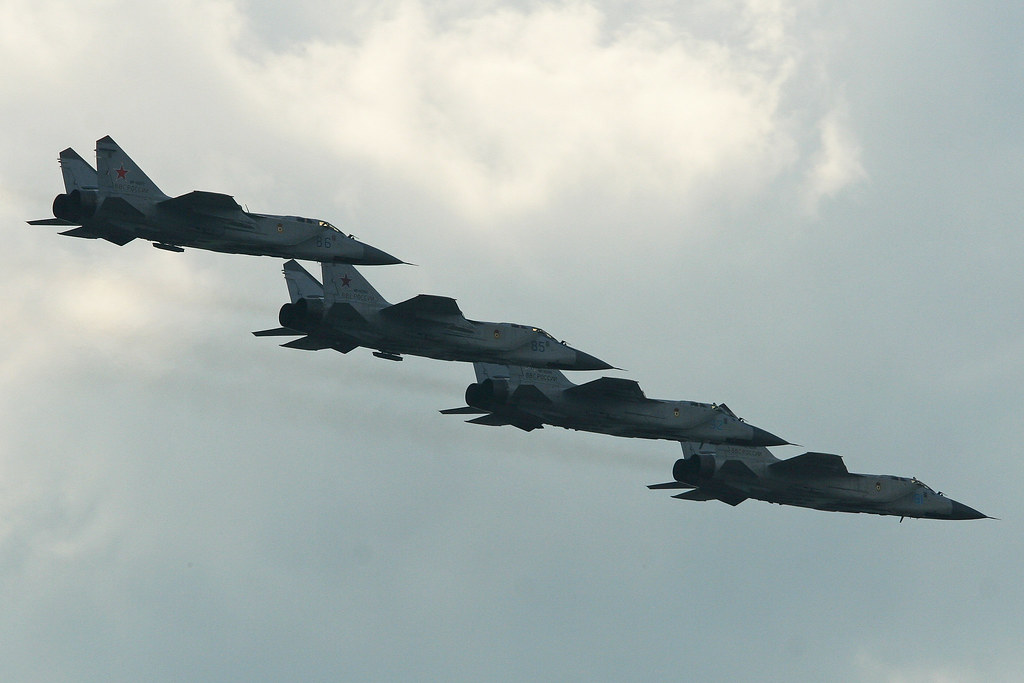
On Friday, September 19th, three Russian MiG-31 fighter jets violated the airspace of N.A.T.O. member Estonia over the Gulf of Finland, remaining in Estonian territory for a total of 12 minutes. This incident, which occurred on Vaindloo Island as the jets flew from northwest Russia toward the Kaliningrad region, was described by Estonian Foreign Minister Margus Tsahkna as “unprecedentedly brazen.” N.A.T.O. responded immediately to the intrusion, intercepting the aircraft. This event follows a concerning precedent of September 10th, 2025, in which Poland experienced an incursion into its airspace by approximately ten Russian drones, arriving directly from Belarus.
Estonian officials immediately called the incident a severe provocation, leading Prime Minister Kristen Michal to request N.A.T.O. Article 4 consultations to discuss the threat to Estonia’s territorial integrity. Foreign Minister Margus Tsahkna stated that Russia’s “increasingly extensive testing of boundaries and growing aggressiveness must be met with a swift increase in political and economic pressure”. Following the interception by Italian F-35 fighters, N.A.T.O. Secretary General Mark Rutte described the alliance’s response as “quick and decisive”. The European Union’s diplomat, Kaja Kallas, condemned the event as an “extremely dangerous provocation”, stating that it was “no accident” and cautioning that “Putin is testing the West’s resolve”. Conversely, the Russian Ministry of Defense denied that the jets ever invaded Estonian airspace, and maintained that the flights were “in strict accordance with international rules” over “the neutral waters of the Baltic Sea.”
The entry of Russian drones into Estonian and Polish airspaces are unequivocally a violation of sovereign territory and international law. Russia clearly aims at inducing a climate of fear, hindering efforts towards de-escalation, and creating an environment of instability rather than dialogue. It is crucial that all countries involved prioritize immediate diplomatic engagement to prevent further escalation and respect international borders and peace. The global focus must be on increasing political and economic pressure rather than opting for military retaliation. As asserted by Estonian Foreign Minister Margus Tsahkna and British Foreign Secretary Yvette Cooper, there is the need to “increase pressure on Putin, including driving forward the important new economic sanctions”. The European Commission echoed this sentiment, proposing a new round of sanctions toward Russia, demonstrating a commitment among the allied nations to respond to violations, reinforcing the need to uphold international law through political and financial means rather than initiating violence. President Ursula von der Leyen stated: “As threats escalate, so too will our pressure.”
This incursion is not isolated. Russian forces had previously violated Estonia’s airspace four times earlier this year. Furthermore, Russia initiated multiple aggressive moves against different N.A.T.O. members during this month, emphasizing the idea of a campaign to test the alliance’s resolve and readiness. Just over a week prior, around 20 Russian drones entered Polish airspace overnight, to which N.A.T.O. responded by sending fighter jets to shoot them down, marking the first time that shots were fired by N.A.T.O. since the start of the war in Ukraine. Romania’s airspace was also breached by a Russian drone just days before the Estonian incident, leading Bucharest to scramble F-16 fighter jets.
These latest attacks signal a concerning escalation of the conflict, carrying profound implications for peace and security. Since in the future, such provocations by Russia are likely to continue, there is an immediate necessity for N.A.T.O. to display robust and unified deterrence and diplomatic resolve. Failure to provide a strong and coordinated international response risks letting Russia continue to undermine collective security principles, pushing the region closer to a broader conflict. For peace to prevail, sustained diplomatic efforts, intensified international pressure, and a commitment to international law are crucial to counter such aggressive actions and prevent an already fragile peace from completely eroding.