
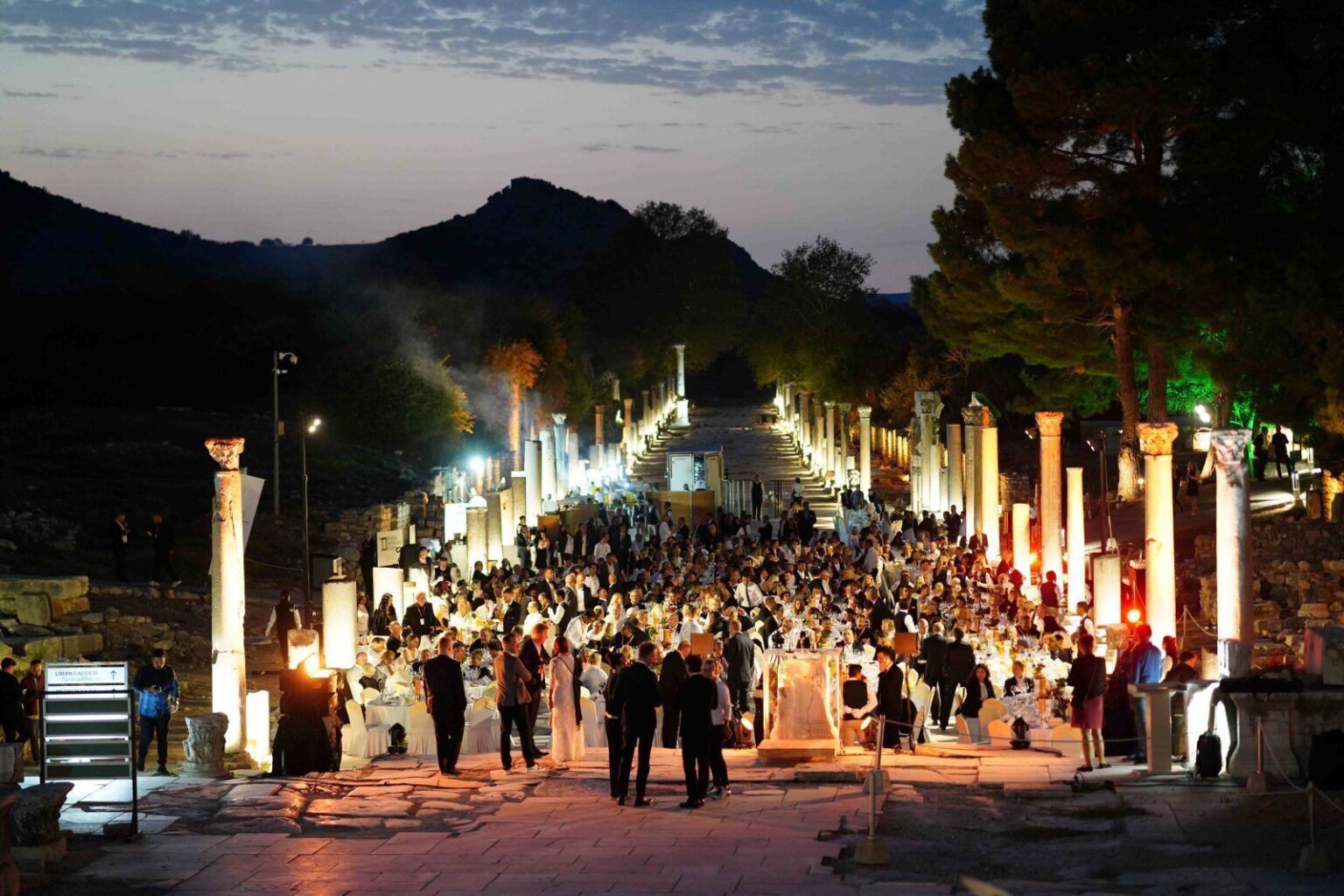
Turkey has extended its night museum program at the Ephesus Archaeological Site, the Galata Tower in Istanbul, and the Side Archaeological Site until November 2. The decision follows strong visitor demand, after more than 550,000 people participated in the program between June and September.
Minister of Culture and Tourism Mehmet Nuri Ersoy announced the extension on his NSosyal account. He said the initiative, which officially ended on October 1, would continue at selected sites to allow visitors to experience cultural heritage under evening illumination. The program has been one of the most popular tourism offerings in Turkey during the summer season.
Night Museums Draw High Visitor Numbers
According to the Ministry of Culture and Tourism, the night museum program welcomed over 550,000 visitors in the past four months. Among the most visited locations were the Ephesus Archaeological Site, the Galata Tower, and the Pamukkale Hierapolis Archaeological Site. The ministry highlighted that the extension aims to meet demand from both domestic and international tourists.
In his statement, Mehmet Nuri Ersoy emphasized the cultural value of the program. “When the lights come on, history comes to life again. Thousands of years old, Ephesus, experiences a second birth as the night approaches. Columns, stones, and magnificent structures merge with the light in the darkness of the sky, taking on a completely different meaning. Our night museum, which has welcomed over 550,000 guests this year, demonstrates how our culture shines magnificently not only during the day but also in the magic of the night. Due to popular demand, we are extending night visits at the Side Archaeological Site, Galata Tower, and Ephesus Archaeological Site until November 2nd. I invite everyone to this unique experience where our culture and history meet the night,” said Ersoy.
Sites Included in the Extension
The Ephesus Archaeological Site, located near Selçuk in western Turkey, remains one of the country’s most important historical destinations. Visitors touring the ancient ruins at night can see landmarks such as the Library of Celsus and the Great Theatre illuminated against the evening sky, creating a different atmosphere from daytime visits. Ephesus continues to be among the most visited archaeological sites in Turkey.
The Galata Tower in Istanbul, a medieval stone tower overlooking the Golden Horn, has also been part of the night museum initiative. It provides panoramic views of Istanbul and has drawn significant attention for its illuminated evening openings. Extended night tours are expected to increase both local and tourist participation during autumn.
The Side Archaeological Site, situated in Antalya province on Turkey’s Mediterranean coast, is another location included in the extension. Known for its ancient theatre, temples, and well-preserved ruins, Side has been a focal point of cultural tourism. The nighttime lighting allows visitors to view its monuments in a distinctive setting.
Although not included in the current extension, the Pamukkale Hierapolis Archaeological Site was also among the most visited sites during the June–September period. The site combines natural thermal terraces with the ancient city of Hierapolis, further strengthening its position as a leading attraction in Turkey’s cultural tourism portfolio.
The Ministry of Culture and Tourism has positioned the night museum program as a way to expand accessibility and increase cultural tourism revenue. By offering extended visiting hours, the initiative also helps to distribute visitor flows throughout the day and reduce congestion at peak times.
The program is regarded as part of Turkey’s broader strategy to diversify its tourism offerings, attract more international visitors, and highlight the country’s rich cultural heritage. With the extension until November 2, the ministry expects continued strong turnout at Ephesus, Galata Tower, and Side. The initiative reflects ongoing demand for cultural experiences that go beyond traditional daytime visits.
Turkey’s tourism authorities have stated that night tours are increasingly popular with international travelers, who often seek immersive cultural activities. The extension allows additional opportunities for tourists visiting Turkey in October to participate in the program, which combines heritage, history, and visual presentation under evening lighting.
The Ministry continues to monitor visitor numbers and feedback from the night museum initiative. If strong demand continues, further extensions or expansions to other cultural sites could be considered in future seasons. For now, the extended openings at Ephesus, Galata Tower, and Side remain available until November 2, offering an autumn opportunity to explore Turkey’s historic landmarks in a different light.