
Published on
October 4, 2025

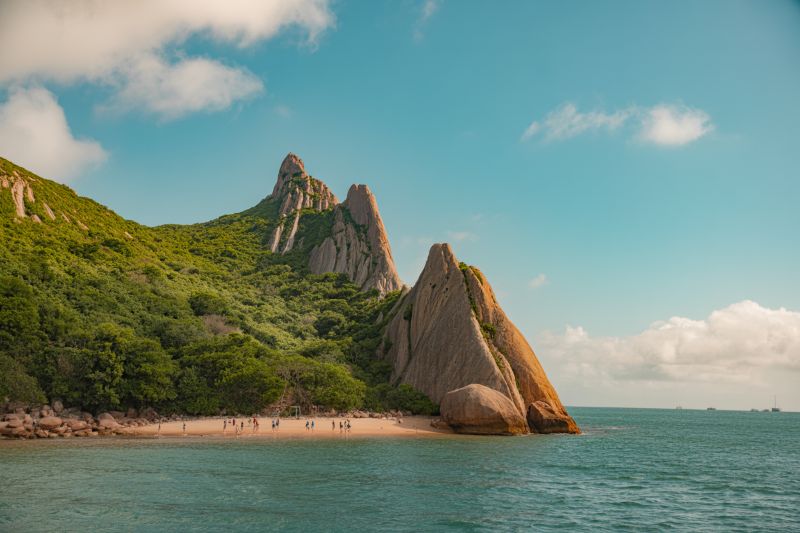
The recent National Day holiday “golden week” stretch in October saw a huge number of visitors to Kung Sai Geo Park, Kiu Tsui Chau (Sharp Island). This island also forms part of the UNESCO registered Sai Kung Geo Park. This sudden increase in visitor numbers raises the question of the affect of “soft” tourism on the very delicate environment on the island. Tourists ignore established regulations on illegal camping, cooking in open tourism fires, or the capture of marine life. This illegal capture of marine life also includes the illegal collection of marine life on the island in accordance to the in par national park regulations of the Sai Kung Geo Park.
These land grab attacks on unsustainable levels gets Greenpeace calls at the Hong Kong government for regulations on the to control overtourism of the protected areas. It gets to control regulations to mitigate the impact on the delicate inner sea coastal eco system and to control the impact the tourism island. From illegal camping in the marine park, over the first holiday week, thousands of “scavengers” on the inner sea eco system extended to the island over the bank holiday, presenting direct threats to the corals and captured marine eco-organisms.
Environmental Violations: Camping, Open Fires, and Marine Life Removal
During a visit to Sharp Island, local authorities and environmental observers noted several violations of the rules governing the UNESCO Global Geopark. Tourists were found camping outside designated areas, setting up cooking stoves, and even using open fires to prepare meals. Cooking over an open flame is illegal within the park under the Forests and Countryside Ordinance, which prohibits such activities in country parks and special areas.
In addition to the fire hazard, some visitors were seen removing marine creatures such as sea snails and sea cucumbers from the shore. The removal of marine life from the island can disrupt the local ecosystem, leading to long-term ecological consequences, especially in a protected environment like Sharp Island. These actions not only violate park regulations but also put pressure on the already vulnerable marine life.
Impact of Overcrowding and Overtourism on Hong Kong’s Islands
The influx of tourists to Sharp Island during peak seasons has raised significant concerns about overtourism in Hong Kong’s natural areas. As the number of visitors increases, the stress on local ecosystems grows, particularly on the Sai Kung islands. The National Day holiday period saw around 4,602 visitors on Sharp Island alone, which is a substantial number considering the island’s limited capacity to accommodate large groups without damage to the environment.
The government and local environmental groups have raised alarms about the growing impact of tourism on Hong Kong’s outlying islands, which are becoming more popular due to their natural beauty and accessibility. While tourism is an essential part of the local economy, this rapid increase in visitor numbers is creating a negative effect on both the environment and the quality of the tourist experience.
The tourism industry’s increasing footprint on Hong Kong’s geopark and islands is threatening the preservation of marine ecosystems, coral reefs, and the island’s unique geological features. If left unregulated, the problem could worsen, leading to irreversible damage to the area’s biodiversity and overall environmental health.
Regulatory Gaps: How the Government is Responding
The Hong Kong government has implemented various measures to protect country parks and special areas, including Sharp Island. According to the Agriculture, Fisheries, and Conservation Department (AFCD), it is illegal to camp or cook outside designated areas within the geopark. However, during the National Day holiday, these regulations were often ignored, with many visitors setting up camp outside designated areas without facing enforcement.
To address these violations, AFCD officers were seen distributing flyers to tourists on the island, reminding them not to trample on corals or remove marine life. Despite these efforts, the question remains whether these voluntary education campaigns are sufficient to tackle the growing challenge of mass tourism and environmental degradation. The AFCD also noted that violators could face significant fines or imprisonment for breaching park rules, yet many visitors were unaware of the regulations or ignored the warnings.
Experts and local lawmakers suggest that while education campaigns are vital, they alone cannot solve the problem. Clearer regulations, more active enforcement, and stricter measures to control visitor numbers are needed to protect the islands and their ecosystems.
Proposed Solutions to Balance Tourism and Conservation
To tackle the increasing pressure from tourism on Sharp Island and other Hong Kong geopark sites, several solutions have been proposed. Lawmakers and environmentalists are calling for the introduction of more stringent crowd management strategies, such as limiting the number of visitors allowed to access the island at any given time.
One proposed solution is the introduction of an online booking or registration system that would control the flow of tourists. This system could allow authorities to manage visitor numbers and ensure that the number of tourists does not exceed the sustainable capacity of the island. Additionally, increasing the number of educational programs and informational signage on the island could help raise awareness among visitors about the environmental importance of the area and the rules they must follow.
Moreover, some have called for the installation of more litter bins and better waste management systems on the island to minimize pollution. As observed, tourists left behind plastic bottles, food wrappers, and tissues, contributing to the island’s litter problem. By encouraging visitors to dispose of their waste responsibly, the environmental burden could be reduced.
The implementation of such measures would require coordination between the government, tourism authorities, environmental groups, and local stakeholders. However, without a concerted effort to preserve these natural treasures, Hong Kong risks losing the very features that attract tourists in the first place.
The Role of Tourists in Sustainable Tourism Practices
While the government plays a significant role in regulating tourism, tourists themselves also have a responsibility to ensure that their activities do not harm the environment. Educating visitors about the importance of following park rules, respecting local wildlife, and minimizing their environmental footprint can significantly reduce the negative impact of tourism on natural sites like Sharp Island.
By adopting responsible tourism practices—such as staying on designated paths, not disturbing wildlife, and cleaning up after themselves—tourists can help protect Hong Kong’s natural heritage for future generations. Encouraging a more sustainable and respectful approach to travel will ensure that the beauty of Sharp Island and other outlying islands can continue to be enjoyed by visitors while preserving their ecological integrity.
Protecting Hong Kong’s Natural Wonders
An increasing strain on the ecosystems surrounding Hong Kong’s Sharp Island and other outlying islands is the result of a growing amount of visitors. Hong Kong tourism is contingent on the region’s ecosystems, and thus, protective measures must be taken. This can be done through crowding regulations, management systems, education directed towards the tourists, and active participation of the government and local organizations. All of these are tourism protective and are aimed at conservation and a reasonable balance on the simultaneous growing demands of tourism on the region. All stakeholders partake in the challenge of eco-tourism.
