
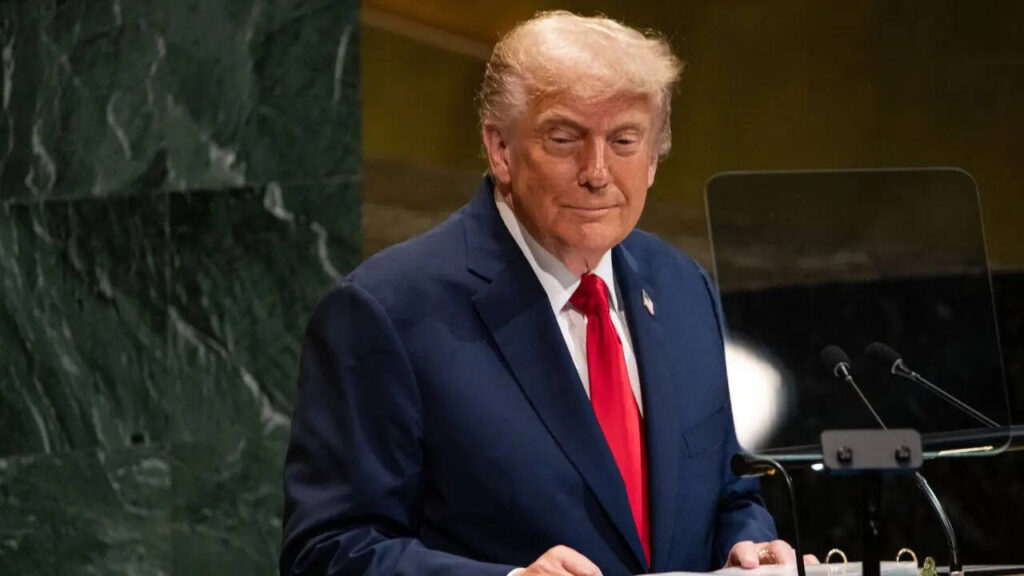
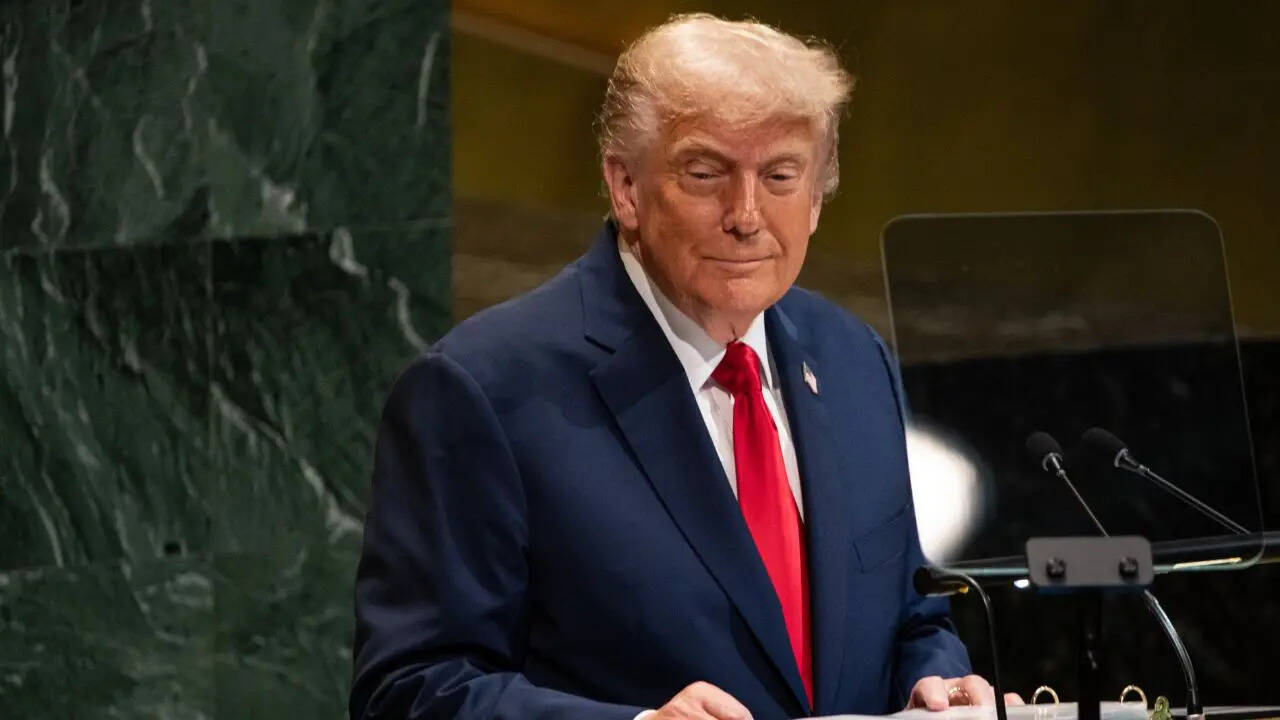
President Donald Trump addresses the 80th session of the United Nations General Assembly. (Source: AP)
Photo : AP

US President Donald Trump has intensified efforts to be considered for the 2025 Nobel Peace Prize, prompting scrutiny in Norway ahead of the official announcement on 10 October.
Speaking at the United Nations General Assembly last week, Trump said: “Everyone says I should get the Nobel Peace Prize,” citing his record in the Middle East. At a separate gathering of senior US military officials on Tuesday, he added: “They’ll give it to some guy that didn’t do a damn thing. That would be a big insult to our country.”
Behind the scenes, Trump’s campaign has involved lobbying efforts by his Middle East envoy, Steve Witkoff, and US Secretary of State Marco Rubio. Reports by Bloomberg indicate that Witkoff has raised the Nobel bid with European counterparts, while Trump himself spoke to Norway’s finance minister and former NATO Secretary-General Jens Stoltenberg during a phone call in Oslo earlier this year.
Corporate figures have also weighed in. Pfizer CEO Albert Bourla praised Trump’s handling of Operation Warp Speed, noting that the rapid development of Covid-19 vaccines “would typically be worthy of the Nobel Peace Prize.”
The Norwegian Nobel Committee, which selects the laureates, operates independently and its deliberations are sealed for 50 years. Kristian Berg Harpviken, director of the Norwegian Nobel Institute, told Bloomberg: “The committee hasn’t been on the receiving end of any direct political pressure, but there are obviously several campaigns going on, both in public and private.”
Historically, efforts to influence the prize have occurred before. Ahead of the 2010 award, officials in Beijing and Oslo warned the Nobel Committee of potential consequences if a Chinese dissident were chosen. The committee awarded the prize to Liu Xiaobo, a jailed human rights activist, and it took six years to repair diplomatic and economic ties.
Trump’s efforts contrast with the more understated approach traditionally expected by the Norwegian committee. Hilde Eliassen Restad, Associate Professor of International Studies at Oslo Nye University College, said: “Culturally, Trump is very much an antithesis for Norway. He’s not subtle, not elegant, so that’s very much different this time. But that’s how he achieves his goals, so you could see why he would think he could get away with it.”
For the 2025 award, nominations closed on January 31 and included 338 candidates, of which 94 are organisations. Members of national assemblies, organisations such as the International Court of Justice, university professors, and former laureates are eligible to nominate. Republican Congresswoman Claudia Tenney has twice nominated Trump, citing his work on the Abraham Accords. Another nomination came from Oleksandr Merezhko, head of Ukraine’s parliamentary foreign affairs committee, who has since attempted to withdraw it.
Despite his efforts, experts note that Trump’s public campaigning may clash with the committee’s culture of discretion and independence. Norwegian Foreign Minister Espen Barth Eide emphasised: “It’s simply up to the Nobel committee. It’s important to remember it’s an independent committee.”
Observers also note that committee composition may shift in 2026, with the potential for political changes in Norway to influence future selections. Tenney said: “The way the committee is formed right now, even if he were to solve world peace today, he still wouldn’t [get it].”
The 2025 winner will be revealed at Oslo City Hall on 10 December, marking the culmination of the committee’s deliberations, which remain confidential for decades.