
Published on
October 5, 2025

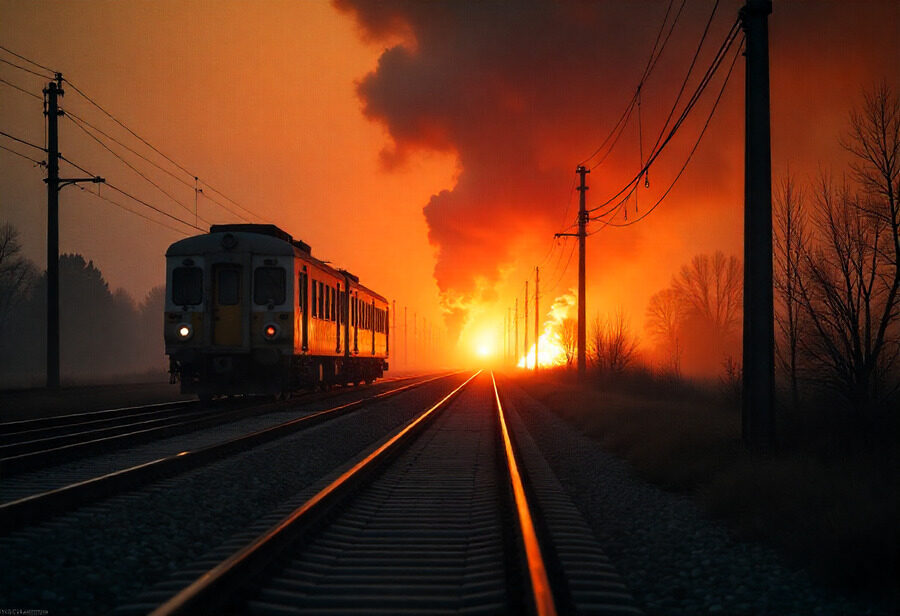
Ukraine travel has been severely disrupted following a Russian drone strike on a railway station in Shostka on October 4, 2025, leaving dozens injured. The attack, which targeted a key transport hub near the Russian border, is part of Moscow’s escalating strategy to cripple Ukraine’s transport and energy infrastructure ahead of the harsh winter months. This aerial assault highlights the increasing threats to vital travel routes and services, intensifying concerns over travel disruptions and power shortages as the country faces another winter of conflict.
A brutal Russian drone strike targeted a Ukrainian railway station on Saturday, October 4, 2025, leaving dozens injured in what Ukrainian President Volodymyr Zelenskyy described as a “savage” attack. This strike marked an alarming intensification of Russia’s aerial offensive, which has increasingly focused on Ukraine’s transportation and energy infrastructure as the country braces for its fourth winter since the onset of the full-scale invasion.
The attack took place in the town of Shostka, located approximately 70 kilometers (43 miles) from Ukraine’s northern border with Russia. At least 30 individuals were reported to have sustained injuries in the assault, according to President Zelenskyy. Shostka, situated northeast of Kyiv, has become a strategic target due to its proximity to key military routes and infrastructure.
In the immediate aftermath of the strike, Ukrainian officials revealed that the Russian assault had struck two separate passenger trains. First, a local service was hit, followed closely by an attack on a train bound for the Ukrainian capital, Kyiv. Oleksiy Kuleba, Ukraine’s Deputy Prime Minister and Reconstruction Minister, confirmed that the two trains were targeted in swift succession, raising concerns over the growing sophistication of Russia’s drone strikes and their increasingly dire impact on civilian infrastructure.
This surge in Russian drone strikes comes at a time when Moscow has significantly escalated its attacks on Ukraine’s vital railway system. Over the past two months, Ukraine’s railway network, which is essential for both civilian and military transport, has come under near-daily bombardment. These railways are critical not only for moving people and goods but also for the swift transportation of Ukrainian troops and military supplies, making them a key target in Russia’s ongoing efforts to weaken Ukraine’s defense capabilities.
In addition to strikes on transportation, Russia has ramped up its offensive on Ukraine’s energy infrastructure, which has become a hallmark of its military strategy. The Kremlin’s systematic targeting of power stations, substations, and energy facilities is seen by many as a deliberate attempt to weaponize the coming winter. The goal appears to be to deprive Ukrainian civilians of heat, electricity, and running water—essential services that are particularly vital during the harsh winter months. Ukrainian authorities have long decried these attacks as a form of terror designed to break the resolve of the population and hinder the country’s ability to function.
The Russian military’s decision to target critical infrastructure has raised alarm within both Ukrainian and international circles. The Ukrainian government has labeled these attacks as war crimes, arguing that the Russian strikes are not only illegal but are intended to create suffering among innocent civilians. These strikes, which frequently damage electrical grids and disrupt power to large parts of the country, are particularly concerning as temperatures drop. With Ukraine facing another bitter winter, these actions by Russia are seen as attempts to demoralize the Ukrainian people, destroy the nation’s capacity to rebuild, and undermine the war effort.
Moscow’s strategy of hitting vital civilian infrastructure is part of a broader campaign that has been ongoing since the early days of the invasion. However, the intensity of these strikes has notably increased as the weather grows colder and the fourth winter approaches since Russia’s full-scale invasion of Ukraine began in February 2022. Winter months have consistently been a period of heightened warfare, with both sides engaging in fierce battles to control strategic positions. But Russia’s aerial strikes on infrastructure seem to be aimed not only at military targets but at creating an even more difficult living situation for Ukrainian civilians, especially in the energy-deprived regions.
In Shostka, the impact of the attack was immediately felt as emergency services rushed to the scene. Local hospitals were overwhelmed with casualties, many of whom sustained injuries from shrapnel or from the violent shockwave caused by the drone explosion. Many of the injured were reported to be civilians who were either traveling on the trains or were near the station at the time of the strike. While the exact toll of the attack remains under investigation, officials have confirmed that the number of wounded could rise as more victims are identified.
As Ukraine prepares for yet another challenging winter, President Zelenskyy has called on the international community to continue supporting his country’s defense efforts. The Ukrainian leader has urged the West to send more advanced air defense systems, such as Patriot missiles, to help protect critical infrastructure from Russian aerial attacks. While Ukraine has had some success in shooting down incoming missiles and drones, the sheer volume of strikes has made it increasingly difficult to protect all vulnerable areas.
Ukraine’s railways, energy grid, and other critical infrastructure have become prime targets in the ongoing conflict, and the Russian military has shown no signs of letting up. As the war grinds on, these strategic sites are expected to remain at the center of the fighting. Given the increased frequency of airstrikes, Ukrainian officials are also working to bolster the country’s emergency preparedness and response systems in anticipation of continued assaults.
The ongoing campaign to destroy Ukraine’s energy grid has prompted widespread concern over the potential for widespread suffering, especially in the most vulnerable areas of the country. Authorities have been working tirelessly to repair power lines, restore services, and provide humanitarian aid to those in need. However, the continued assault on these systems makes it clear that the war is entering a new phase—one where the fight for survival becomes just as crucial as the battlefront.
Ukraine travel has been disrupted after a Russian drone strike targeted a railway station in Shostka, leaving dozens injured. This attack is part of Russia’s intensified strategy to target Ukraine’s transport and energy infrastructure as winter approaches.
As the war enters its fourth winter, the resilience of the Ukrainian people is being tested like never before. With Russia intensifying its attacks on essential infrastructure, Ukraine faces a dire situation, but the resolve of its people and its leaders to continue resisting aggression remains steadfast.
