

Grand Canyon inn faces $400k of lost reservations after wildfire
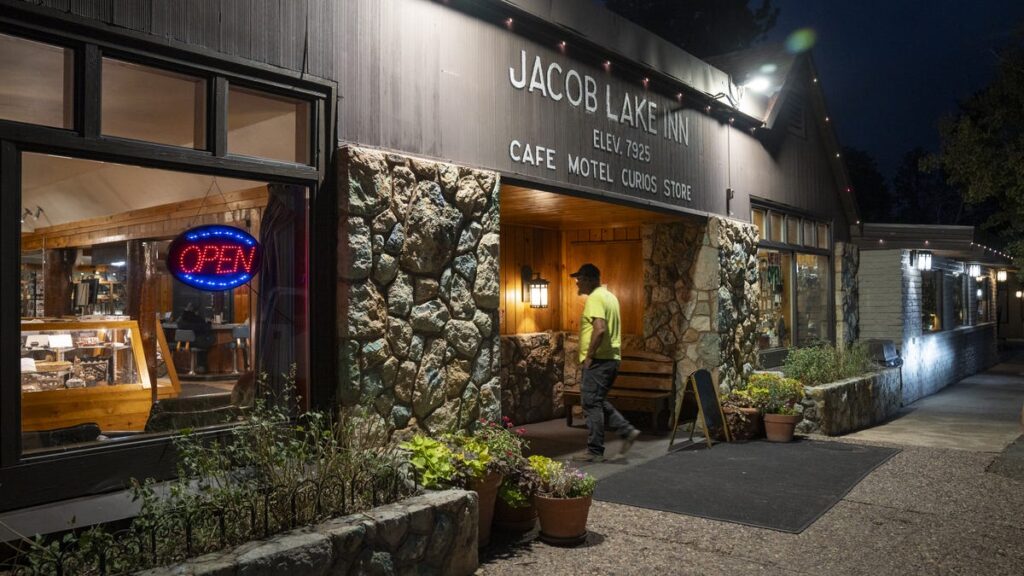
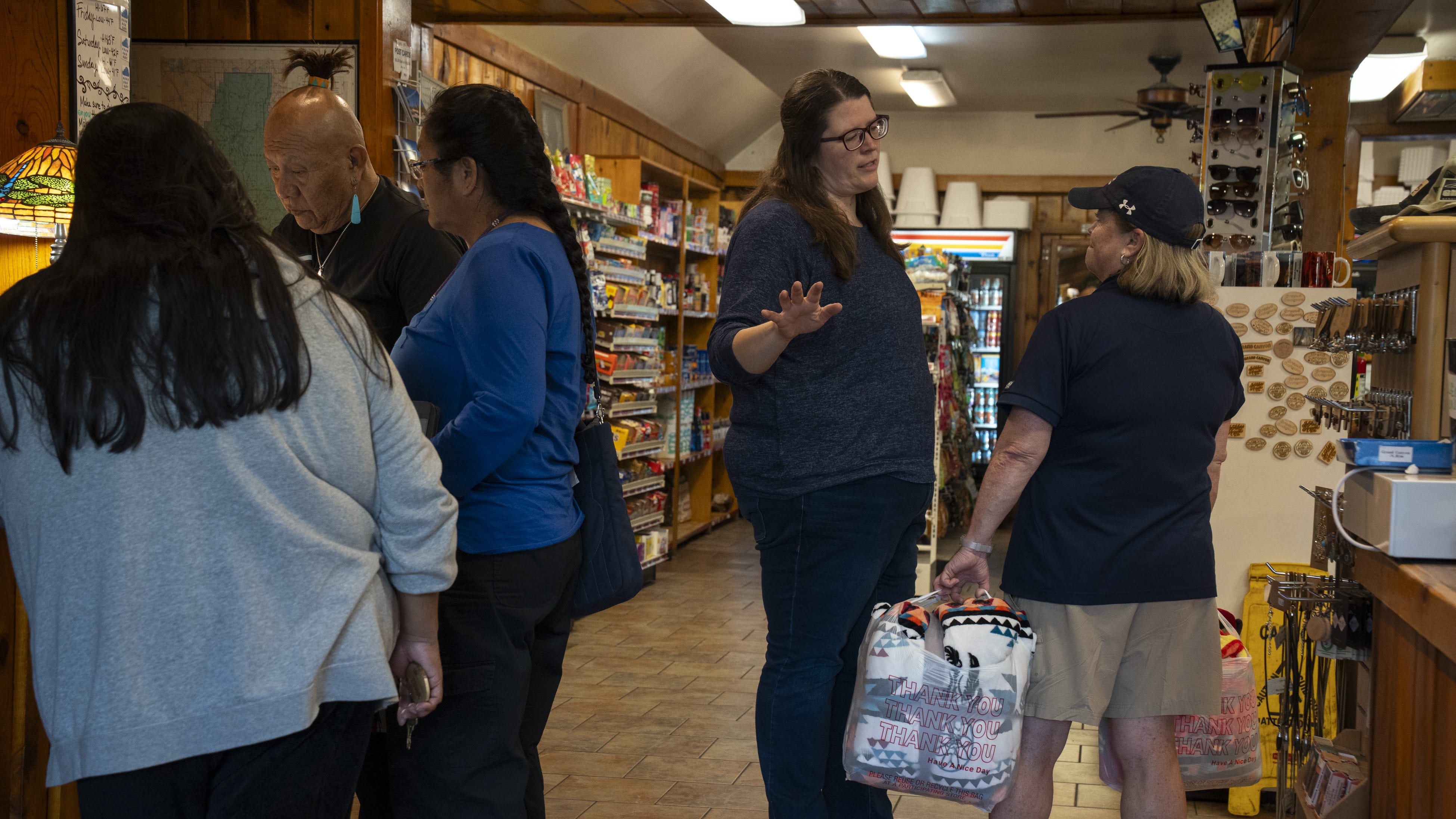
Jacob Lake Inn Manager Melinda Rich Marshall discusses loss of Grand Canyon Lodge and prospects for business if a new lodge attracts winter visitors.
- The Dragon Bravo Fire destroyed the Grand Canyon Lodge at the North Rim, forcing a closure that has hurt businesses that rely on tourism.
- As the first talks begin about rebuilding at North Rim, some people say it’s a chance to open the area to year-round tourism with a lodge that can make it through cold winters.
- Former Arizona Gov. Bruce Babbitt, along with other environmentalists, oppose opening the North Rim in winter, arguing that seasonal closures help preserve “the greatest backcountry” trip in Arizona.
JACOB LAKE — Tourist businesses battered by a wildfire that wrecked the Grand Canyon North Rim’s summer season are hoping that something long wished but formerly improbable could emerge from the ashes: a year-round tourism attraction on the national park’s quiet side.
The National Park Service closes the North Rim in winter, in part because the historic Grand Canyon Lodge was built for summer, with shallow pipes that would freeze in winter. But the lodge burned in July, opening the possibility that the agency could build a replacement lodge capable of handling winter visitors.
The often snowy State Route 67, stretching some 43 miles south from Jacob Lake Inn to the lodge and scenic overlooks, goes unplowed after the first big storm. The closure shrouds the 8,000-foot-high plateau and its elk, bison and occasional backcountry skiers in a winter wilderness that some advocates hope to protect and others seek to unlock.
Some environmentalists and at least one former governor who has skied the terrain want to keep it as is, quiet in winter. Others find the business prospects tantalizing.
“That would be huge,” Cliff Dwellers Lodge co-owner Wendy Gunn said.
For entrepreneurs arrayed along a striking 2 ½-hour drive past red cliff bands, circling condors and high pine stands from Marble Canyon to the Kaibab Plateau to Kanab, Utah, the downtime from November to May deals them out of the otherwise lucrative “Grand Circle” route from park to park in southern Utah and northern Arizona.
“We have pushed for an opening of the North Rim year-round for many years,” said Shaun Riding, a Kanab resident who co-owns Kayak the Colorado, a kayak rental and river shuttle company that operates in the Lees Ferry section above Grand Canyon.
Tourism to Kanab and points north of the state line has grown in all seasons since a spike in outdoor activity during the COVID pandemic, he said, and more of those people would pass through northern Arizona as well if they had a premier wintertime destination — for instance, a glimpse into one of the natural wonders of the world from a snow-covered cliff. If the government rebuilds Grand Canyon Lodge, he hopes it will be a winterized tourist magnet.
“Gosh,” he said, “if they could open North Rim (in winter), I just see it to be a huge benefit to everybody in the area.”
The Park Service has hinted that it may grant his wish. Updating colleagues on the Dragon Bravo Fire during a meeting of the Glen Canyon Adaptive Management Program in late August, Grand Canyon Superintendent Ed Keable said rebuilding the lodge creates an opportunity to keep it open all year.
“We had been planning on extending the season” even before the fire, Keable said, using funds from the Great American Outdoors Act to winterize the lodge and enable a season lasting at least through December. The limitations of working with a remote lodge dating to the Great Depression made full-winter operations unlikely, he said, but those limitations vanish with a new lodge built from the ground up.
Business owners who have participated in post-fire meetings with the Park Service and Arizona Gov. Katie Hobbs say those officials have repeatedly discussed the possibility of a winter season when the lodge reopens. The agency has not started a public process to study the issue or gather comments, though, and Keable noted that there are “different opinions on that.”
Year-round North Rim tourism? ‘It’s a terrible idea’
Another governor first made his opinion clear to a Sports Illustrated writer when the two of them skied, hiked and winter-camped from Jacob Lake to the North Rim and through the canyon to the South Rim in 1982, several months before the ill-fated Grand Canyon Lodge was added to the National Register of Historic Places.
That now-former Arizona governor and U.S. Interior secretary, Bruce Babbitt, has not moderated his opposition to allowing traffic through “the best winter backcountry in Arizona.”
“It’s a terrible idea, period,” Babbitt told The Arizona Republic in September.
Why? For one thing, Babbitt still harbors thoughts of skiing the 43 miles through the solitude of forest and meadow to peer into the canyon, though he acknowledged he might not be up for continuing through the canyon itself at his age, now 87. Plowing the road would kill the experience for him, and alter the ecology.
“If you start plowing a trench, 40 miles, right through the middle of those glades, you’ll create a deep trench that will ruin the solitude and the skiing and, importantly, disrupt the wildlife,” he said. Animals may turn back when faced with icy berms when the snow is deep.
In the 1982 Sports Illustrated article, titled “Grandeur and Torment,” the writer, the late Olympic marathoner Kenny Moore, described a night when he ached and his feet bled, when keeping up with Babbitt on this trek “seemed the hardest thing I’d ever done, harder than the Olympic marathons or the 312-mile Great Hawaiian Footraces, because it was fresh and it wasn’t over yet. Tomorrow we had to go still farther down, and then lift these packs all the way out, a 4,800-foot climb.”
He also described Babbitt’s opposition to a then-current proposal by the U.S. Forest Service to plow the North Rim access in winter, potentially for logging or other resource industries just outside the park. And he wrote that the governor had wanted to scope out the route’s potential as a backcountry skiing attraction.
Babbitt told The Republic his ultimate reason for taking the trip was just to do it, and to add to the sense of wonder at the canyon that he had already gained by floating the Colorado and hiking the trails.
“I just wanted the experience of all the moods and seasons and elevations in the Grand Canyon,” he said. “I just wanted to experience the greatest backcountry winter trip in all of Arizona.”
Dragon-Bravo Fire was costly for many businesses
Many businesses operating along tourists’ routes to the North Rim are eager to open the winter solitude to more people, but with easier access by road. Some of them have suffered serious losses since the Dragon Bravo Fire closed the North Rim. They say that experience makes obvious what a draw the canyon’s remote scenery provides — and how much bigger the attraction could be if opened year-round.
Jacob Lake Inn had lost about $1 million in revenue by late September, said manager Melinda Rich Marshall, whose family has operated the rustic resort since 1923. Her relatives were considering a plan to take on debt to stay open this winter, a proposition that worried her because, with Grand Canyon Lodge and other park visitor services destroyed, there is no guarantee of what next year’s traffic will look like.
She had attended meetings with Keable and Hobbs to clamor for at least reopening two North Rim viewpoints this fall, an option the Park Service eventually announced for Oct. 1.
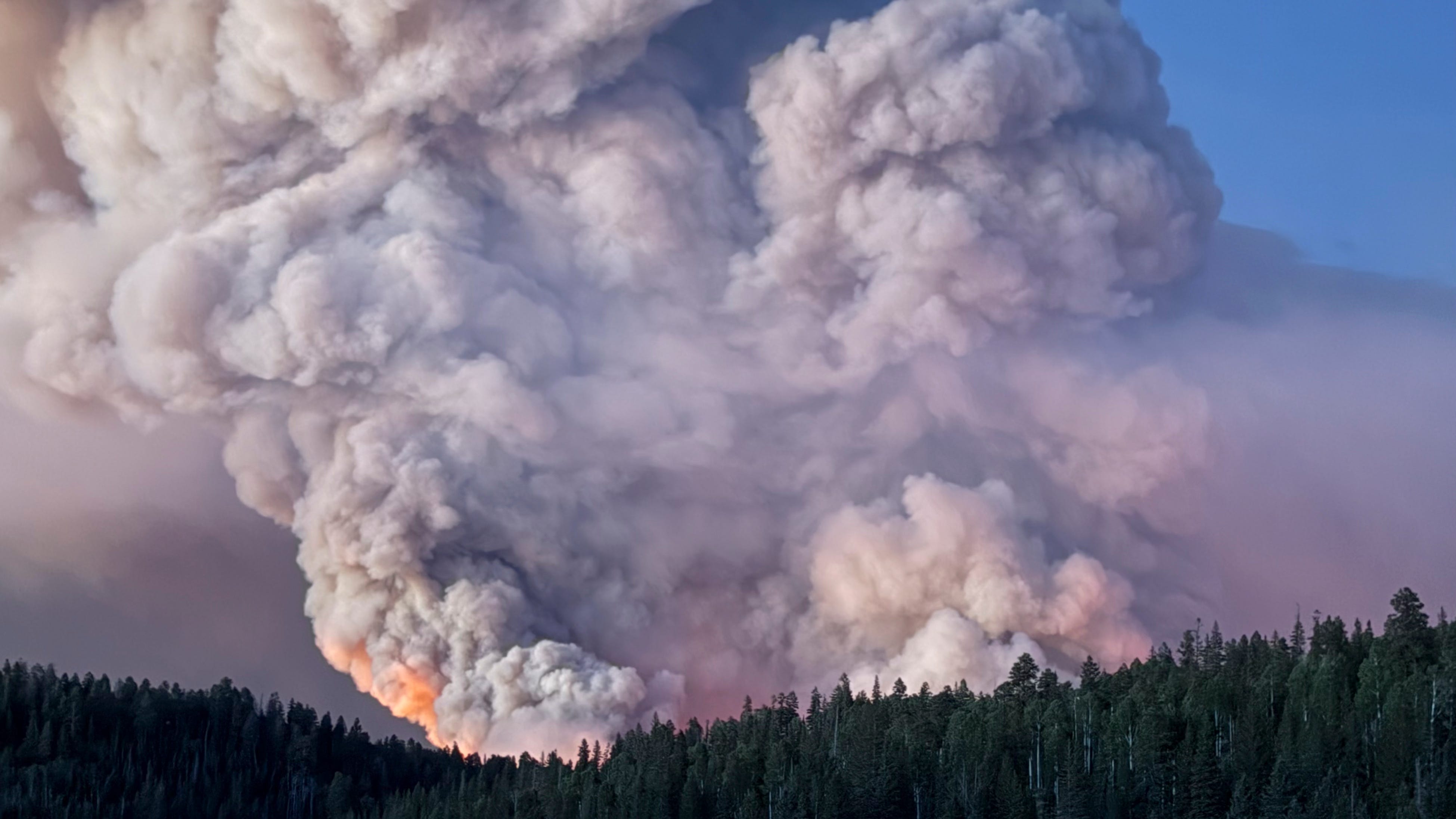
Dragon Bravo Fire burns near the Kaibab Lodge near the North Rim
The Dragon Bravo Fire burned for nearly three months in summer 2025, destroying several structures and an entire season of business for local tourism.
“With the lodge burning,” Marshall said, “it basically burned our economy to the ground, too.” She said it seated in an empty dining room that she said normally would be brimming with visitors on a September afternoon. The room is lined with hanging Navajo rugs, prominent among the souvenirs that few will peruse this fall.
Winter has always been slow season, she said, with visitors from southern Utah sometimes coming to go sledding, and regional sewing groups booking rooms to work together on projects.
“If it’s a big enough snow year we’ll have people who come because they want to do snowmobiling and other winter sports,” she said. Skiers have not been a major contingent, but she’s eager to see if opening the North Rim in future winters would change that. “There are possibilities for things that we haven’t really looked into before because it wasn’t an option because the road was closed.”
At meetings with business operators, federal and state officials have discussed the possibility of a winter season, Marshall said. One concern is the responsibility of plowing, but she said she doesn’t expect it would be difficult in most years. The snow was deep during her youth, she said, but with rare exceptions has been thin during the droughts of the last 20 years.
Jacob Lake Inn would have to winterize some of its rooms, the cabins away from the lodge buildings, to take full advantage of a winter season. Marshall said it’s likely worth the investment. Winter views at the North Rim could drive more tourism throughout northern Arizona, including in Page, she expects.
“For the entire economy of the area, it will completely change the way things function,” she said.
‘People want to see the Canyon in snow’
At Kaibab Lodge, near the national park’s North Rim entry, staffers Chad Sanders and Robin Bies debated whether a winter opening would bring big business. The couple had come up from their Sun City home in metro Phoenix in spring to shuttle rim-to-rim canyon hikers to their vehicles, hoping to escape the summer heat like many of their clients. Winter might not hold the same allure, Bies said.
“My perspective,” Sanders countered, “is if you built it, they’ll come. People want to see the Canyon in snow.”
While a winter season might be nice, both agreed, the more immediate need was to get the North Kaibab Trail reopened, and with it the rim-to-rim hikers that drive most of the existing demand for cabins and shuttles. The two had shuttled more than 40 people a day around the canyon at the start or finish of their through-hikes in spring, they said, and if not for the fire closure they would have expected business to pick up again as Canyon temperatures cooled in September.
Instead, business at the lodge was down perhaps 85%, they said, and they led a skeleton crew catering mostly to contractors mopping up after the fire.
“All of us can profit as soon as the trailhead opens,” Bies said.
Another business hoping to pick up some of the traffic is Riding’s Kayak the Colorado. The service lost customers when an electronic sign placed at the intersection of U.S. Highway 89 and the 89A cutoff south of Page alerted motorists that the latter was closed during the summer fires burning on the Kaibab. They could have made it as far as his launch point at Lees Ferry, but many steered clear.
Riding also owns a food truck in Kanab, which he said was down by about two-thirds of its business because of the North Rim closure.
He hopes to make up some of the business by offering winter kayaking at Lees Ferry, a new service he tested by keeping one shuttle captain working the area last winter and intends to staff with two this winter. More would work through winter if North Rim stayed open year-round, he said.
“It is cold,” especially when in the shade of cliffs in winter, he acknowledged. “But the beauty of Lees Ferry is we have flat, calm waters. There’s not rapids. You get in that boat and you’re not getting wet.
“On sunny days in the middle of the winter it’s enjoyable.”
Navajo jewelers and artists who sell their goods in roadside stalls also stand to gain from more wintertime traffic. “That could really help,” said Gloria Eriacho, a jewelry maker from the Bodaway-Gap area who sells her work at Antelope Trails Interpretive Market next to Navajo Bridge in Marble Canyon. Although her booth remains open year-round, traffic trails off over winter.
“When North Rim is open we used to get the best business,” she said, “May through November. After that it slows down.”
She spoke in the past tense because, like other businesses, hers suffered from the fire closure.
“Some of us didn’t make any money through like August,” Eriacho said. “It’s finally picking up this month.”
Winter openings could draw more opposition
In Kanab, a small Utah city within day-trip distance of Grand Canyon, Zion and Bryce Canyon national parks, businesses say winter visitation already is on the upswing.
“Kanab used to be seasonal,” Willow Canyon Outdoor co-owner Melanie Rader said. “It’s not so much anymore.” Restaurants that once closed for the season now stay open. Bryce Canyon has become a hot spot for cross-country skiers, she said. That could also be true of the North Rim if it opened.
Rader’s shop sells gear, clothing, books and coffee, and she supplements her income by guiding and shuttling hikers in and around Grand Canyon. Whether people want to ski Grand Canyon or not, she believes, they will want to hike it in winter if given the chance.
“If I can get my car to a trailhead, I’m golden to spend some time in Grand Canyon in winter,” she said. Though sometimes icy at the top, the trails offer conditions “like springtime” as they get deeper in the canyon.
The idea of opening the North Rim in winter when Grand Canyon Lodge is rebuilt is new enough that it has not generated a coordinated pushback from environmentalists who, like Babbitt, may wish to keep the forest and meadows as they are. Previous discussions have drawn opposition to further commercializing the area, though, and a Sierra Club representative said that sentiment stands.
“It is a special place and should be treated as such,” Sierra Club Grand Canyon Chapter Director Sandy Bahr said in an email. “Development should be minimal — the Canyon and its beauty should be left unmarred,” and wildlife and vegetation should have a season to recover.
Babbitt, the former governor, said he understands the desire to see Grand Canyon in winter, the contrast of snow against the rock, the sense of solitude because the summer visitor rush is over. But there are some two dozen miles of road that remain open along the canyon’s South Rim, he said, and that should be enough. The North Rim is and should remain different, he believes.
“I remember getting up in the middle of the night in one of those glades, putting on my skis, a beautiful moon in a clear sky reflecting off of the meadow and the white trunks of groves of aspen trees,” he said. “It was really an otherworldly experience.
“All of that is going to be jeopardized if they start turning that into a year-round destination.”
Brandon Loomis covers environmental and climate issues for The Arizona Republic and azcentral.com. Reach him at brandon.loomis@arizonarepublic.com.
Environmental coverage on azcentral.com and in The Arizona Republic is supported by a grant from the Nina Mason Pulliam Charitable Trust.
Follow The Republic environmental reporting team at environment.azcentral.com and @azcenvironment on Facebook and Instagram.